Human-centred research and exhibit design for early childhood learning
Project partner: Scitech
Year: 2020
Project type: Postgraduate student project
Primary audience: Children aged 0–6, parents and caregivers
Methods: Ethnographic research, observation, interviews, co-design, ideation, prototyping and testing
Year: 2020
Project type: Postgraduate student project
Primary audience: Children aged 0–6, parents and caregivers
Methods: Ethnographic research, observation, interviews, co-design, ideation, prototyping and testing
Project overview
Curiosity Theory in Discoverland was a student service-design project exploring how Scitech could revitalise Discoverland, its learning and play area for children aged six and under.
Scitech came to our team with several challenges affecting the experience. Visitor numbers had declined, some signage and instructions no longer matched how exhibits functioned, and parents were not always actively participating in activities with their children.
Our task was to investigate the experience from the perspectives of children, caregivers and Scitech staff, then develop creative strategies for making Discoverland more engaging, relevant and collaborative.
The Challenge
Discoverland was an important part of a well-known Perth institution, but parts of the environment and its exhibits had remained largely unchanged for many years.
The experience was affected by several interconnected issues:
- Declining attendance
- Outdated or unclear exhibits
- Signage that did not accurately explain some activities
- Limited opportunities for parents and children to participate together
- A disconnect between Discoverland and Scitech’s broader ambition to appear modern, engaging and innovative
- Limited resources available to update and operate the space
- Heavy reliance on the floor team to explain exhibits and encourage participation
The challenge was not simply to create new exhibits. We needed to understand how the environment, instructions, staff support, parent behaviour and children’s curiosity combined to shape the experience.
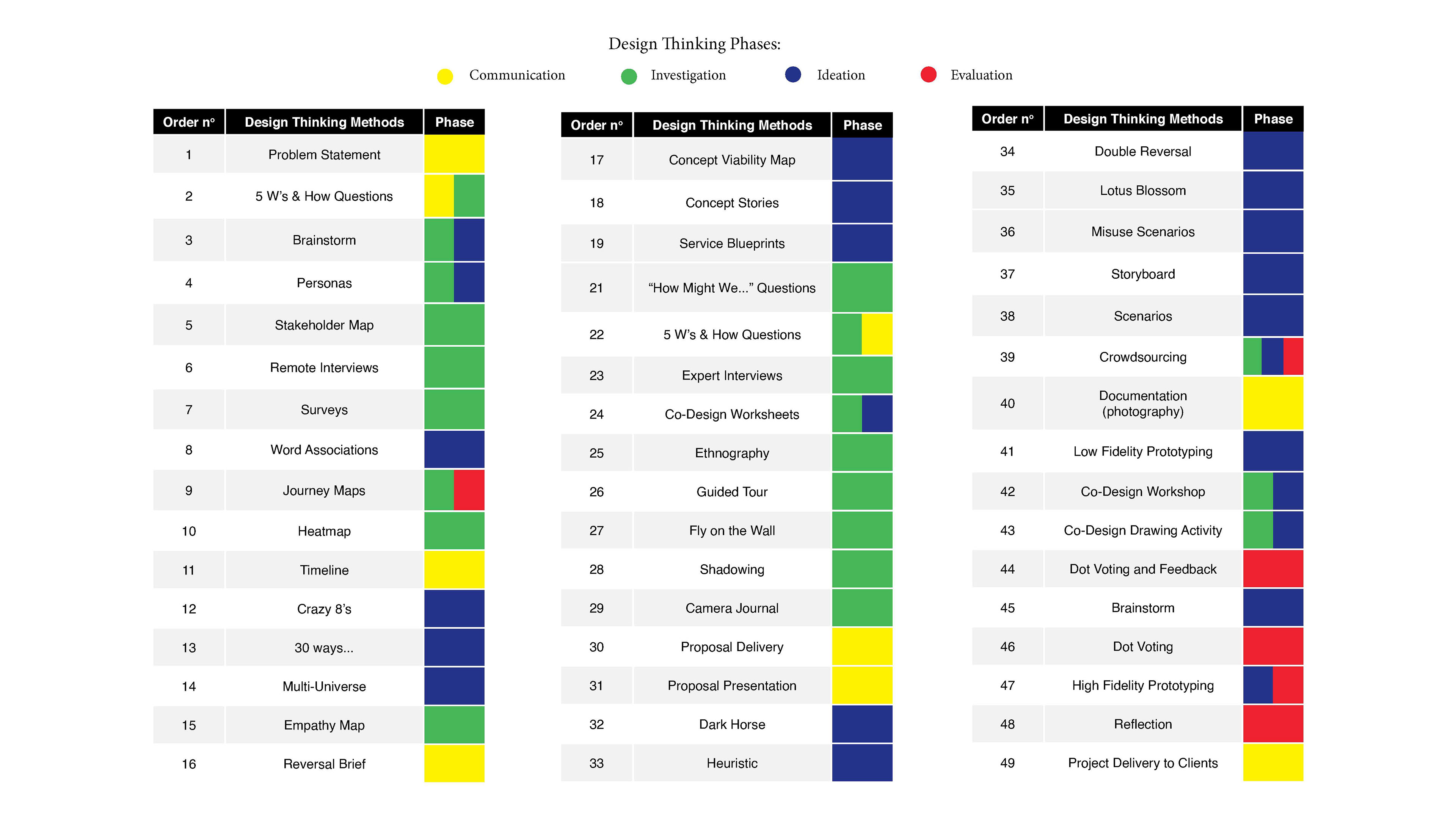
Our Approach
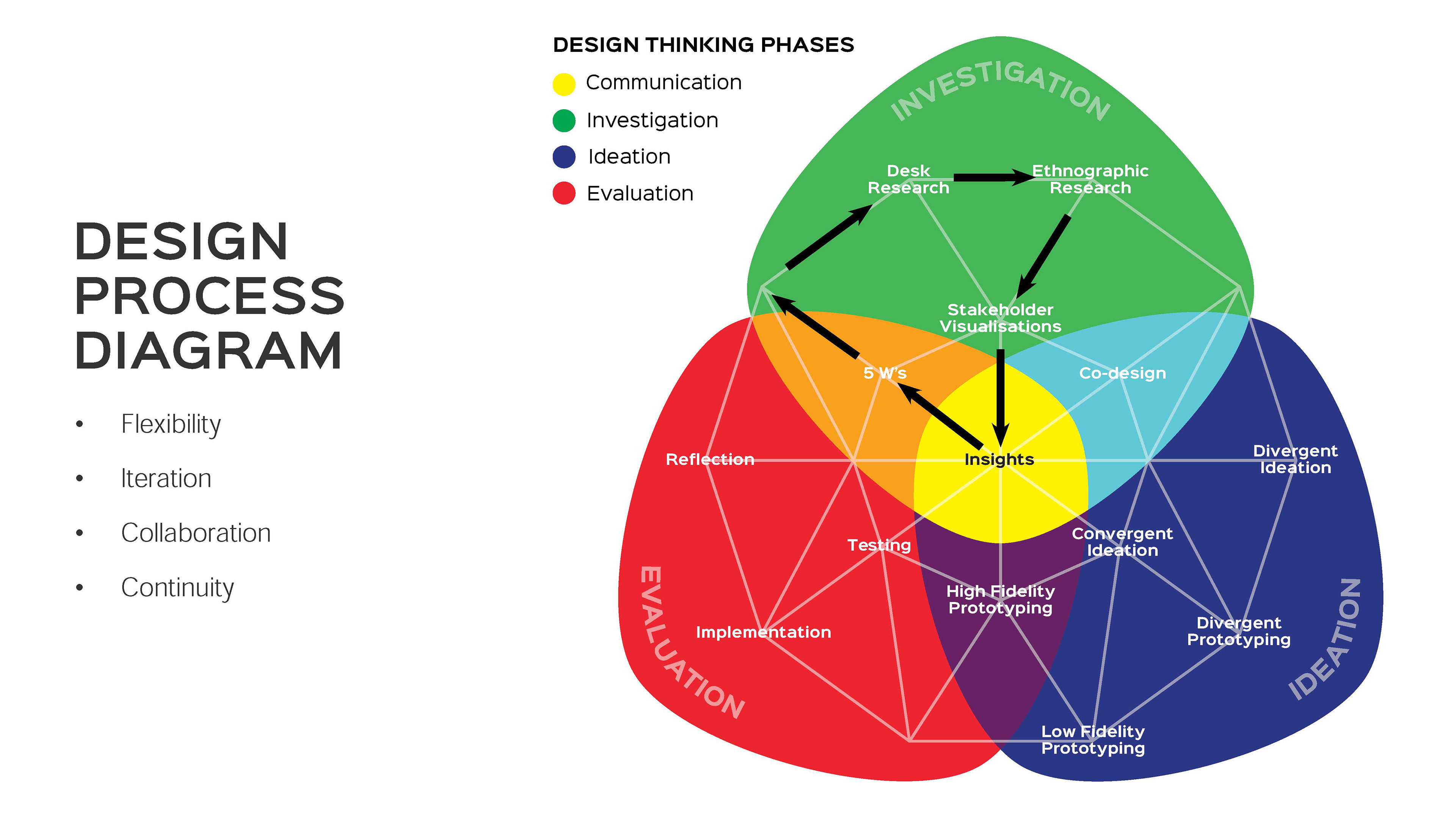
The project was completed in two stages.
The first phase involved 28 students working through the research, empathy, discovery and problem-definition stages. The project was led by Erica Mason and Eko Pam. During this phase, I worked closely with the research and visualisation team.
Our research included:
- Meeting and interviewing Scitech employees
- Touring and documenting the Scitech environment
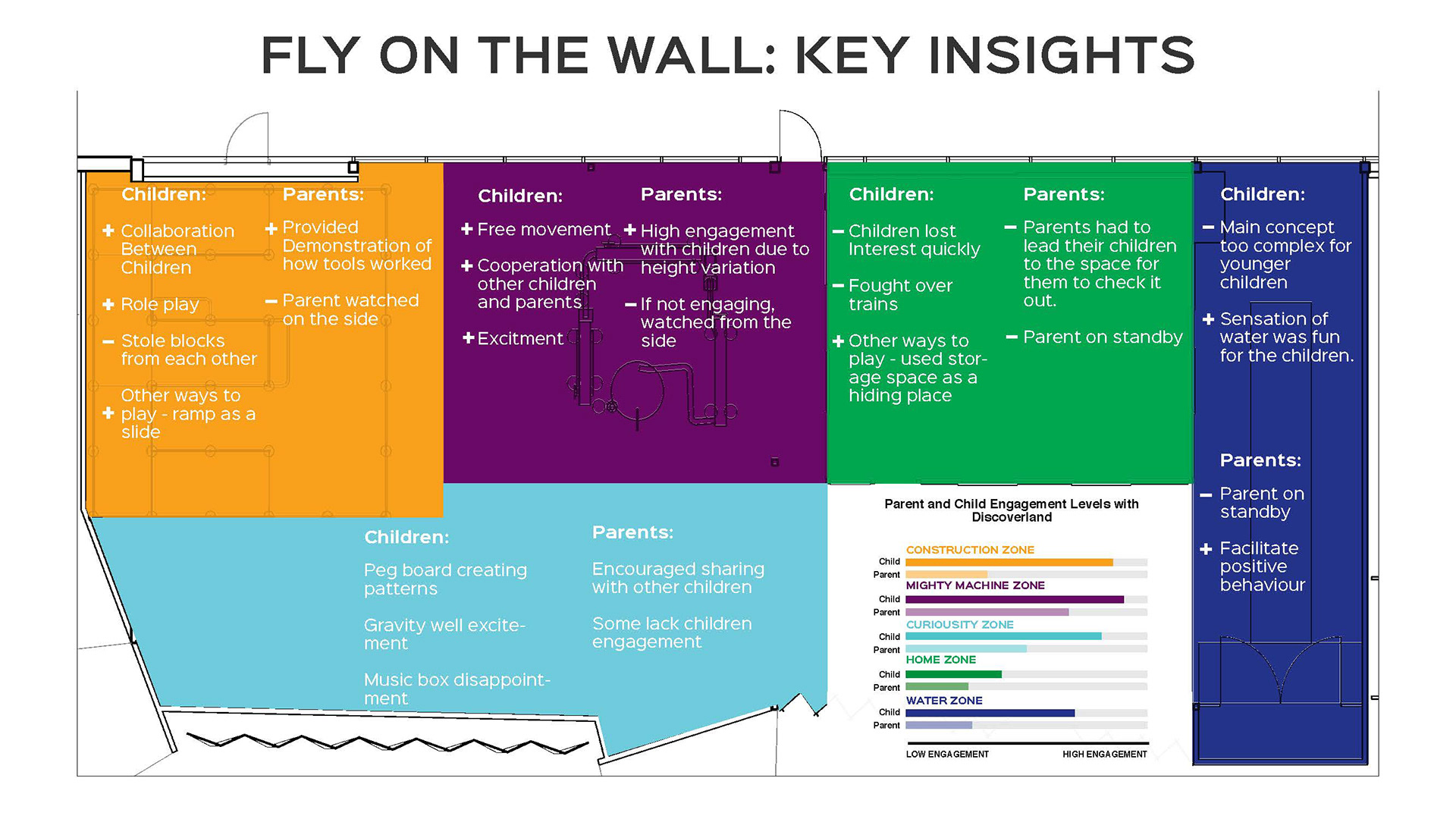
- Observing children using exhibits
- Observing how parents facilitated or allowed independent exploration
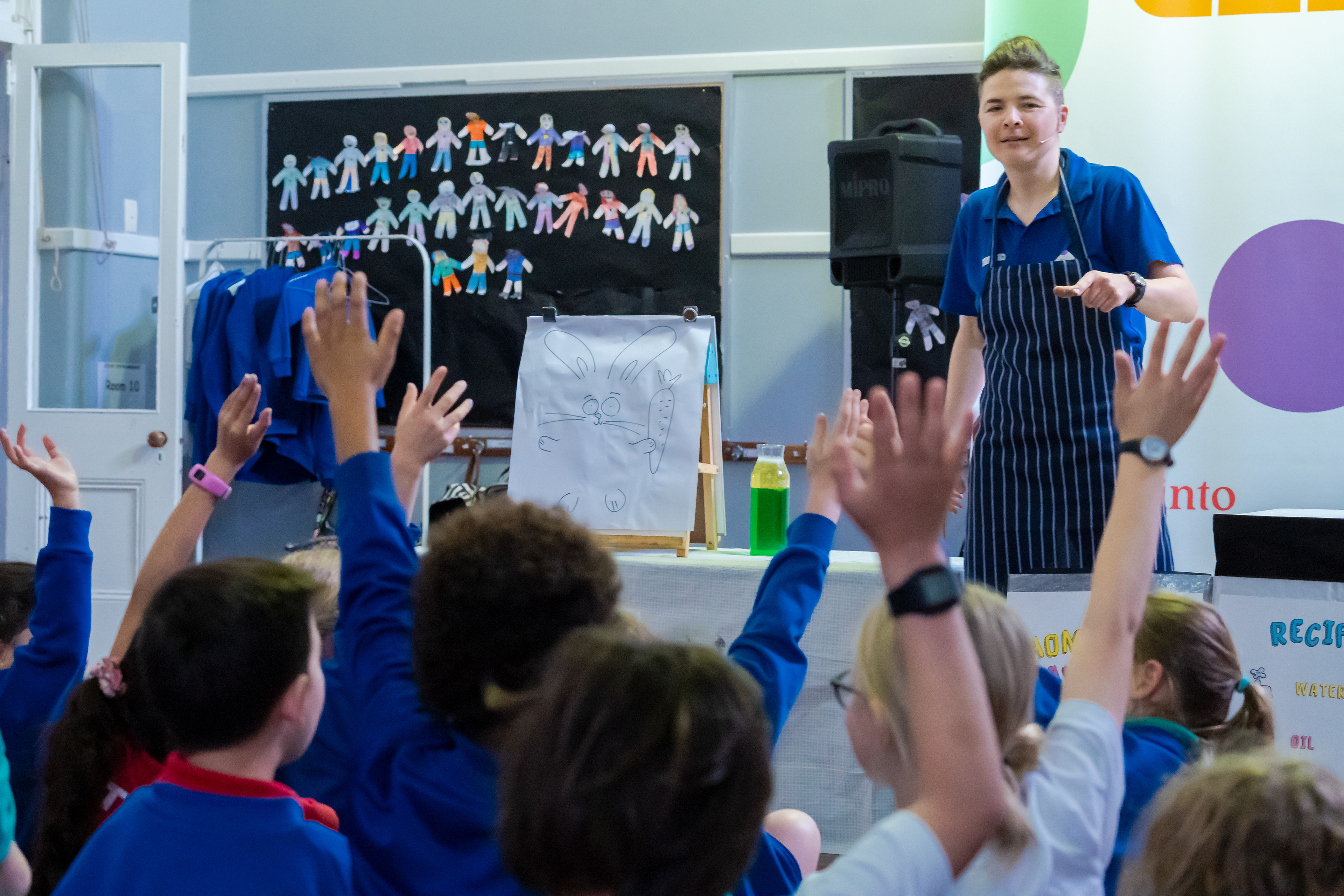
- Documenting Scitech science presentations at primary schools
- Interviewing parents, including home-educating families
- Reviewing how exhibit instructions affected participation
- Investigating curiosity, play and early childhood learning
- Facilitating creative research activities with children
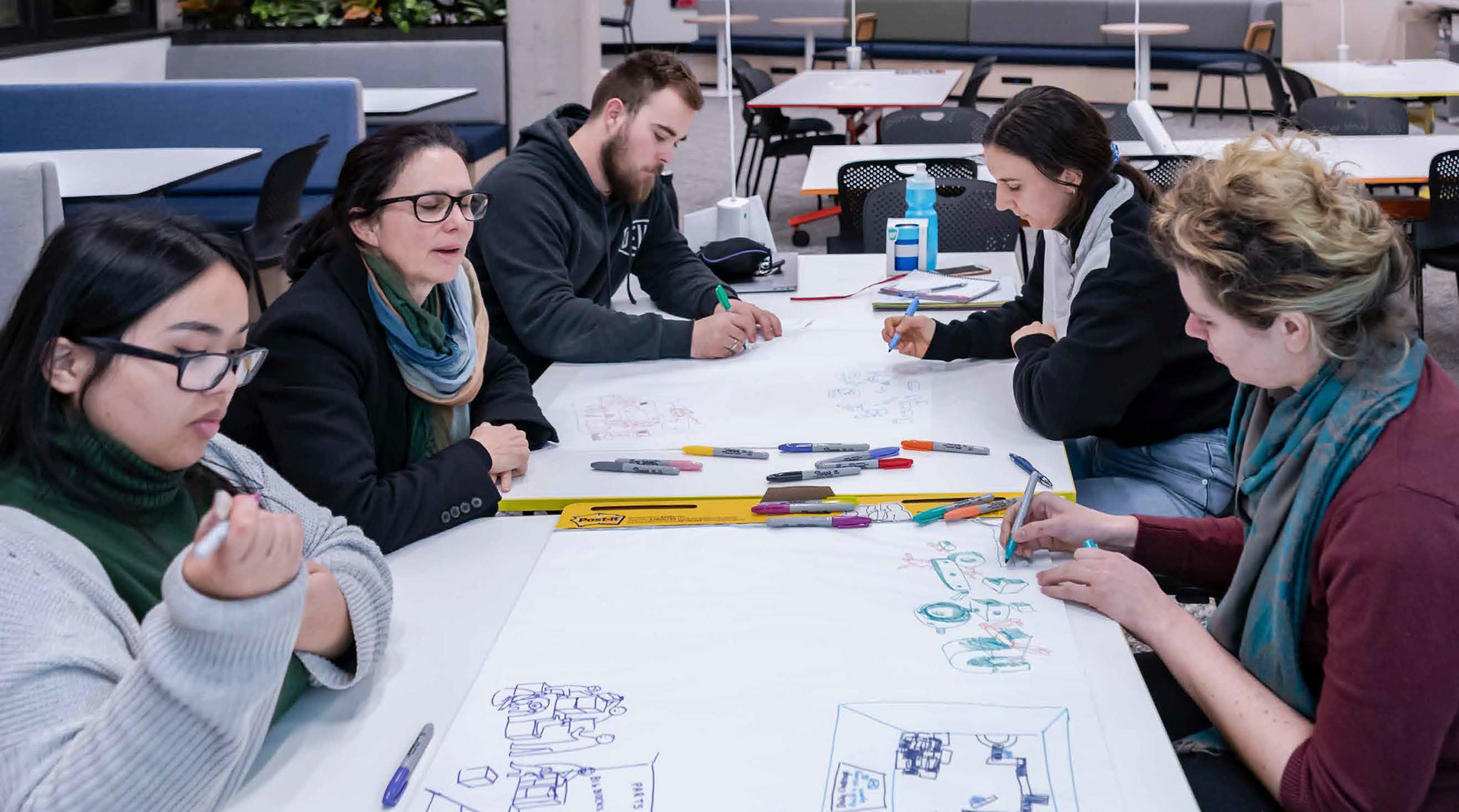
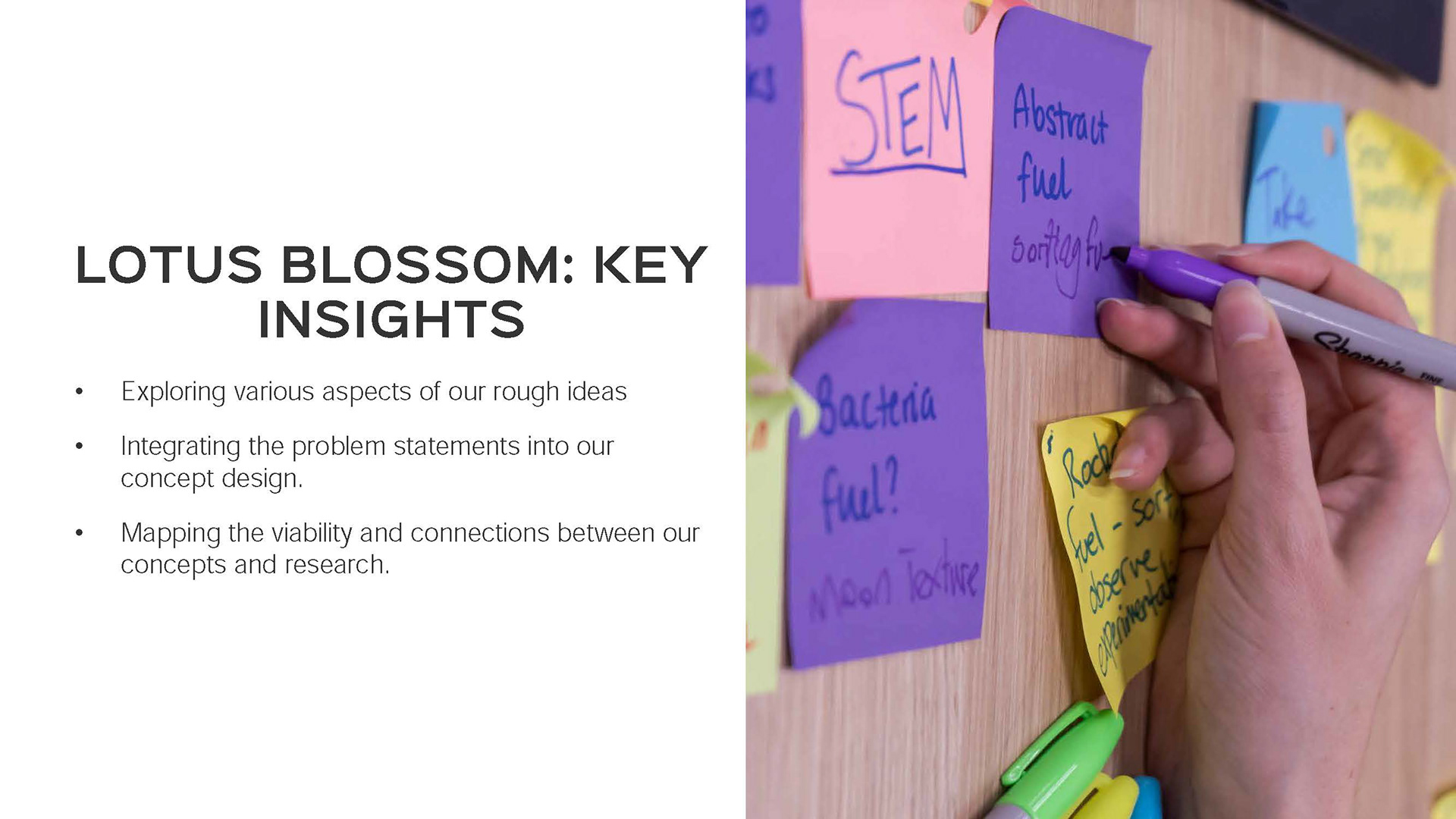
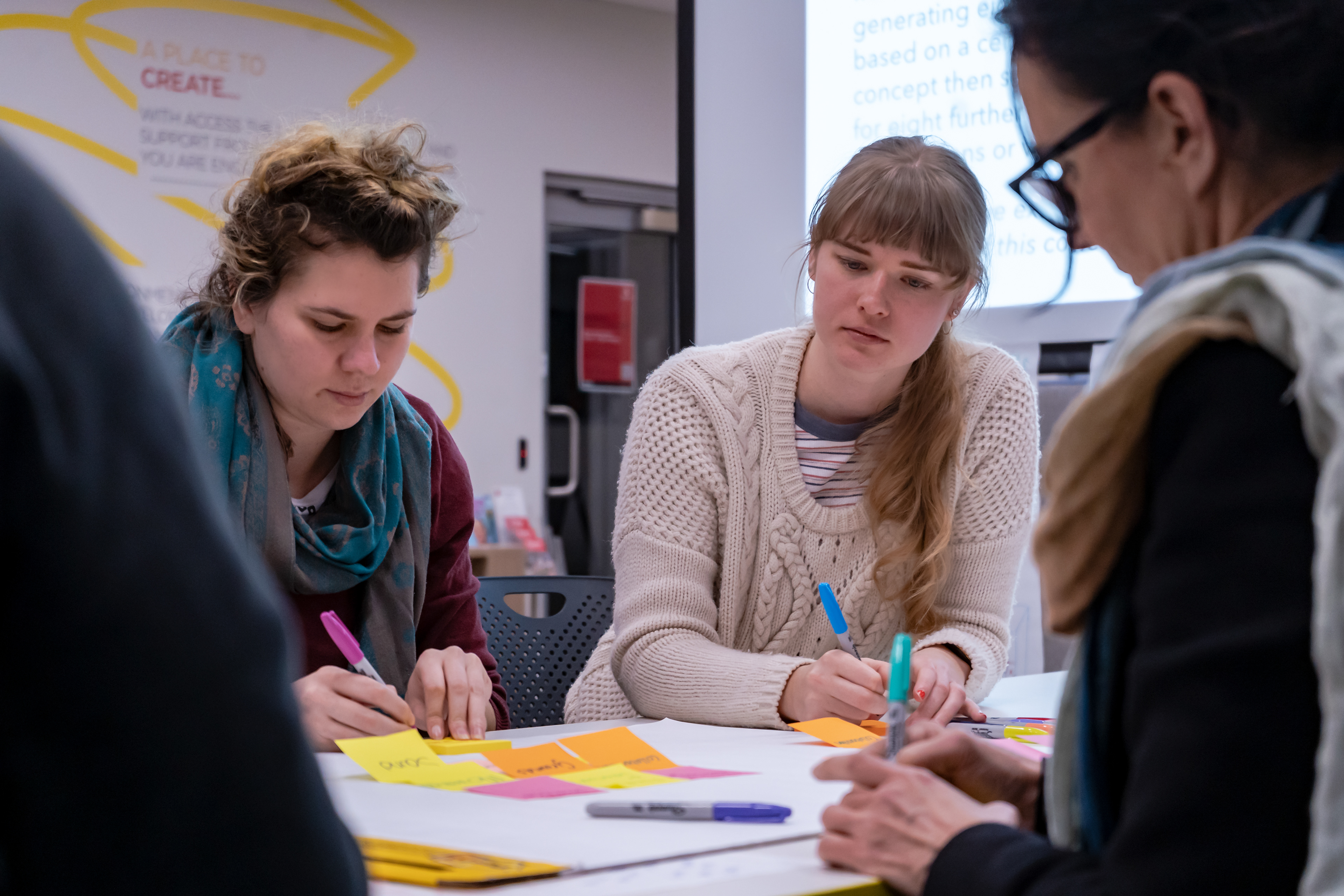
The second phase moved into ideation, design and testing. I joined a core six-person design team with Sharmaine Adaza, Michelle Hyland, Philip Kalinowski, Dominique Pryor, Teayl Thorn, Julia Toczyski. Together, we developed the research into potential exhibit concepts and tested low-fidelity prototypes with children and parents.
My Contribution
My contribution covered problem definition, research, visualisation, co-design, concept development and prototype testing.
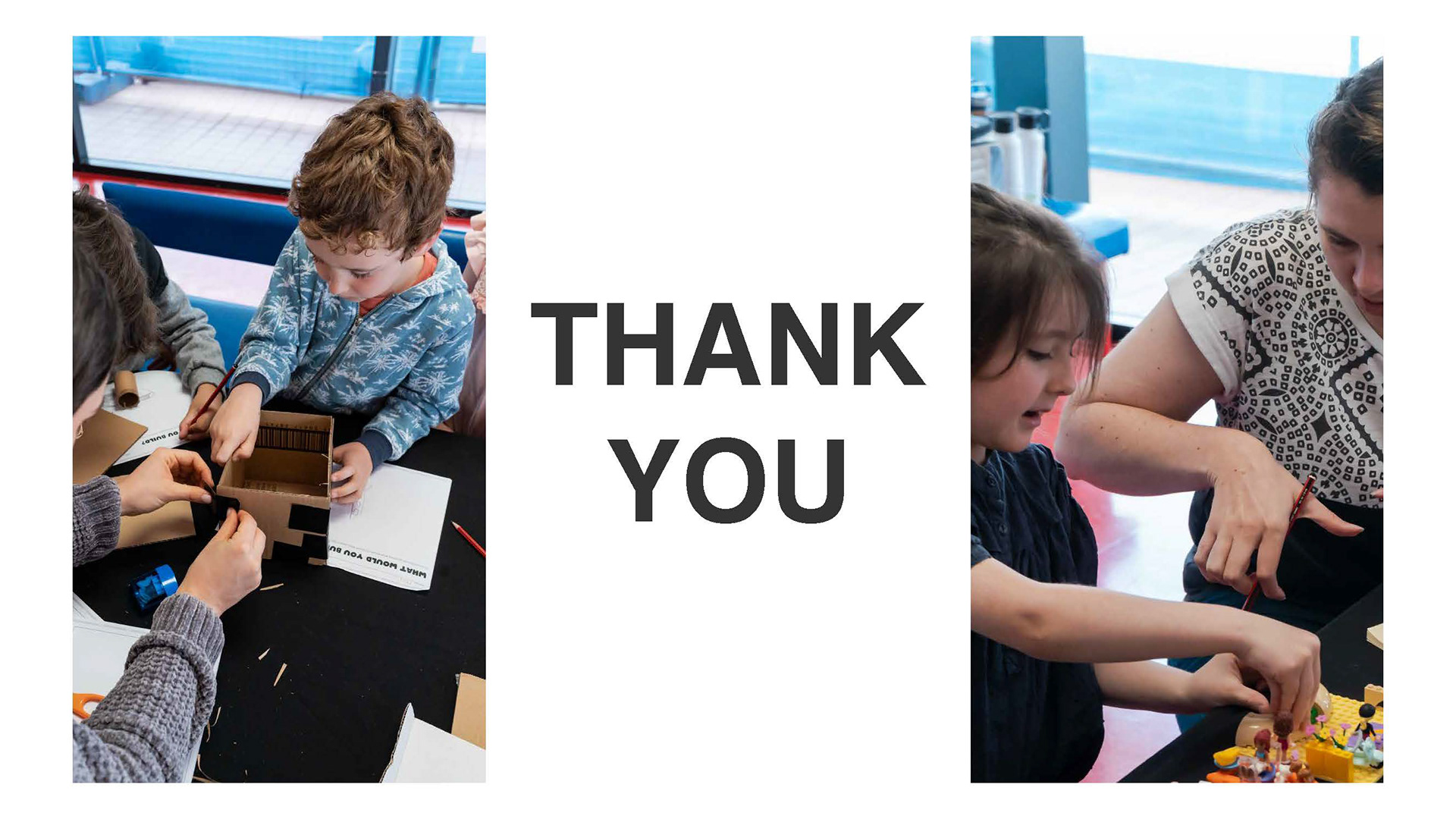
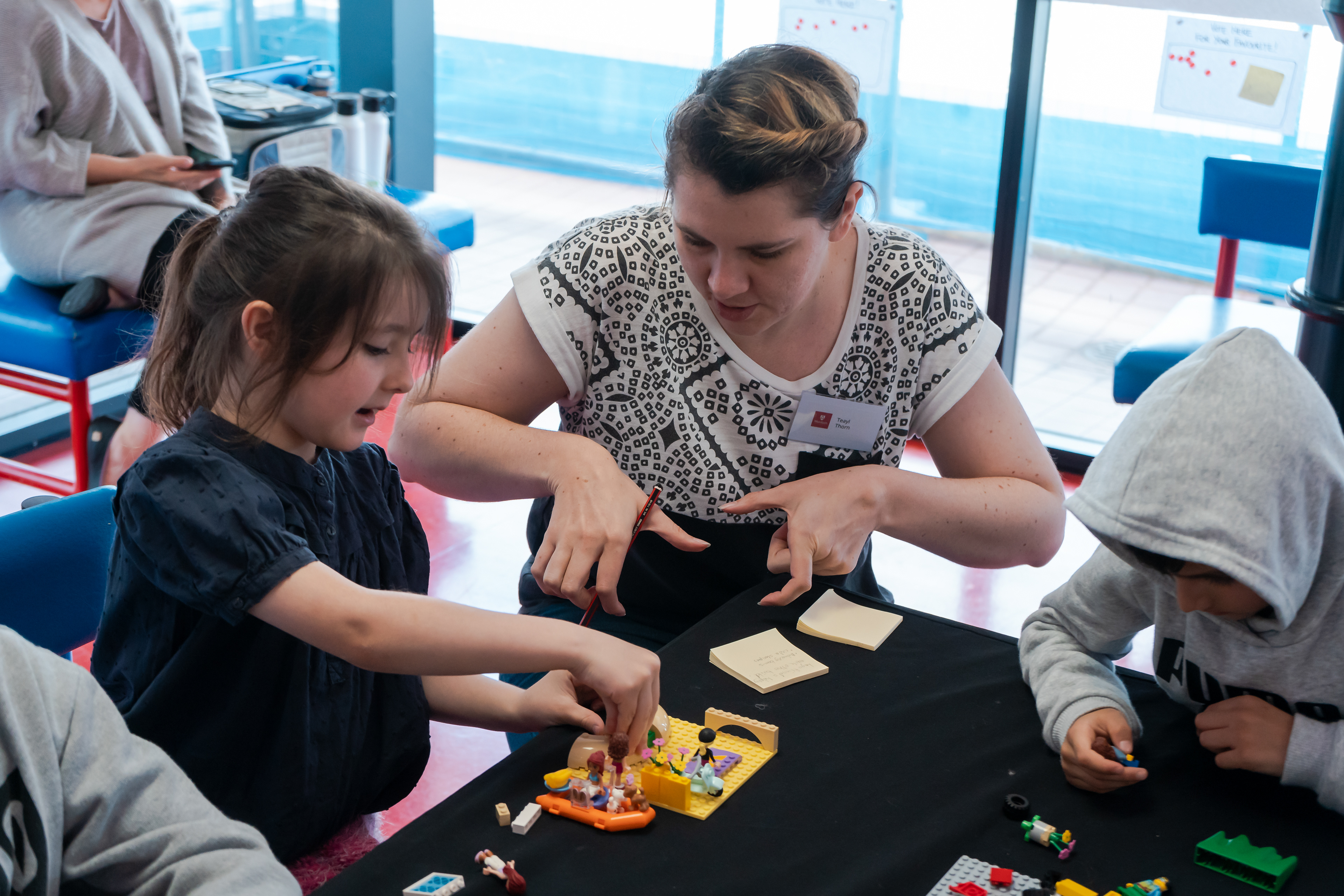
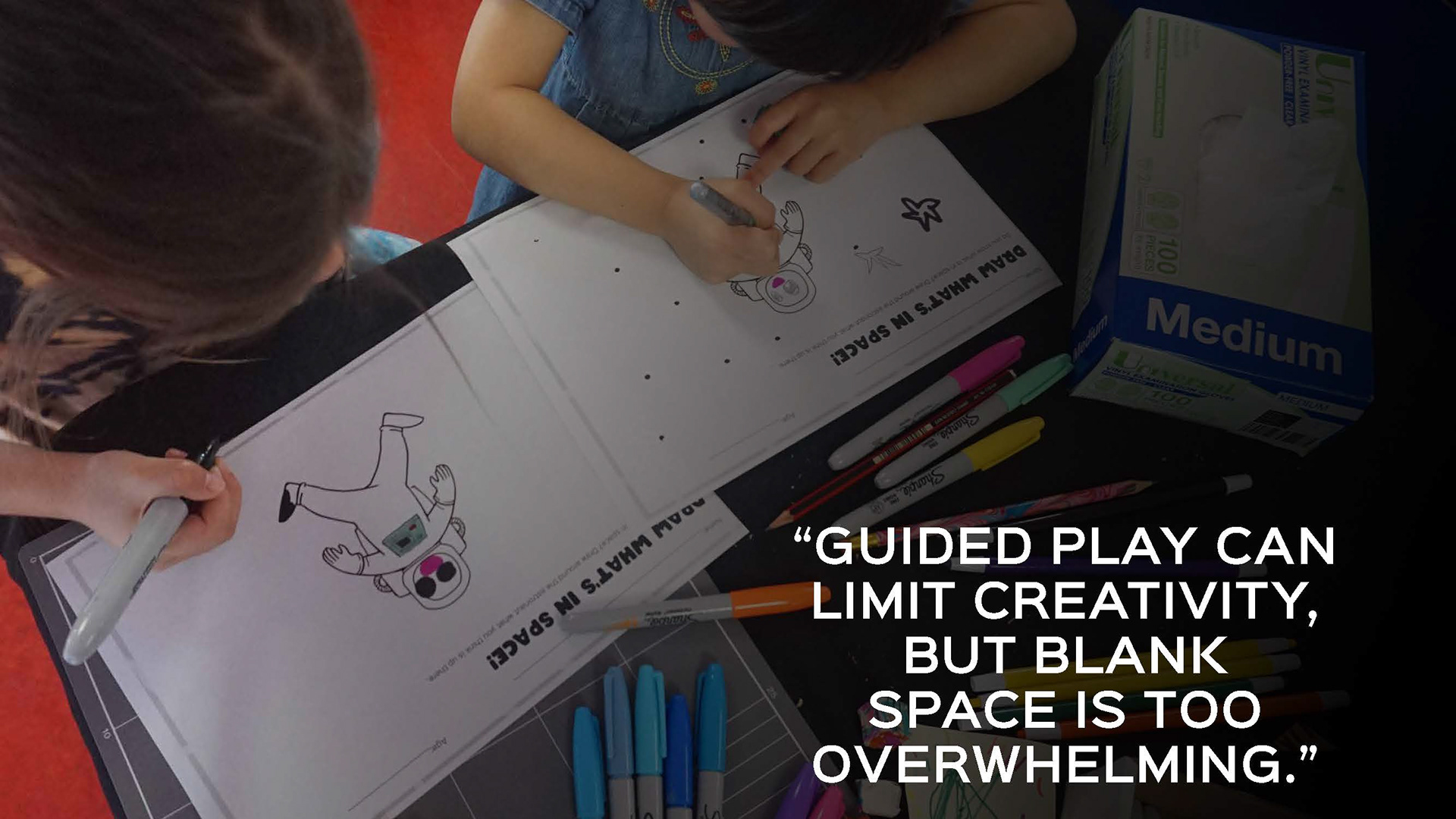
I designed and facilitated activities that invited children to imagine their own worlds, playgrounds and learning environments. These included drawing exercises using paper, pencils, crayons and textured materials, followed by three-dimensional building activities using LEGO and Duplo.
Children were invited to:
- Draw an imaginary world
- Draw an imaginary place to play
- Draw an imaginary school
- Build an imaginary playground or learning environment
- Explain what they created and what someone could do there
I documented the activities through observation notes, drawings, photographs and short video explanations. These sessions helped us understand how children interpreted creative prompts, expressed ideas and responded to adult involvement.
I then contributed to translating the findings into exhibit concepts, low-fidelity prototypes and proposals presented to Scitech.
What we discovered
Children responded better to open and accessible language
Some children associated the word “fantasy” with established films, television programs or fictional worlds. Reframing the activity around an “imaginary” or “dream” place encouraged them to develop more original ideas.
This demonstrated how a seemingly small change in language could significantly affect participation and creative confidence.
Children expressed ideas in different ways
Some children began by drawing, while others preferred to list words and organise their thoughts before creating an image. Younger children often explored materials freely rather than following the activity categories exactly.
One six-year-old summarised this perfectly when asked whether his model belonged in an imaginary school, playground or world:
“No, I built it for fun!” ~ Six-year-old
This reminded us that exploration does not always need to fit an adult-defined category to be meaningful.
Adult prompts could support or unintentionally restrict imagination
Children frequently looked to adults for reassurance or asked whether they should include particular ideas. Parents sometimes offered suggestions that unintentionally influenced what their children produced.
Our findings suggested that parents needed prompts that encouraged conversation without supplying the answers. Questions such as “What can you hear in this place?” or “What can you see?” could help children develop their ideas while retaining ownership of them.
Children communicated more while creating
Children often shared detailed stories while drawing or building but forgot some of those details when later asked to summarise their work. This indicated that observation and conversation during play could provide richer insights than relying only on a formal explanation afterwards.
The environment needed to support shared discovery
The project identified an opportunity to create exhibits that encouraged children and caregivers to experiment together. Clearer prompts, collaborative challenges and open-ended activities could reduce the pressure on Scitech’s floor team while helping adults participate more confidently.
Co-design and prototyping
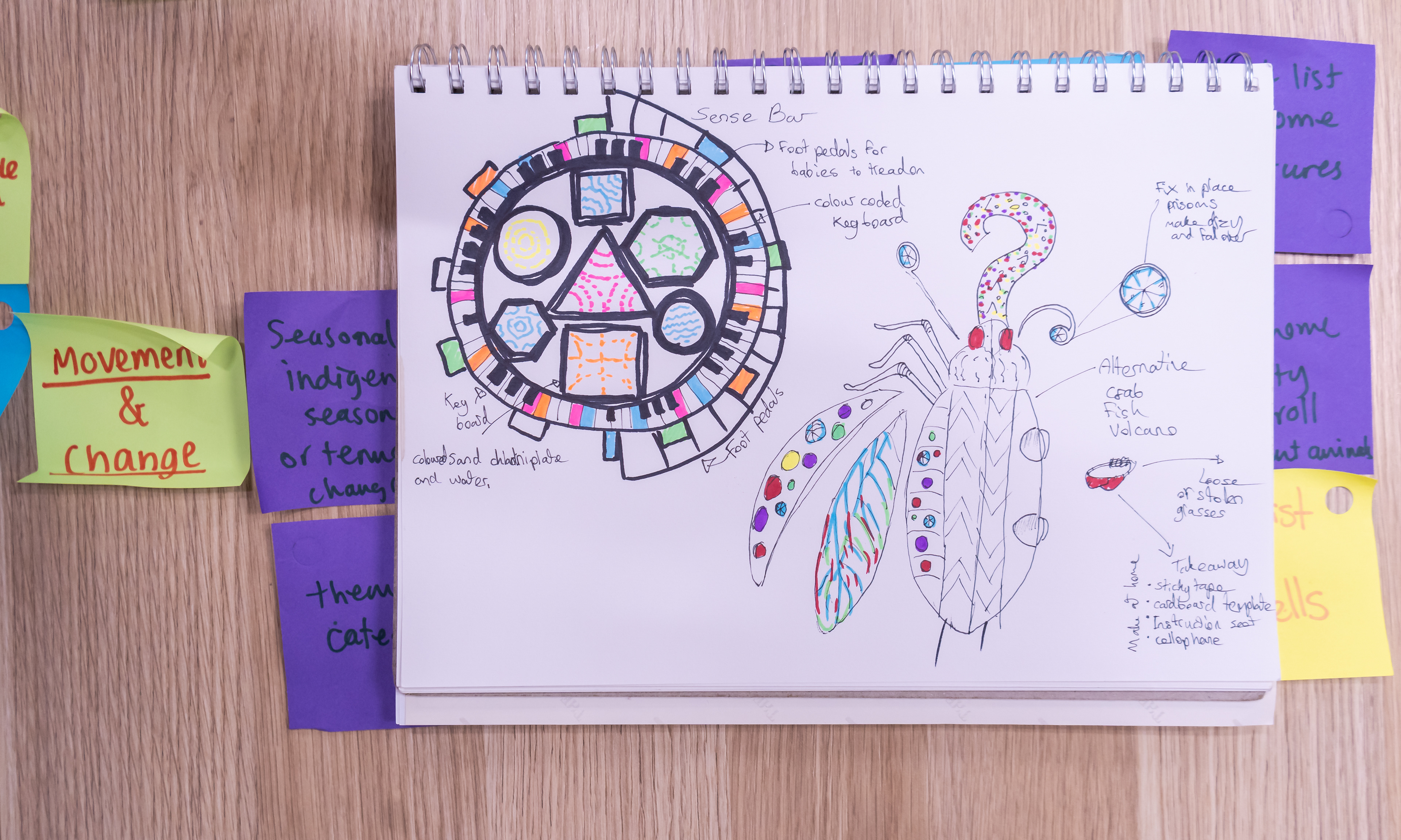
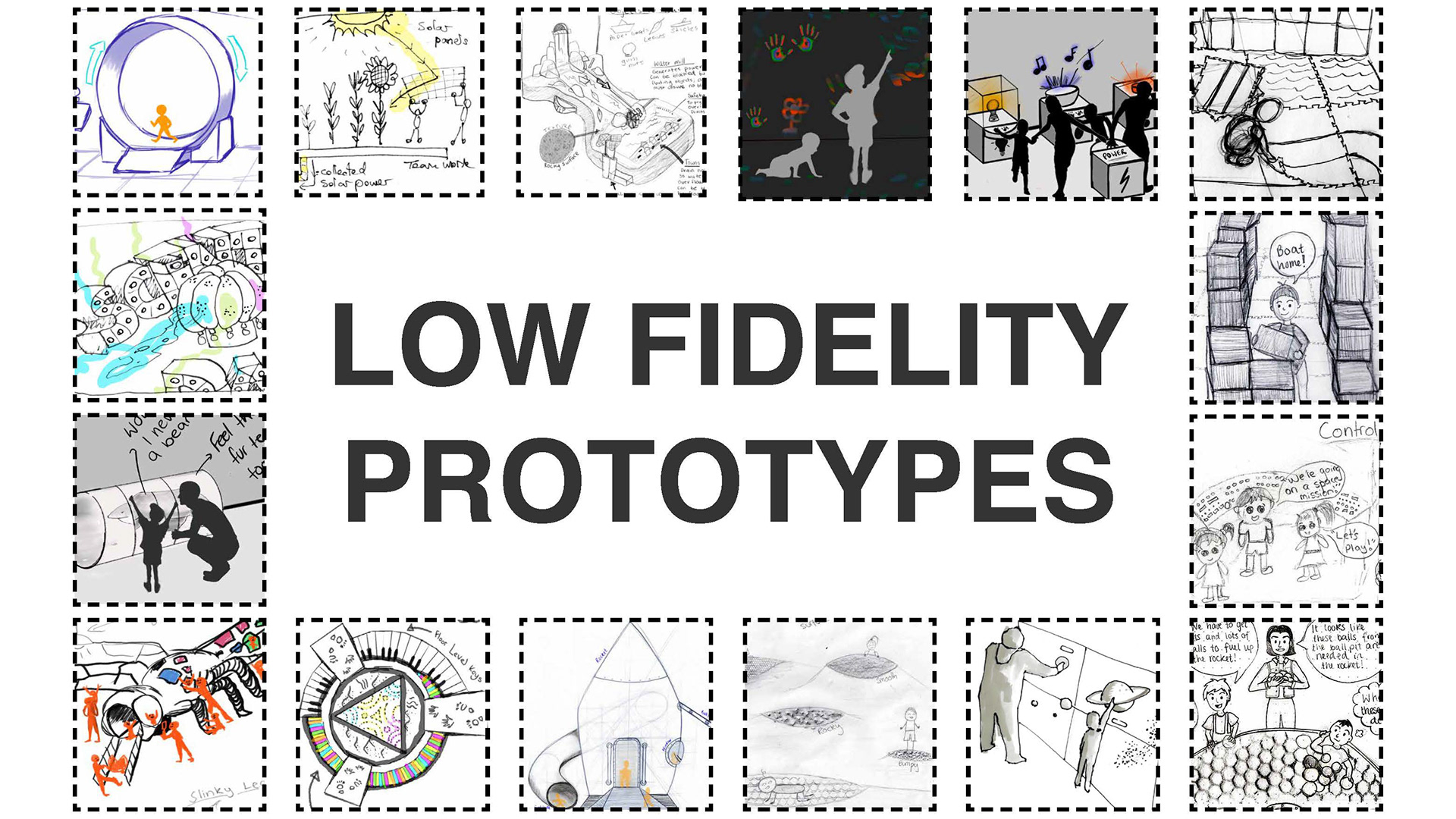
The team developed a wide range of early concepts across energy, light, nature, sensory learning, movement, water and space.
These included:
- Building Grounds
- Energy City
- Lightbulb Energy Transfer
- Hydroelectric Generator
- Kinetic Hamster Wheel
- Bio-electrical Heat Patterns
- Solar-powered Plants
- Sensory Park
- Light Cave
- Sand Vibrations
- Interchangeable Animals
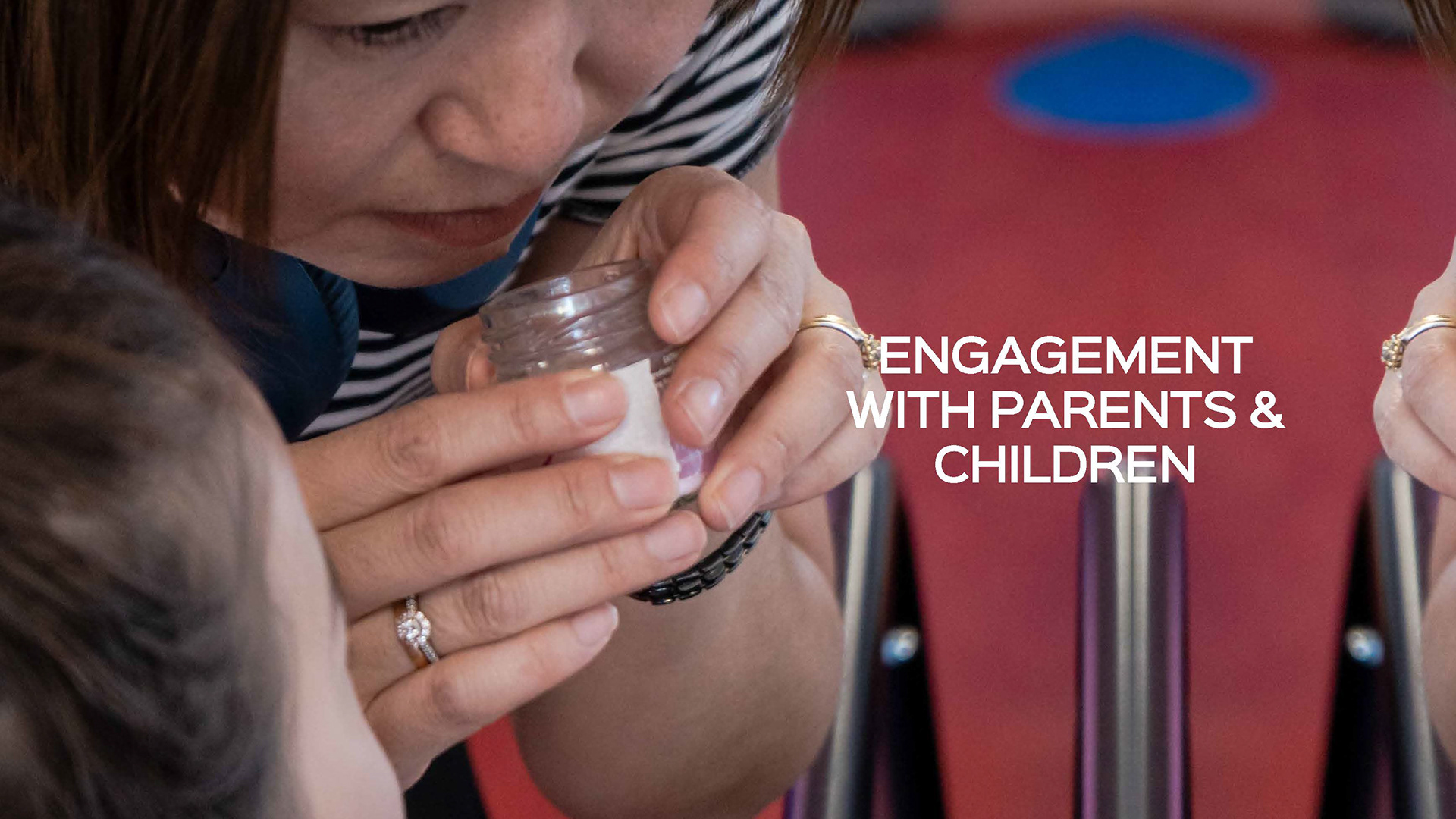
- Scent Bar
- Moon Room
- Spaceship
- Ball Pit
- Crater Patch
- Interactive Starscape
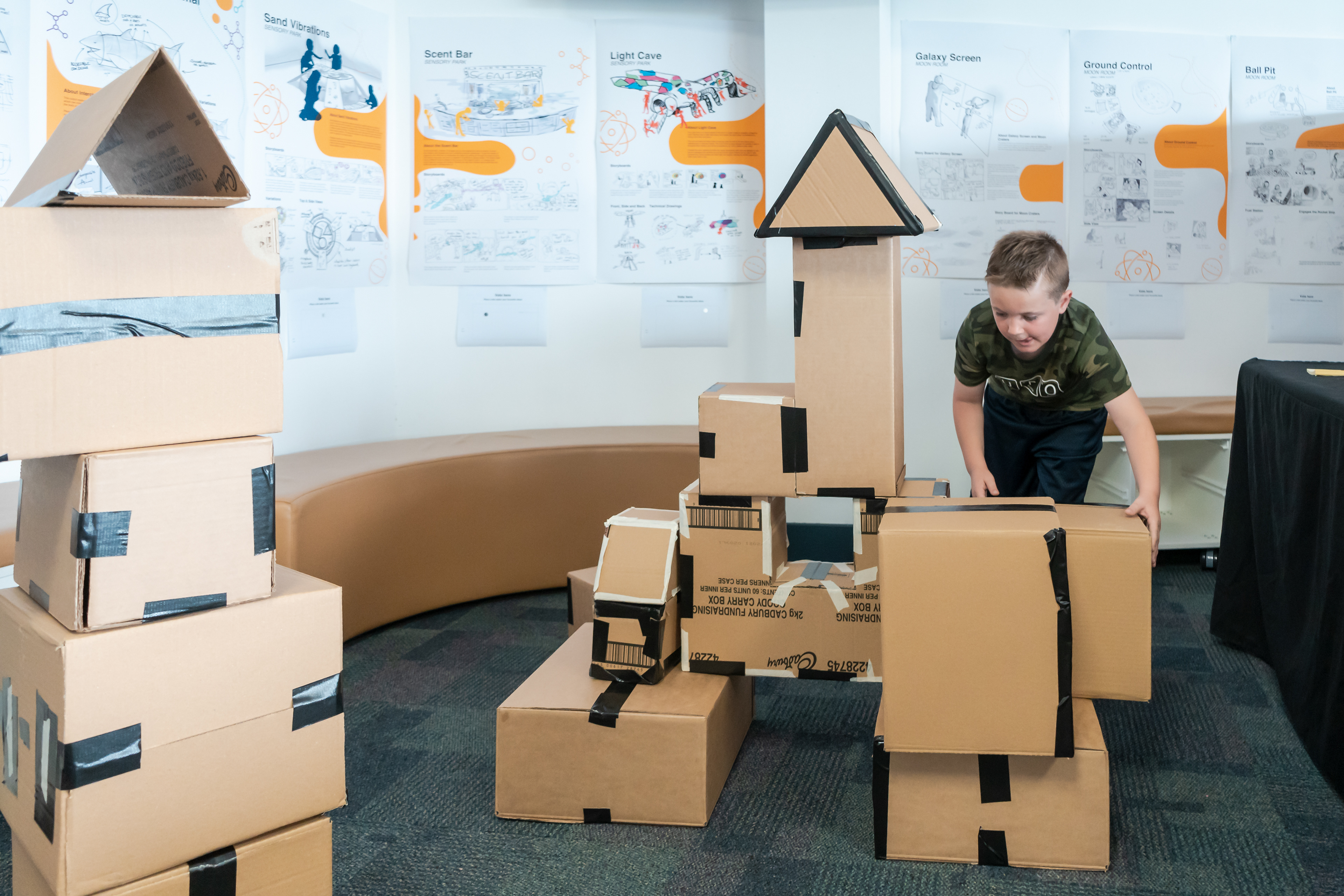
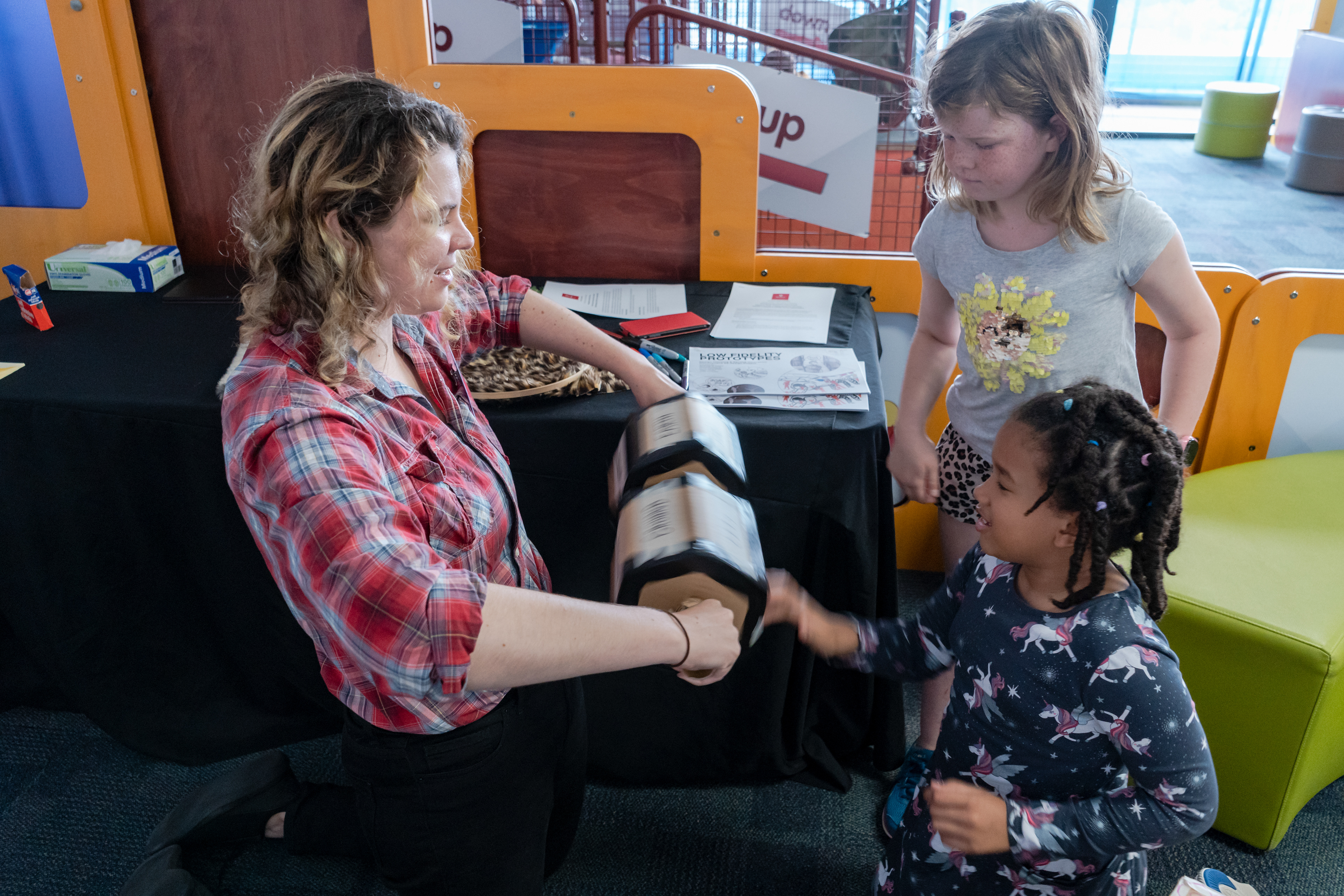
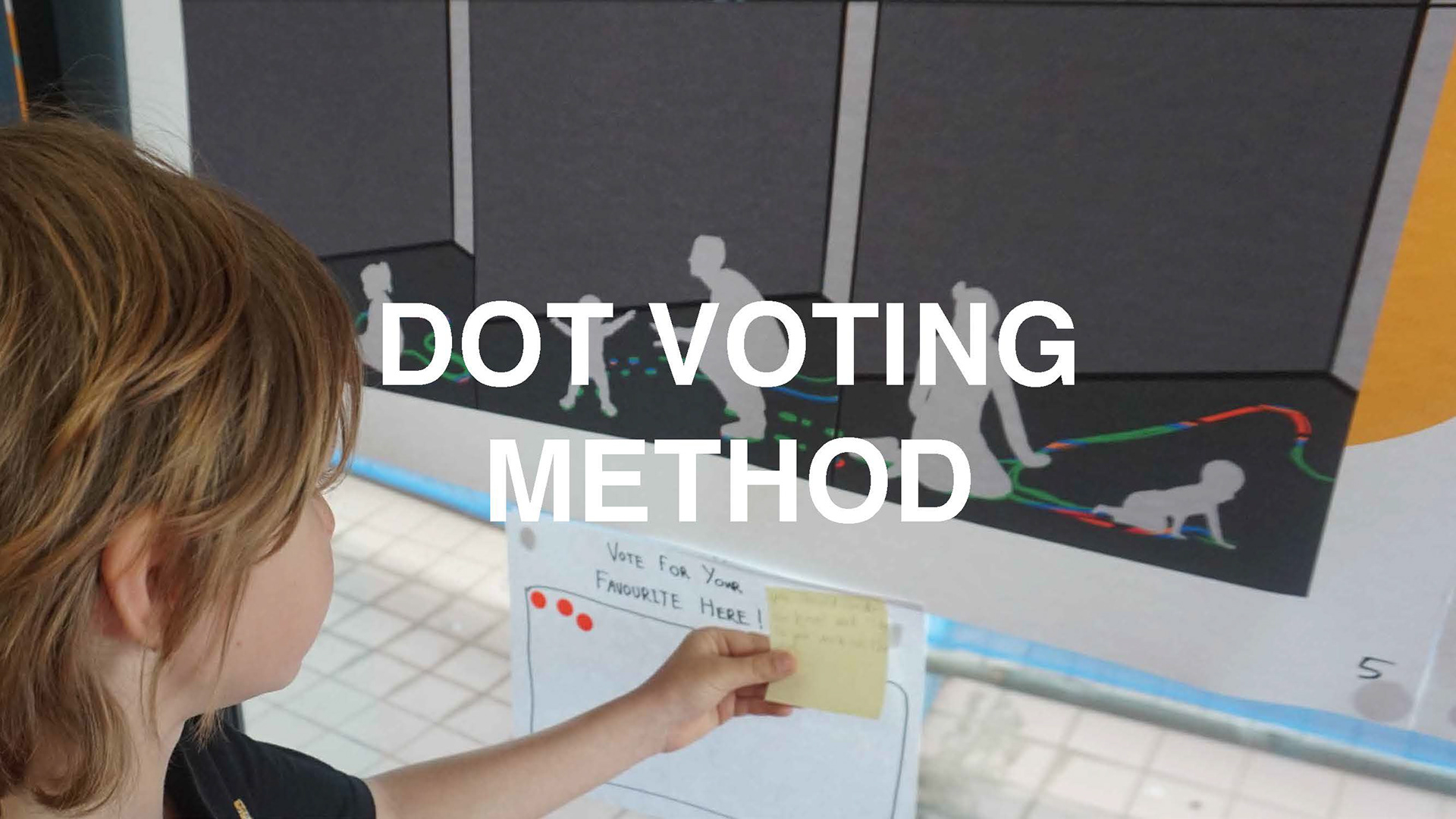
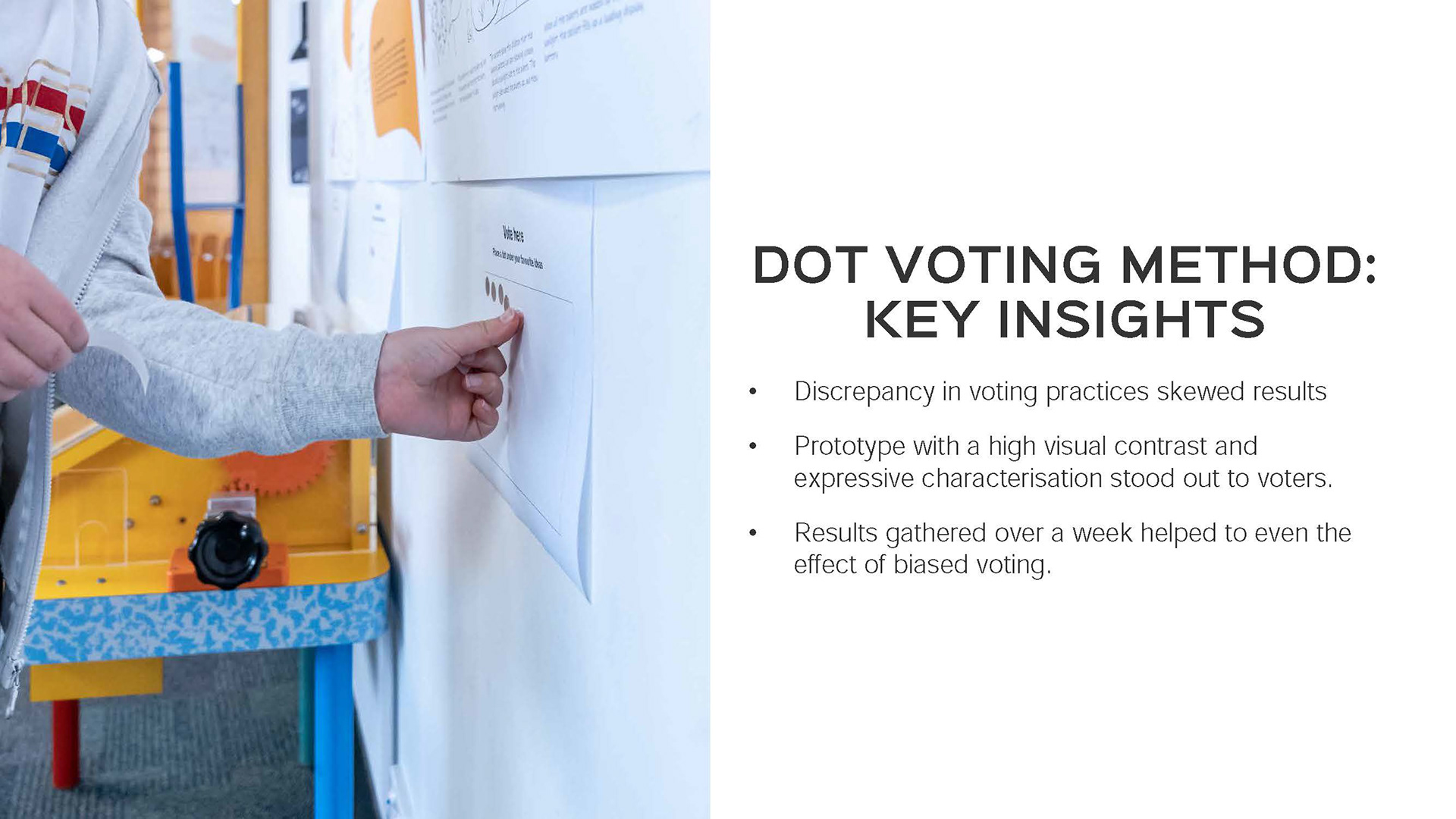
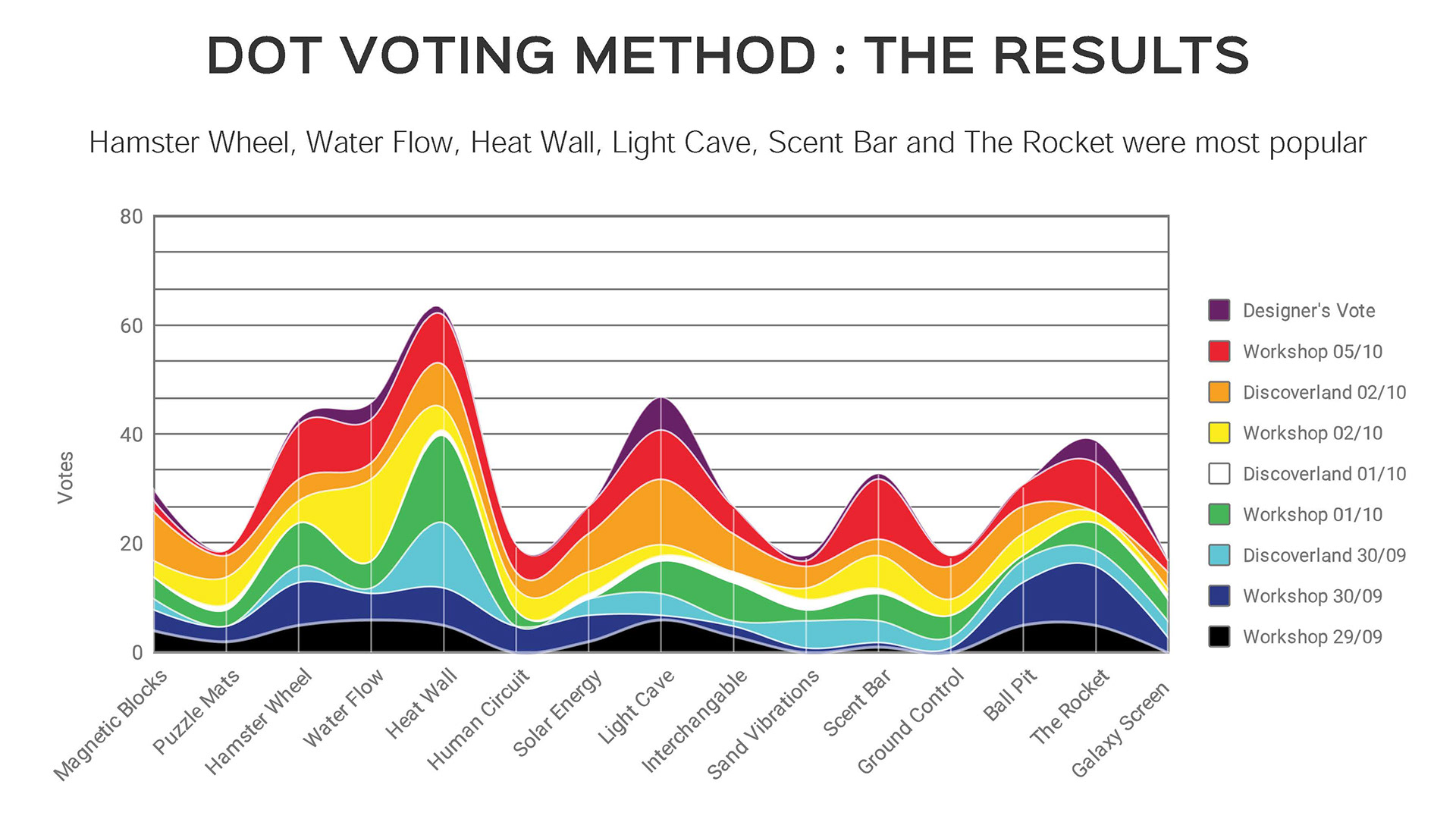
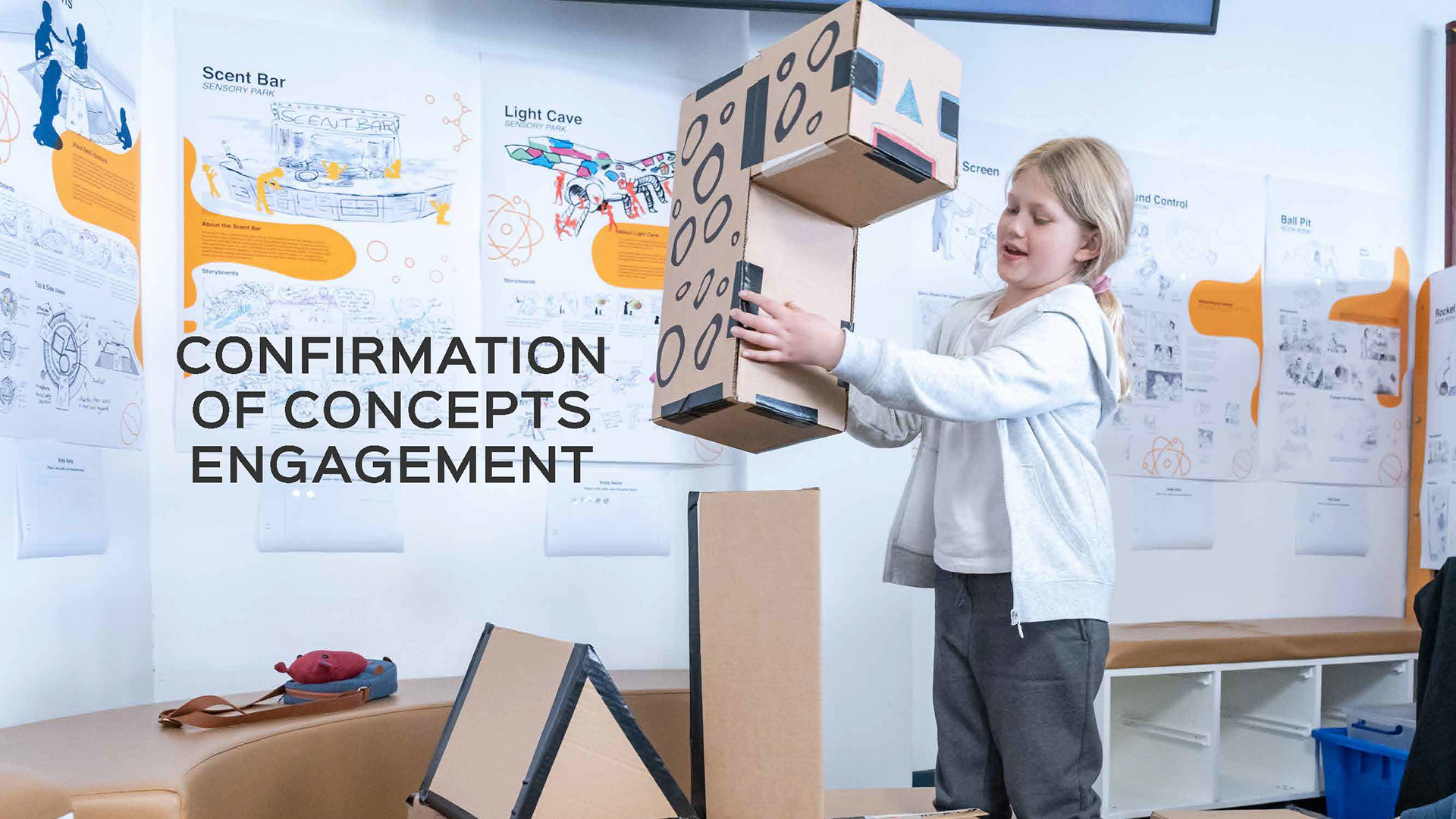
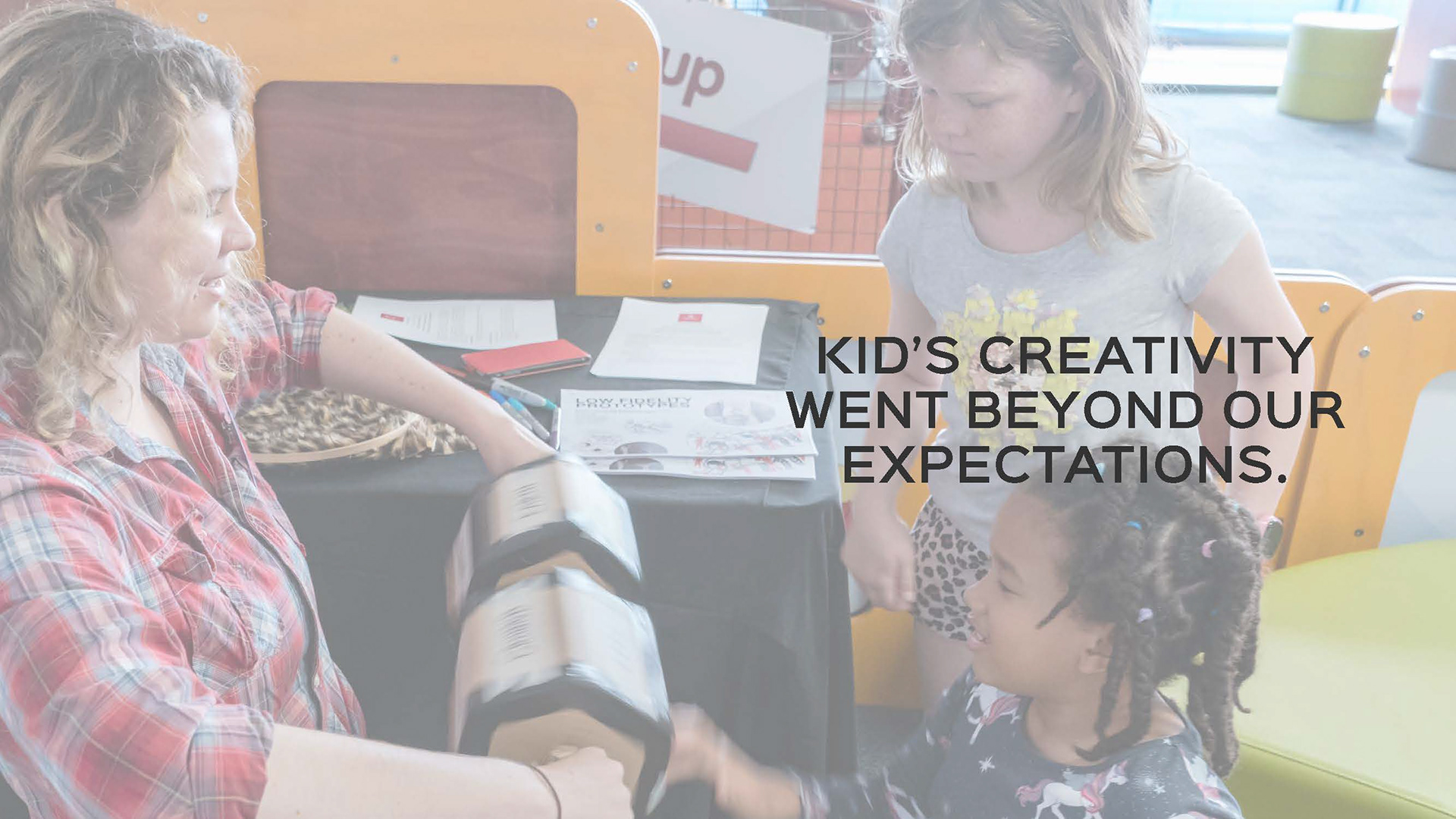
We presented concept sketches to children and invited them to vote for the activities they found most interesting. Using cardboard, LEGO and craft materials, children and parents then helped test and build upon the ideas.
This allowed us to see which concepts captured their attention, encouraged experimentation and inspired imaginative play.
Developed exhibit concepts
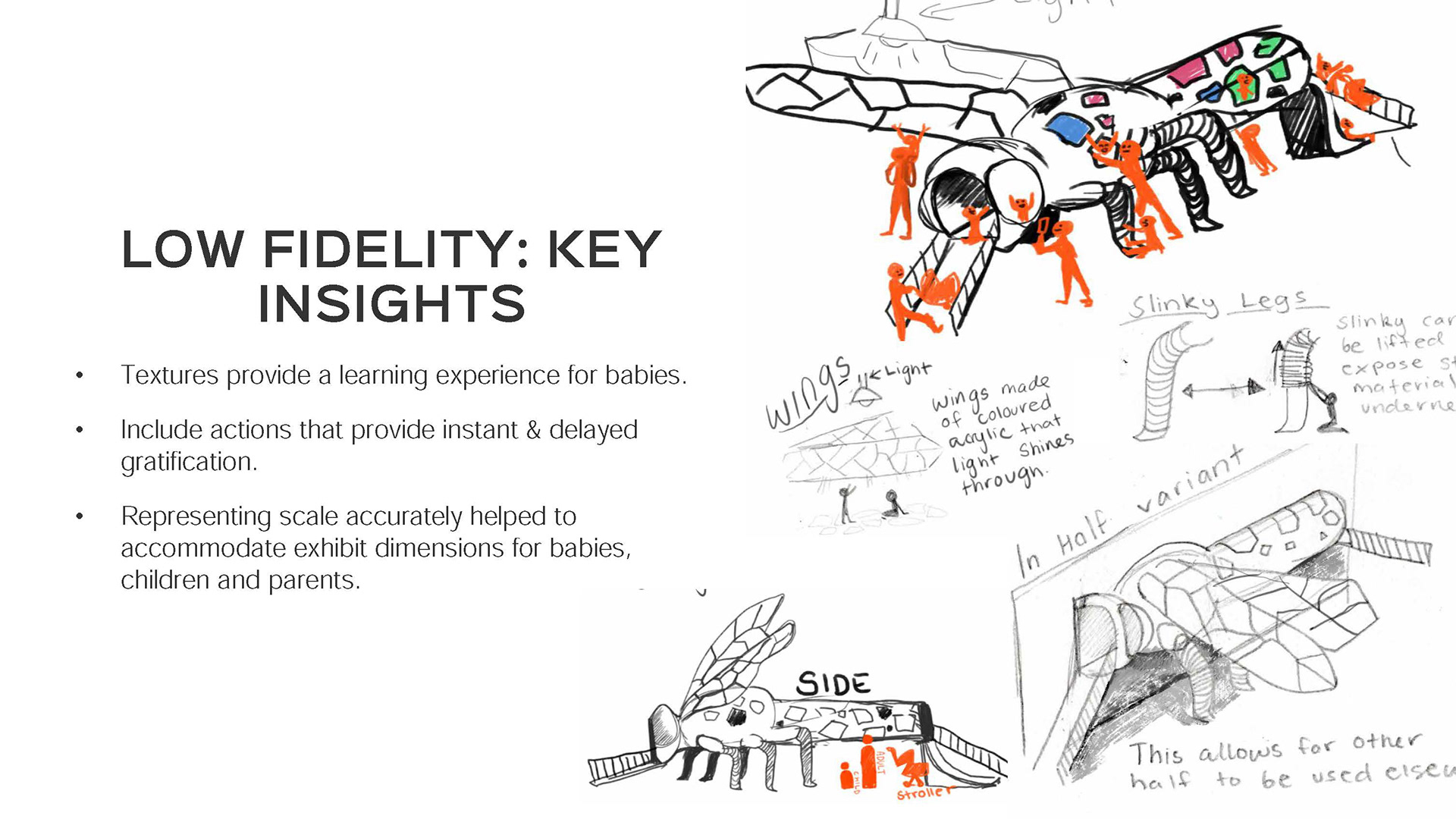
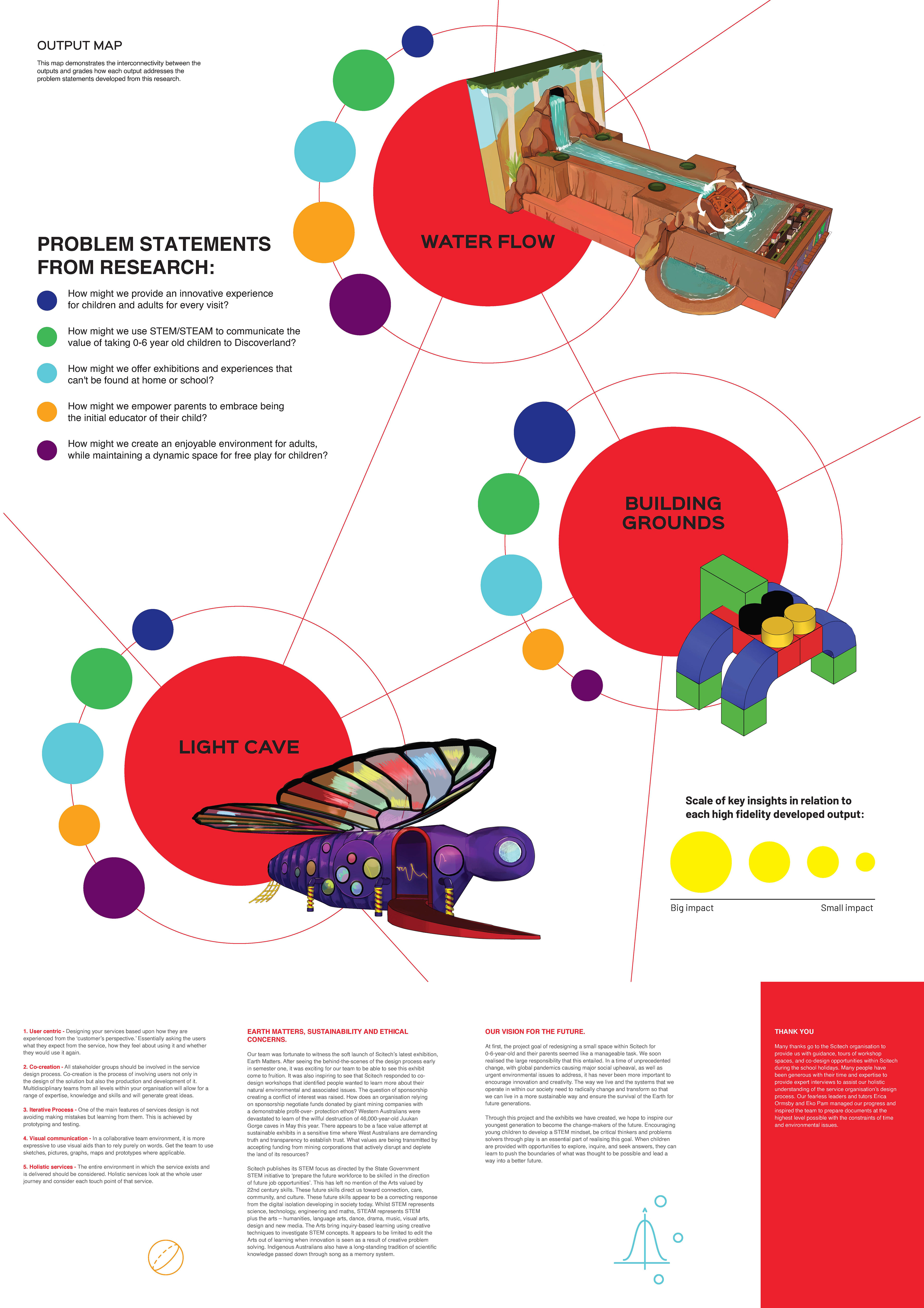
Light Cave
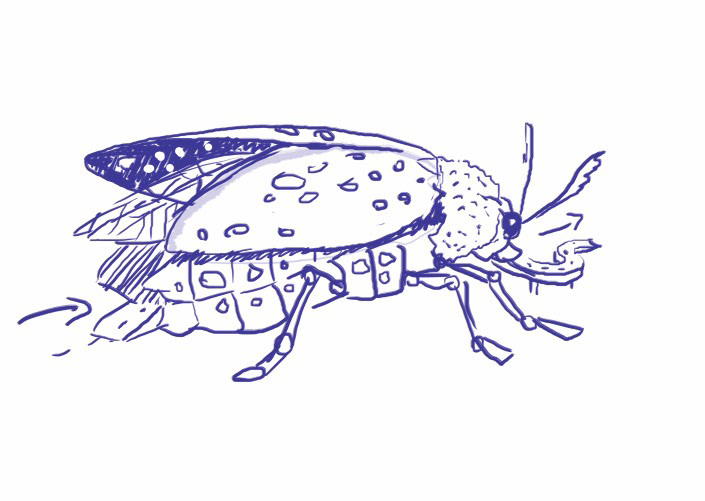
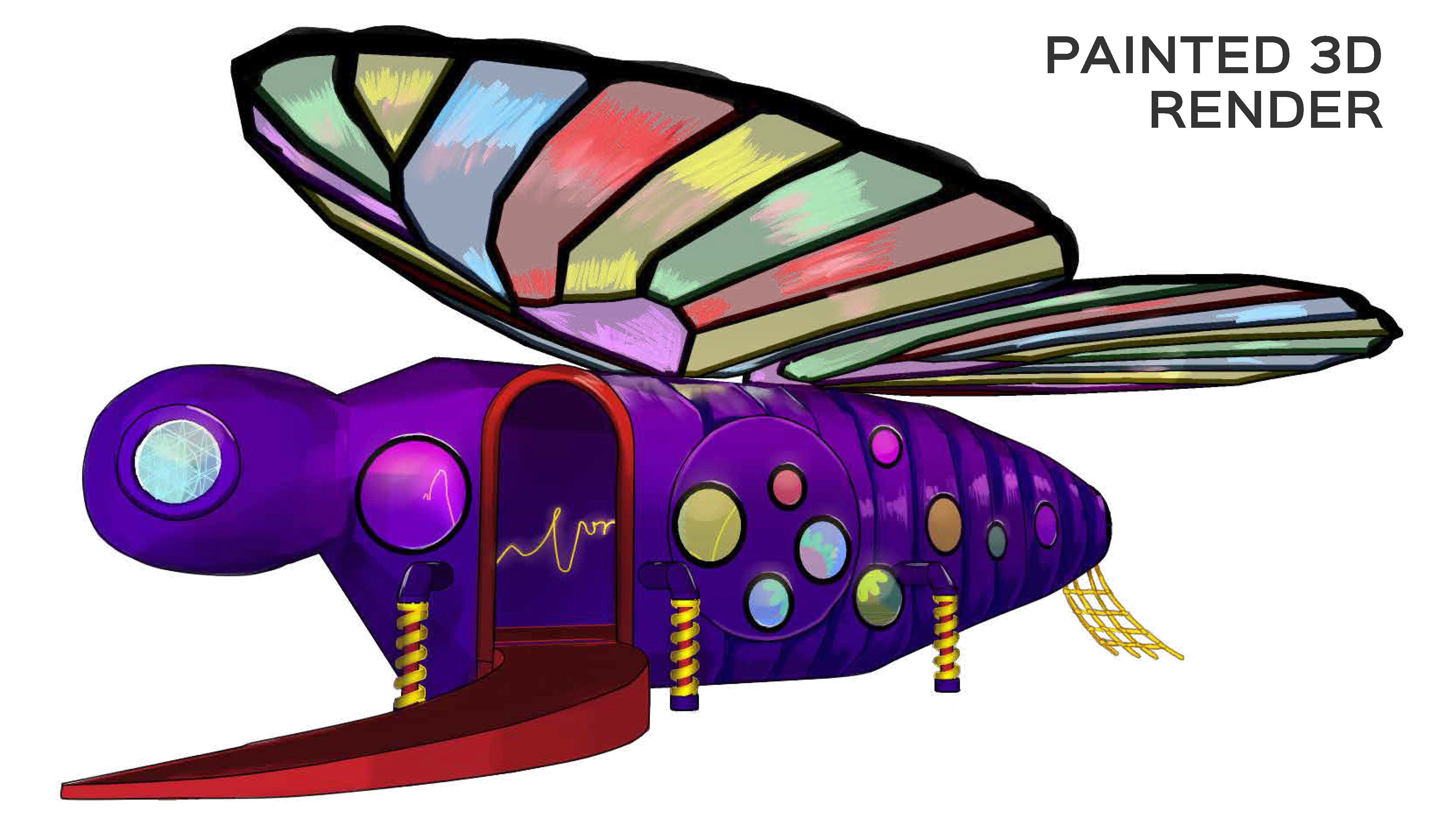
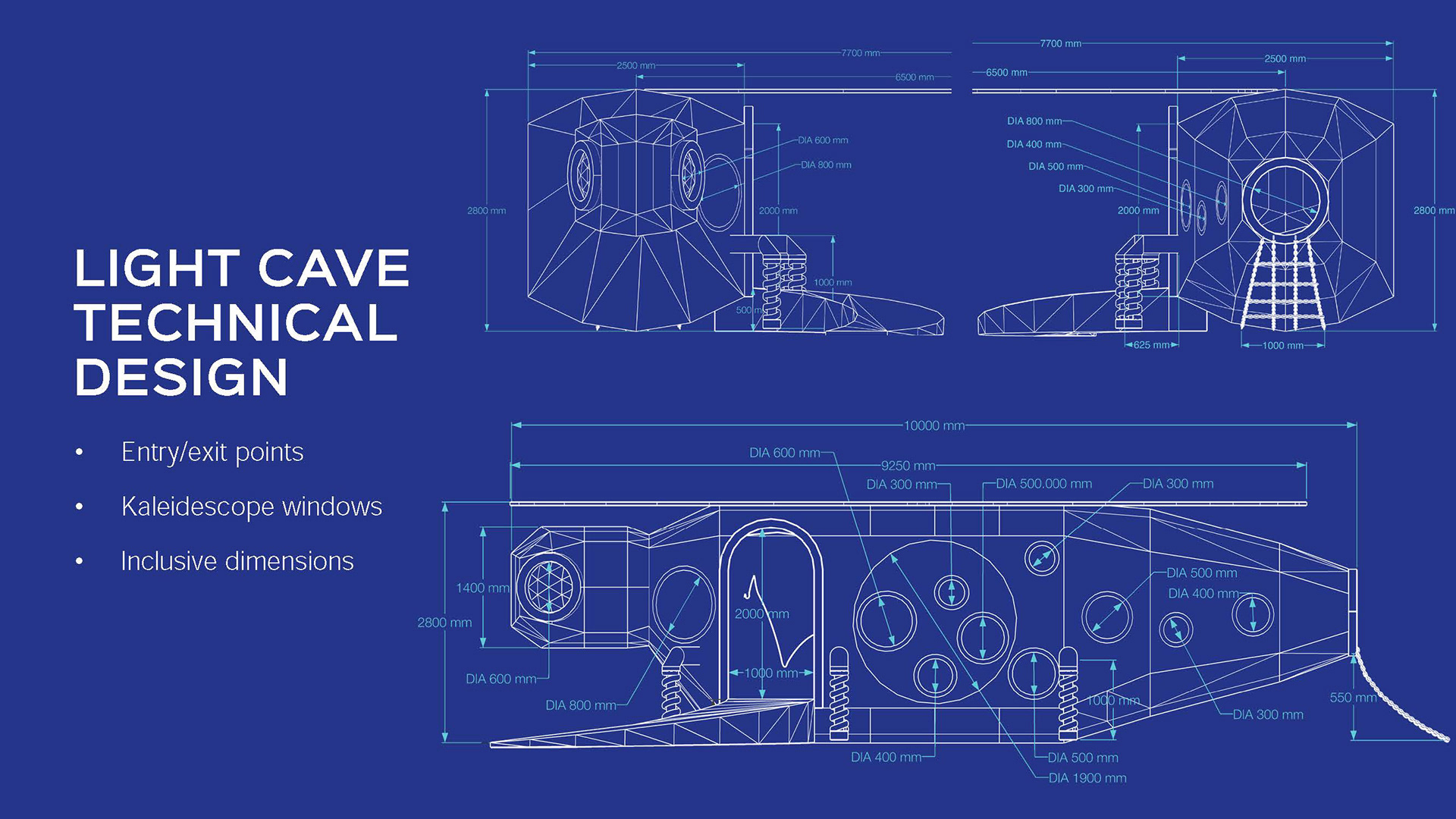
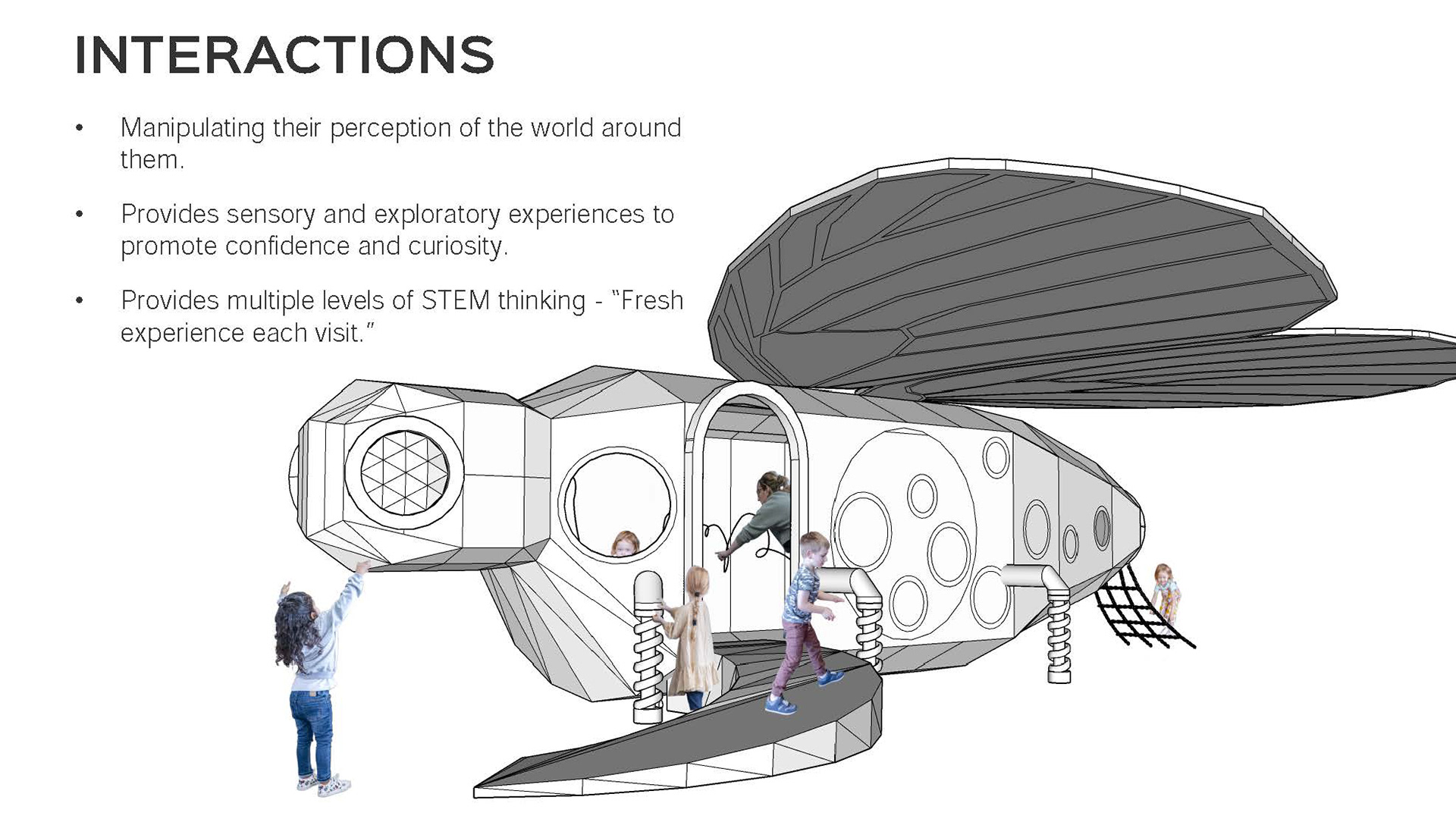
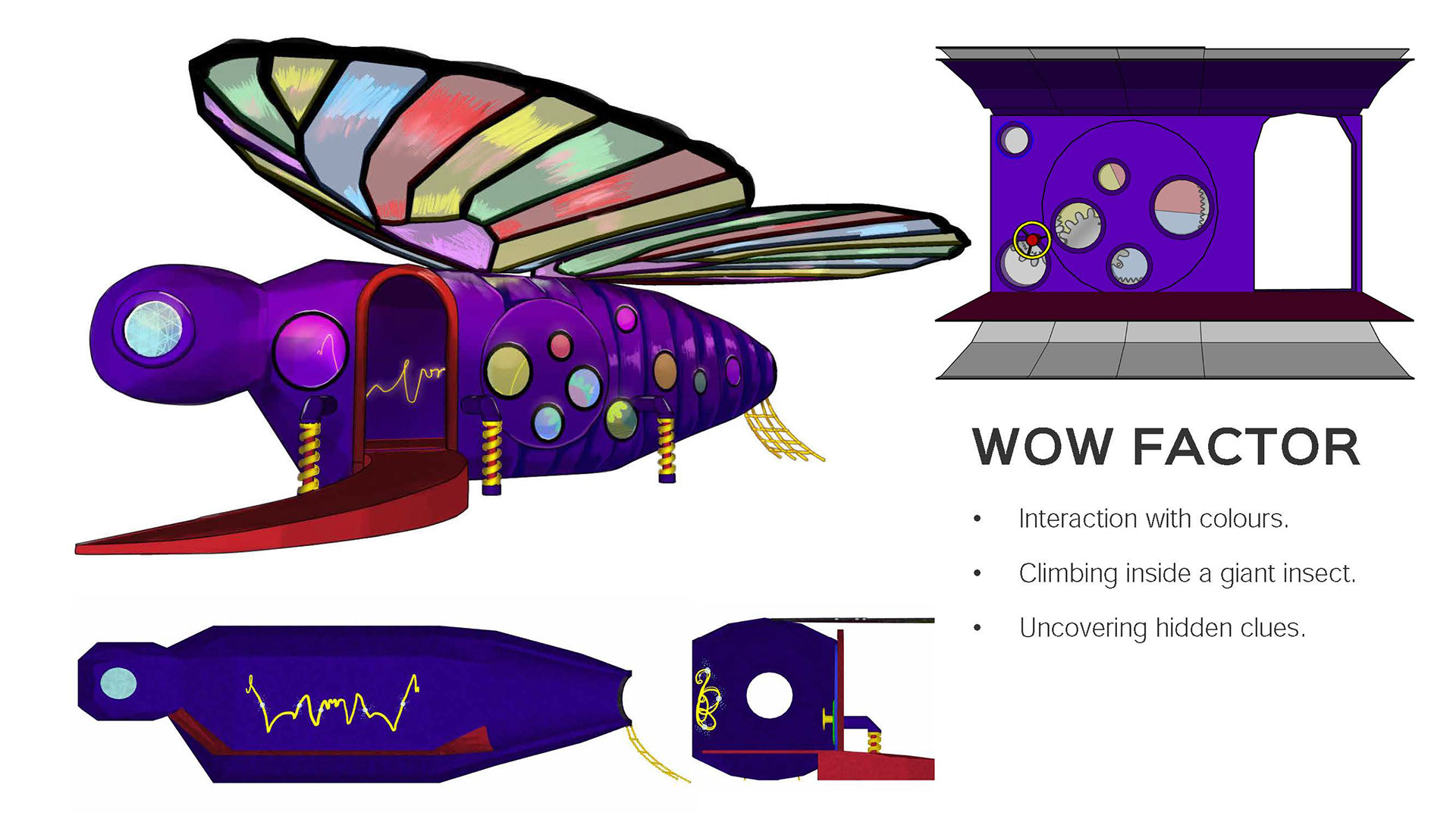
Light Cave was imagined as a large jeweled beetle, but was developed into a butterfly-shaped installation instead, containing activities that allowed children to bend, mix and transform light.
The concept included coloured gels, kaleidoscopes, fractals and prisms. Accessible activity areas were incorporated so children using wheelchairs and parents with prams could also participate in the experience.
Building Grounds
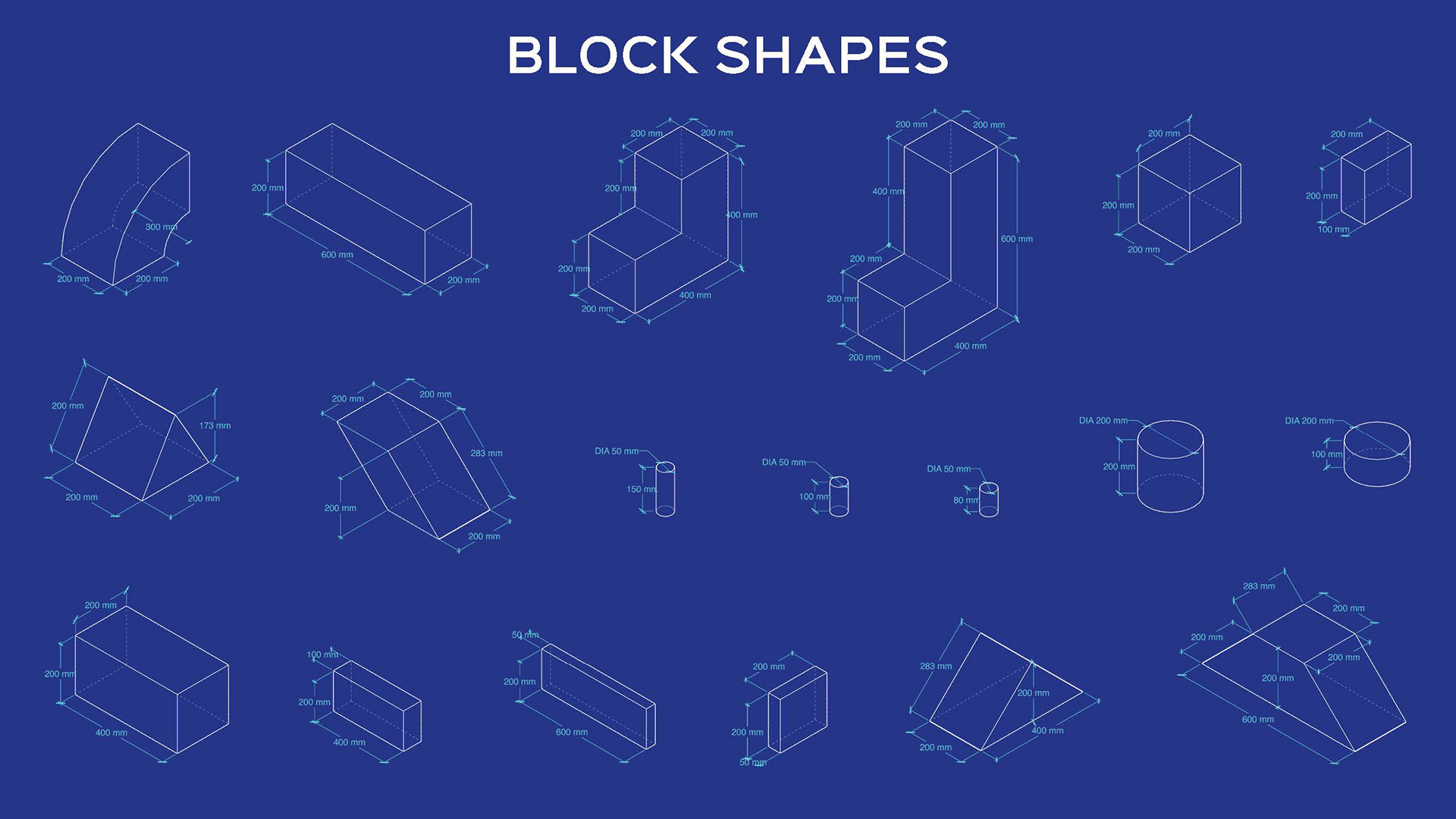
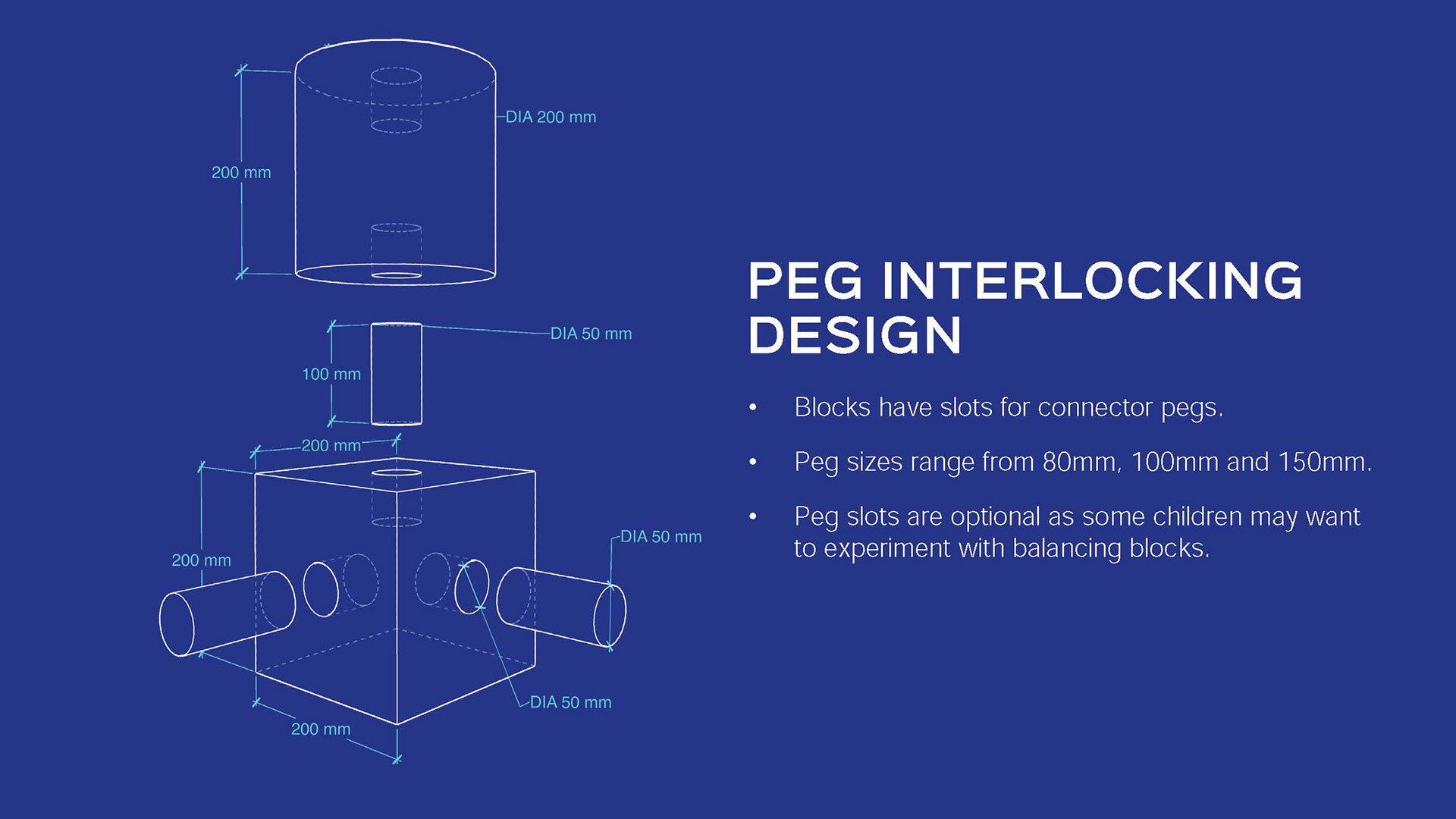
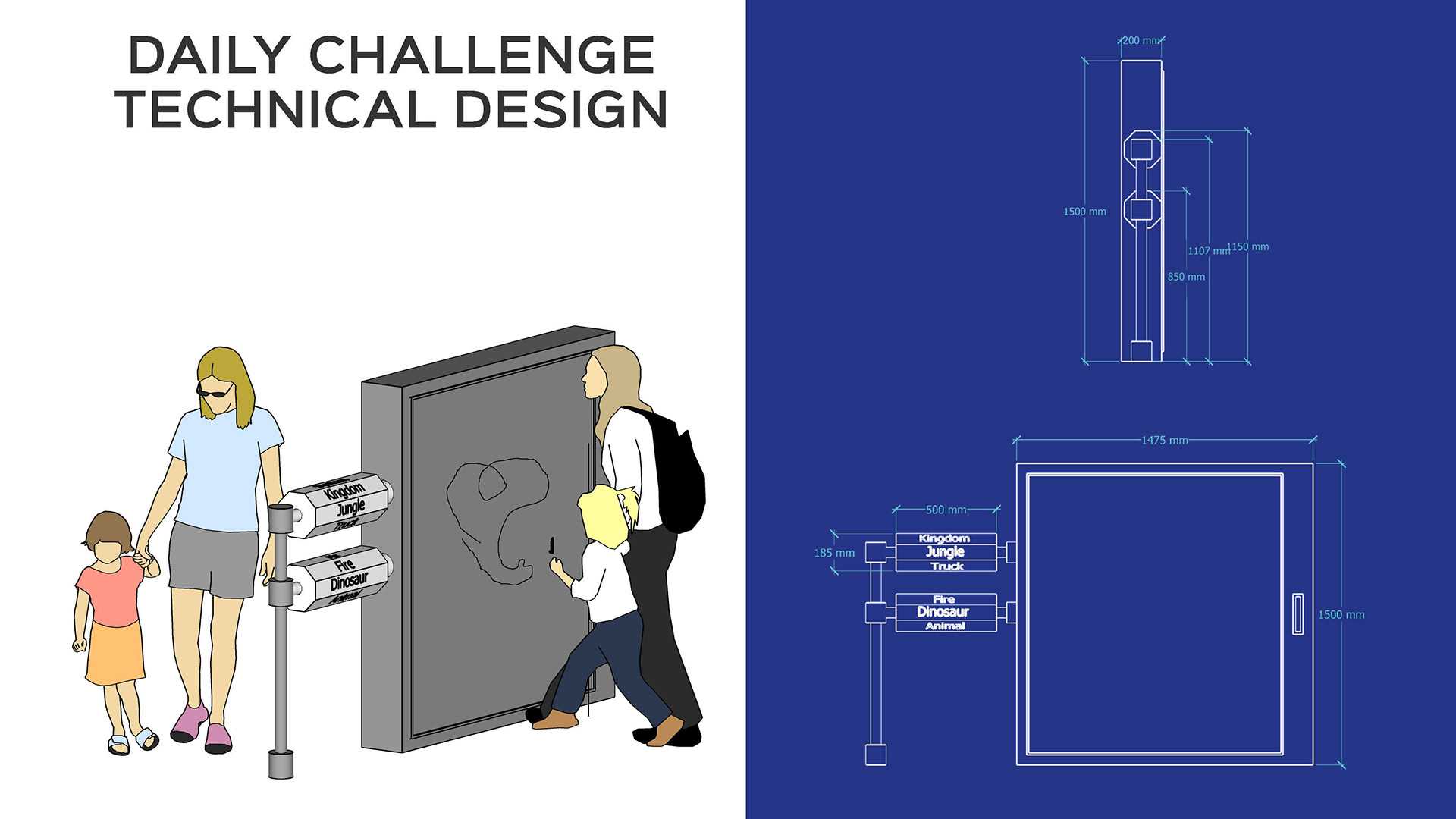
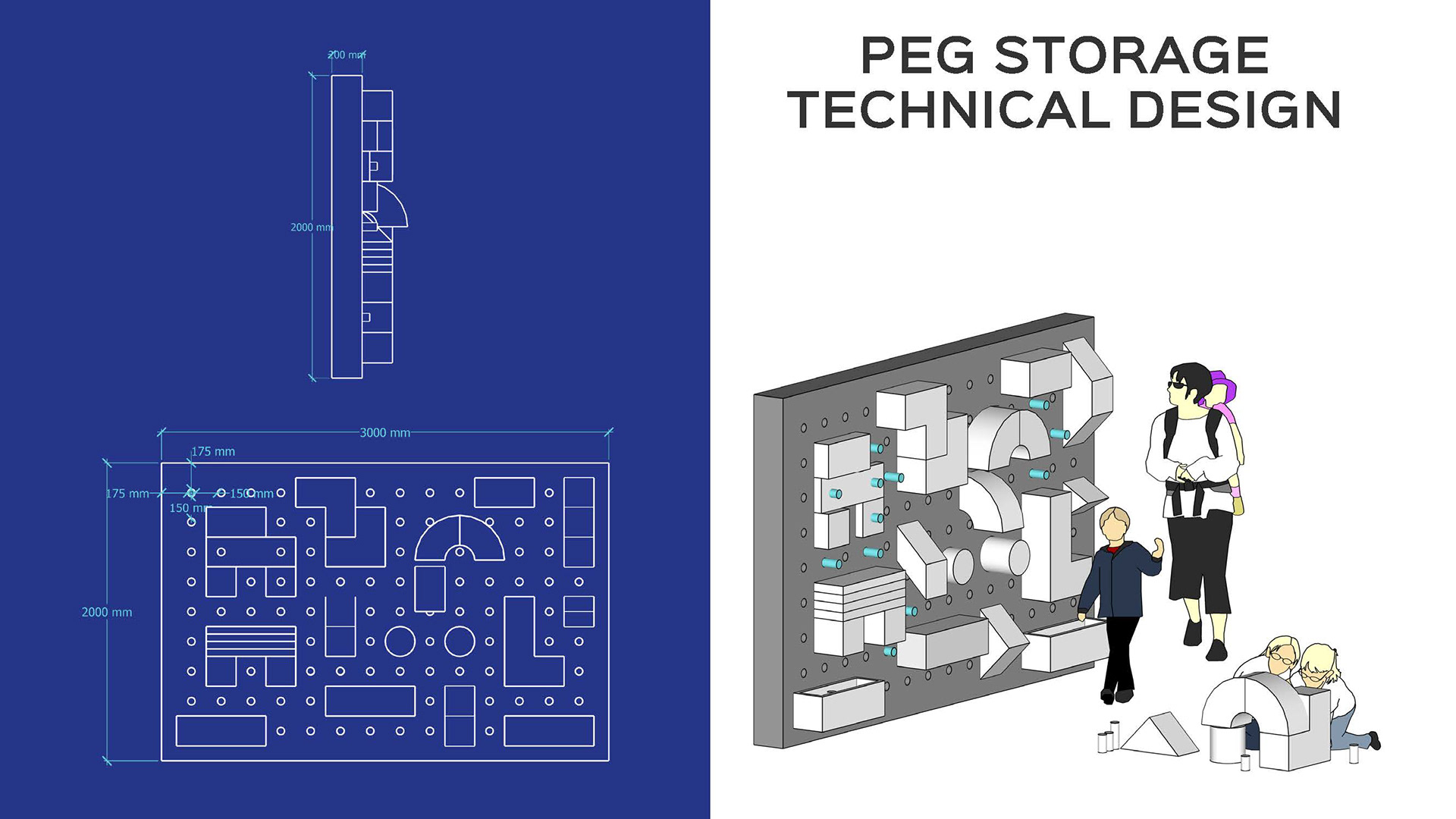
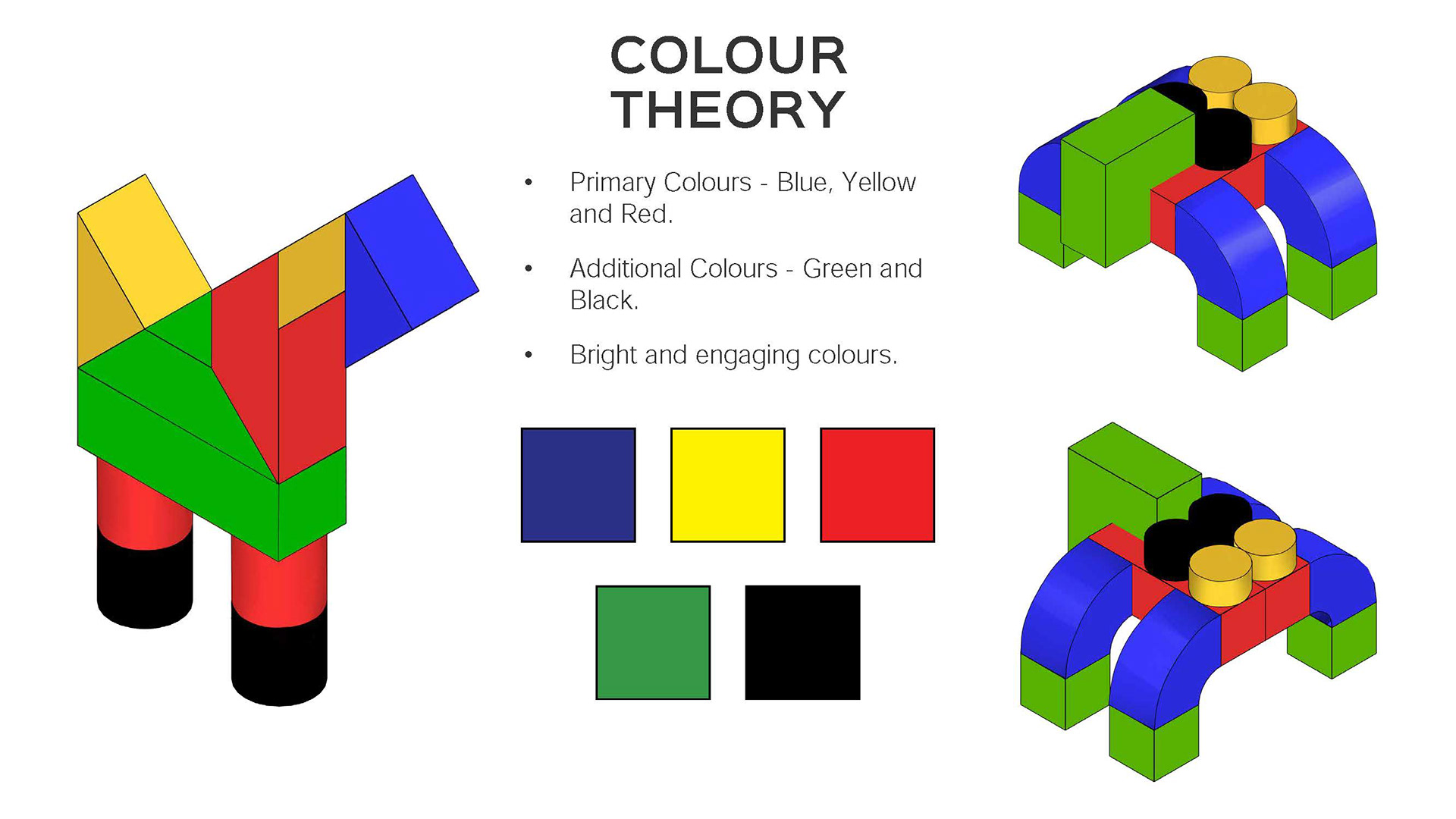
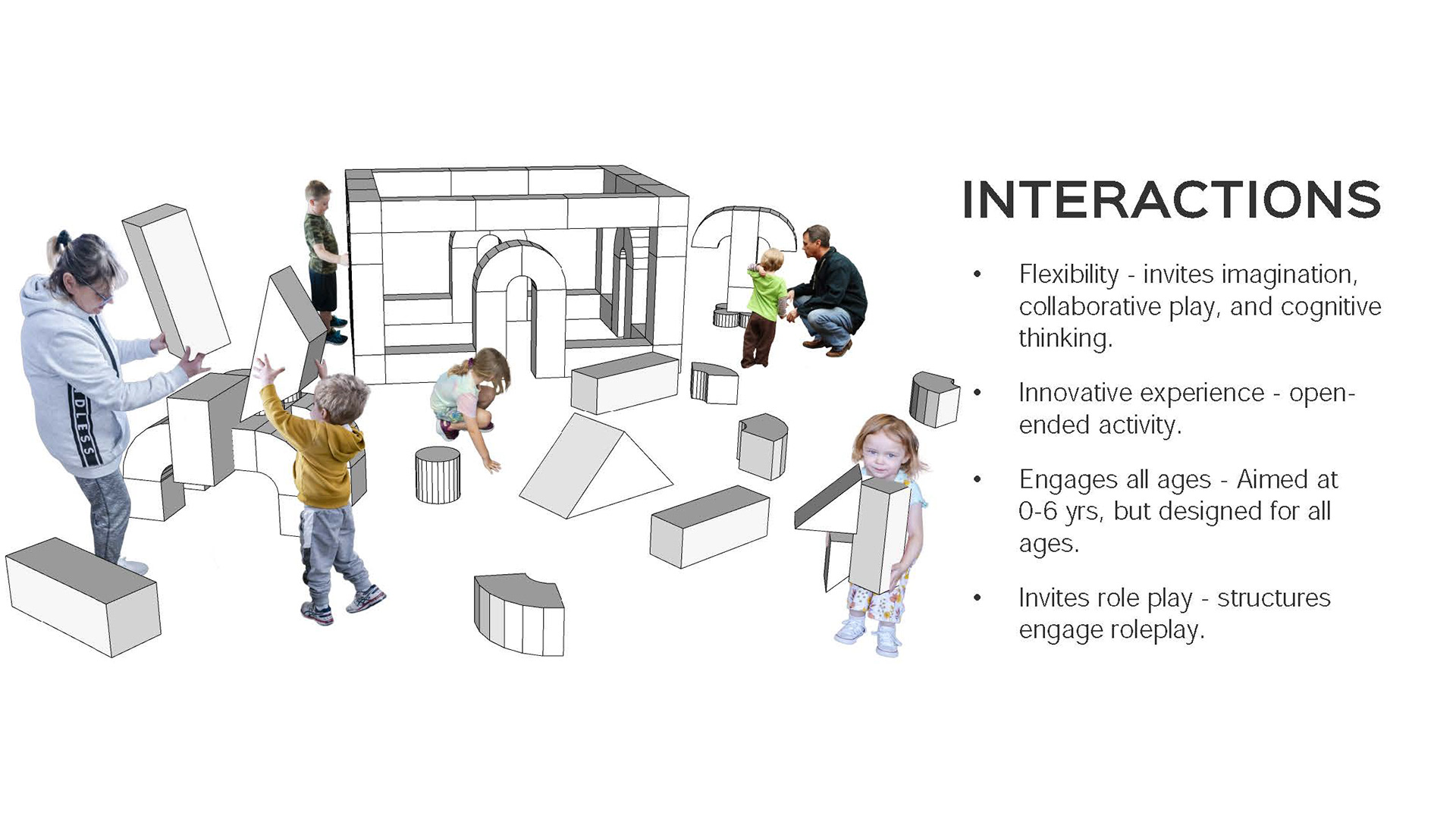
Building Grounds used oversized pegs and differently shaped blocks to encourage experimentation with structures, architecture, balance and shape.
Children could build freely, copy an example or complete simple construction challenges. This allowed the experience to support different levels of confidence, ability and participation.
Water Flow
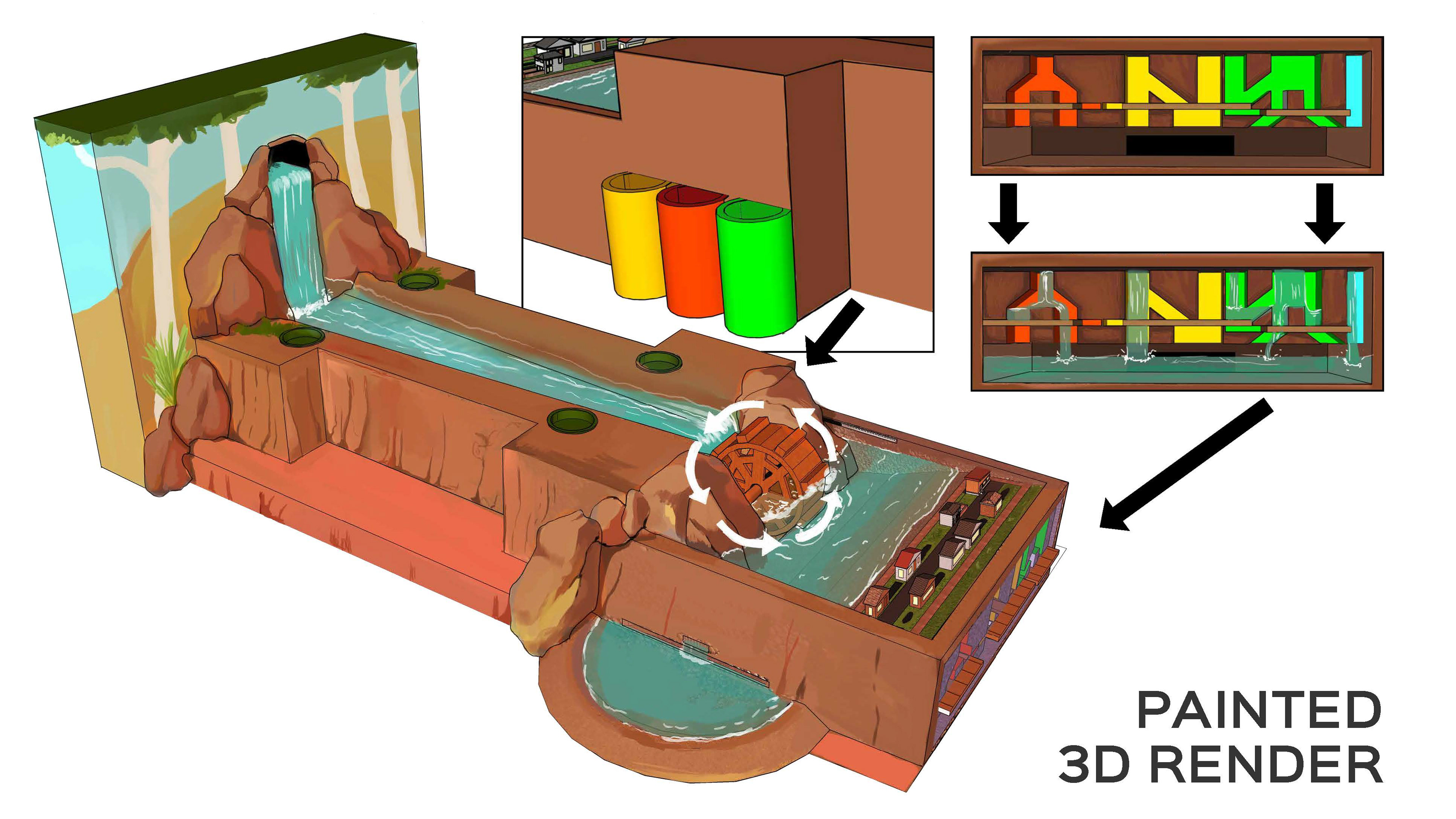
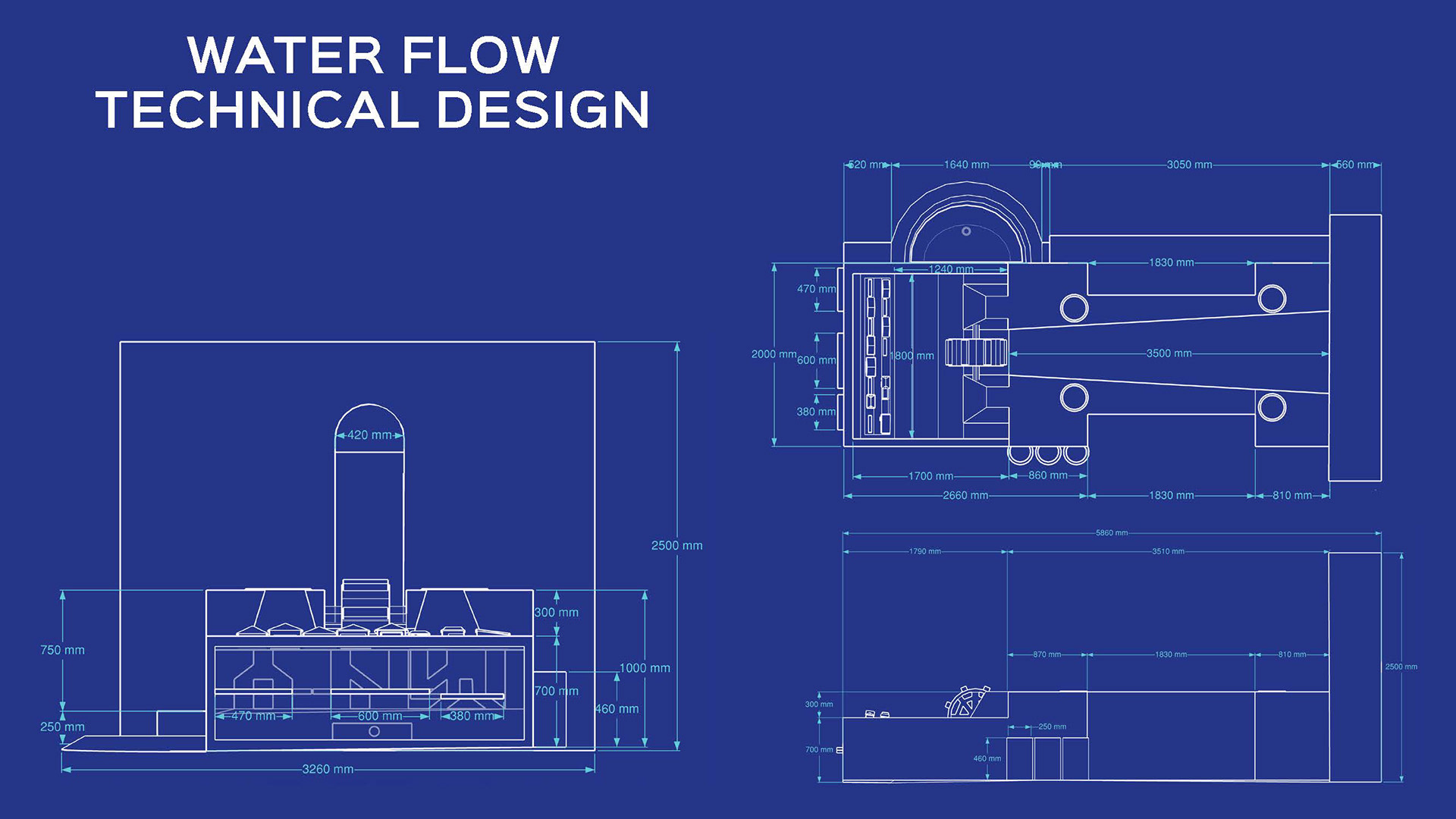
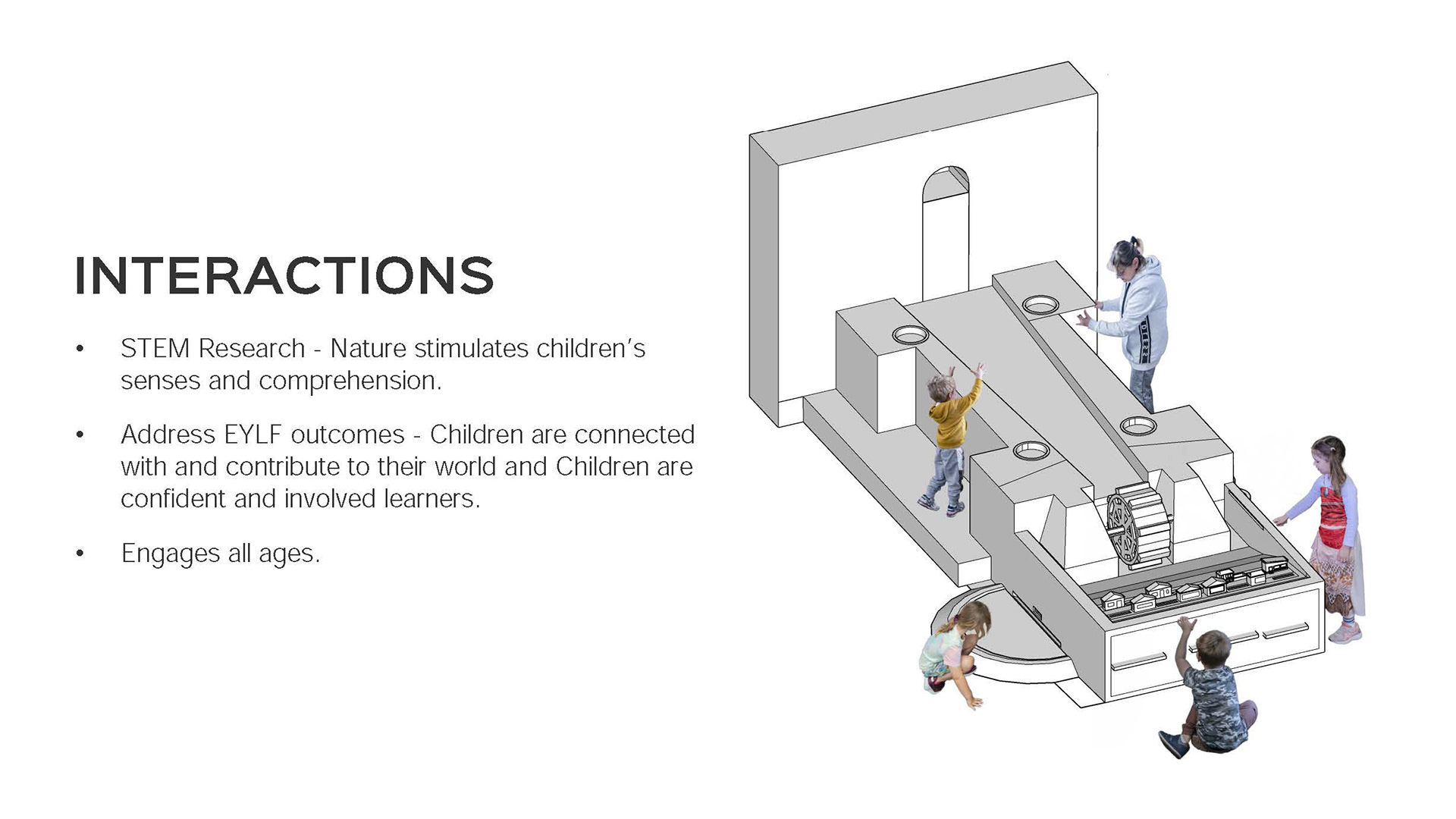
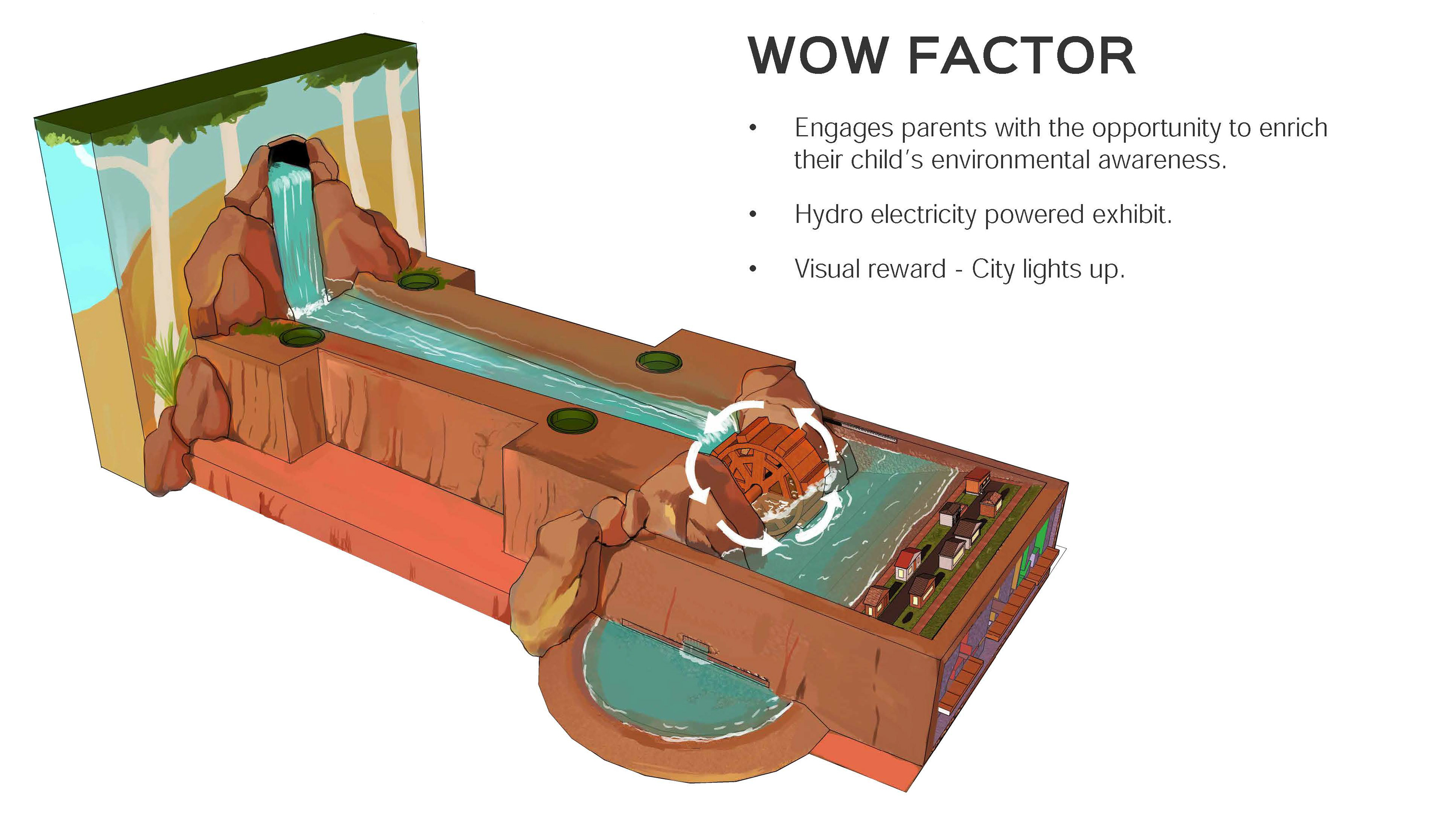
Water Flow expanded upon Discoverland’s existing water-play area by connecting play with hydroelectricity and environmental responsibility.
Water would be pumped to an elevated point before flowing through a water wheel and generating energy to illuminate a model town. Leaves, twigs and simulated rubbish could interrupt the waterway. Children would use small nets to remove the obstructions, restore the water flow and return power to the town.
The activity combined physical play with ideas about potential energy, water systems, pollution and environmental rehabilitation.

Outcome
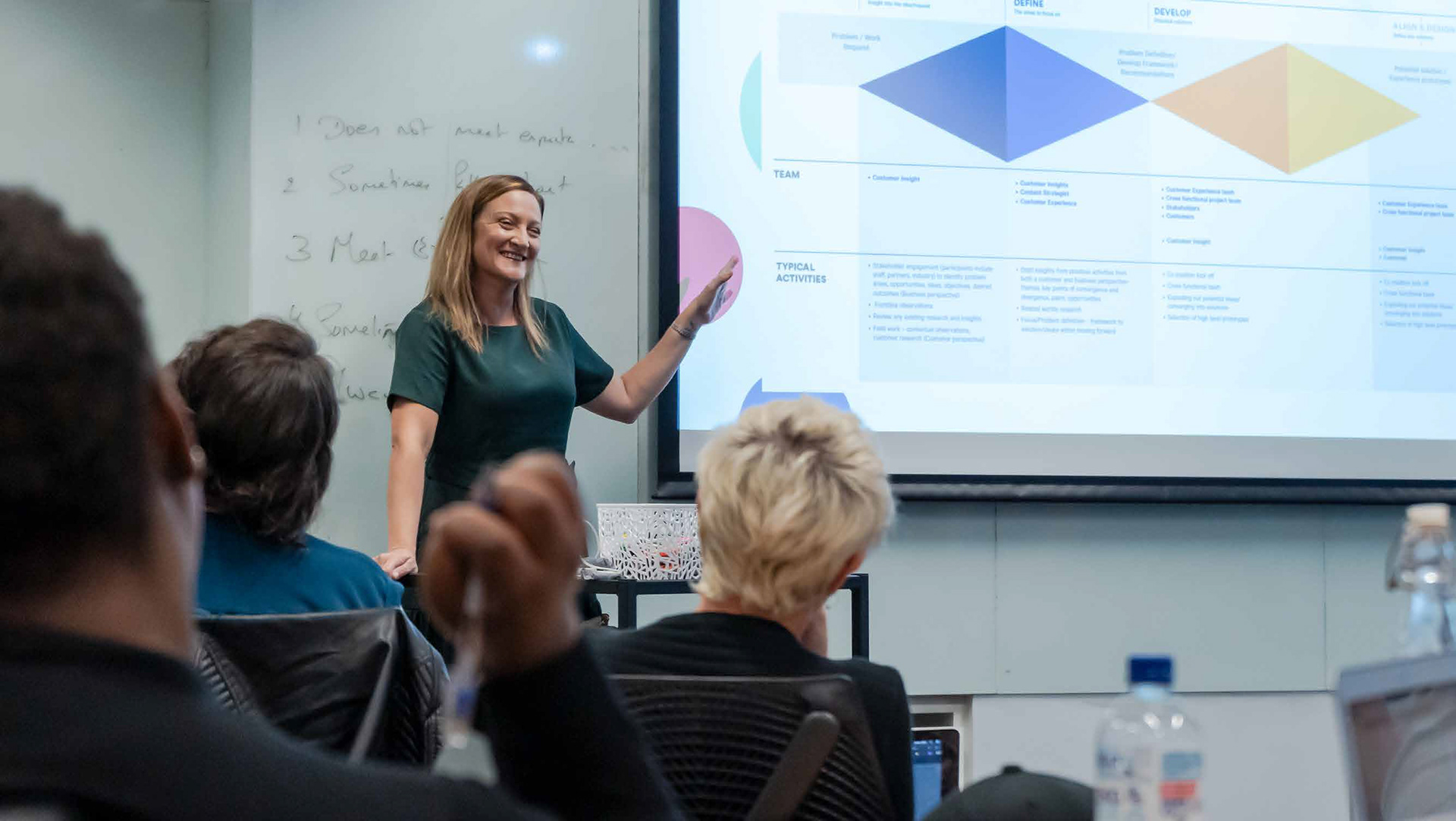
The research findings and problem definition were presented to Scitech representatives at the conclusion of the first phase. The developed concepts and prototypes were presented during a second meeting.
The project provided Scitech with research-led ideas for updating Discoverland, improving exhibit communication and encouraging more collaborative participation between children and caregivers. The concepts remained proposals for Scitech to consider rather than installed exhibits.
Working through COVID-19
The project took place during COVID-19 and was affected by lockdowns, changing access conditions and students withdrawing from the project. The team adapted its research and prototyping activities around the restrictions in place at the time.
Students conducting research with children obtained Working with Children Checks. Permission was obtained from participating parents and children, and identities were kept anonymous where requested. In some cases, activities were documented using photographs of children’s hands, their creations or the backs of their heads rather than identifiable portraits.