Reframing Second-Hand Retail Through Service Design
Hero Statement
How might we encourage more people in Singapore to shop at The Salvation Army by reducing the stigma surrounding second-hand retail while increasing awareness of the organisation's community impact?

Project Overview
Client
The Salvation Army Singapore
The Salvation Army Singapore
Year
2019
2019
Role
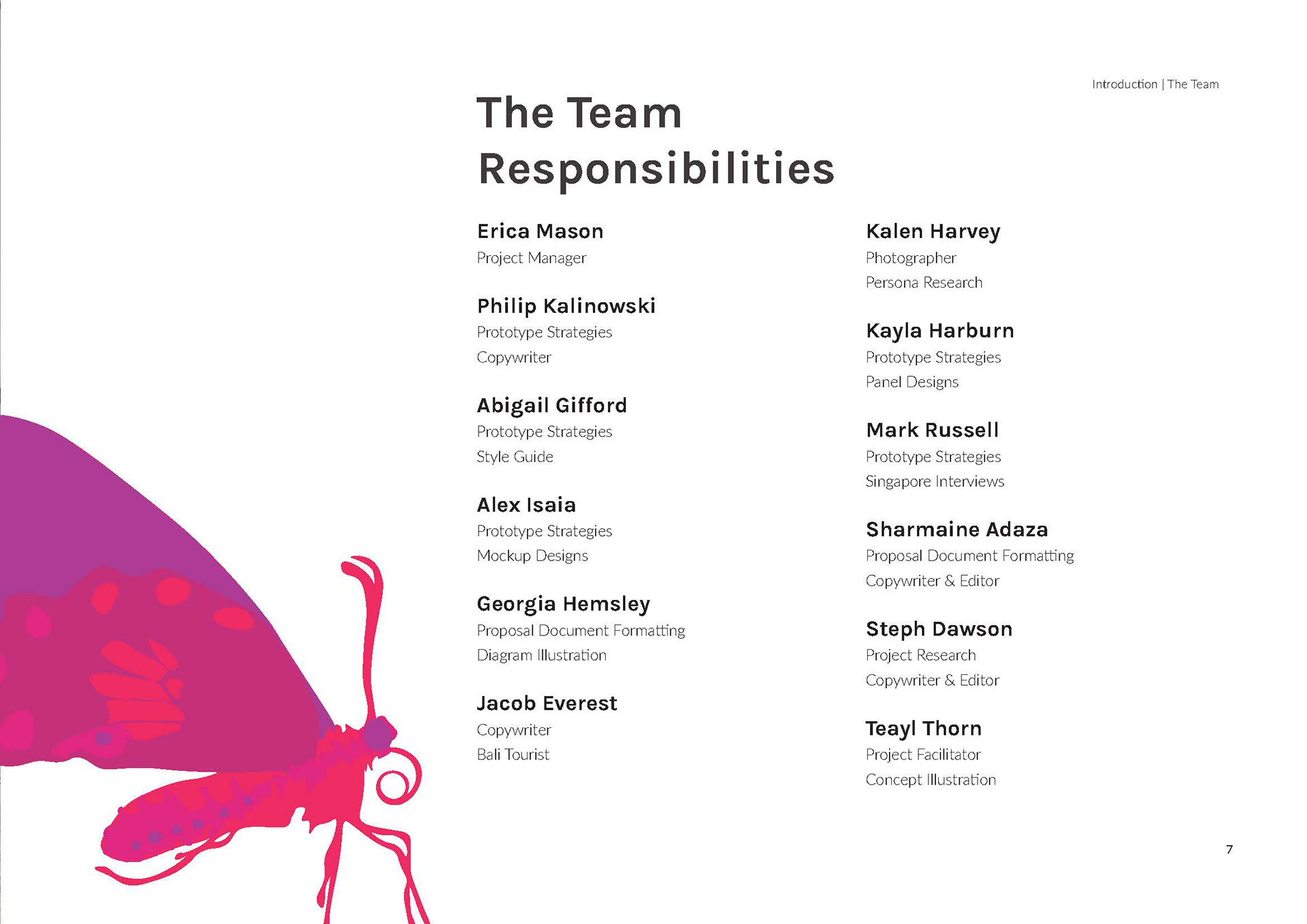
Project Facilitator • Service Designer • UX Researcher • Concept Development • Workshop Facilitation • Illustration
Project Facilitator • Service Designer • UX Researcher • Concept Development • Workshop Facilitation • Illustration
Team
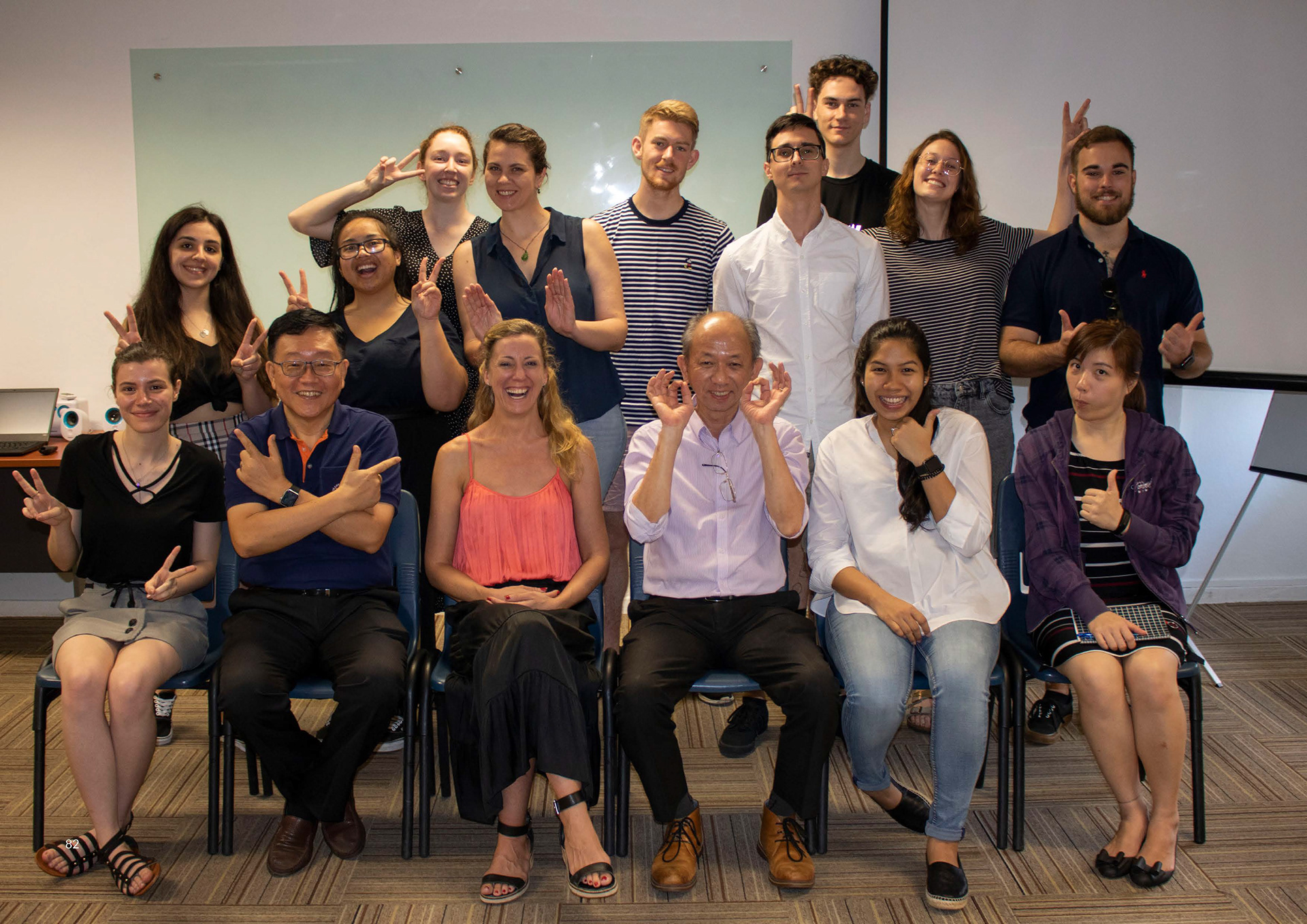
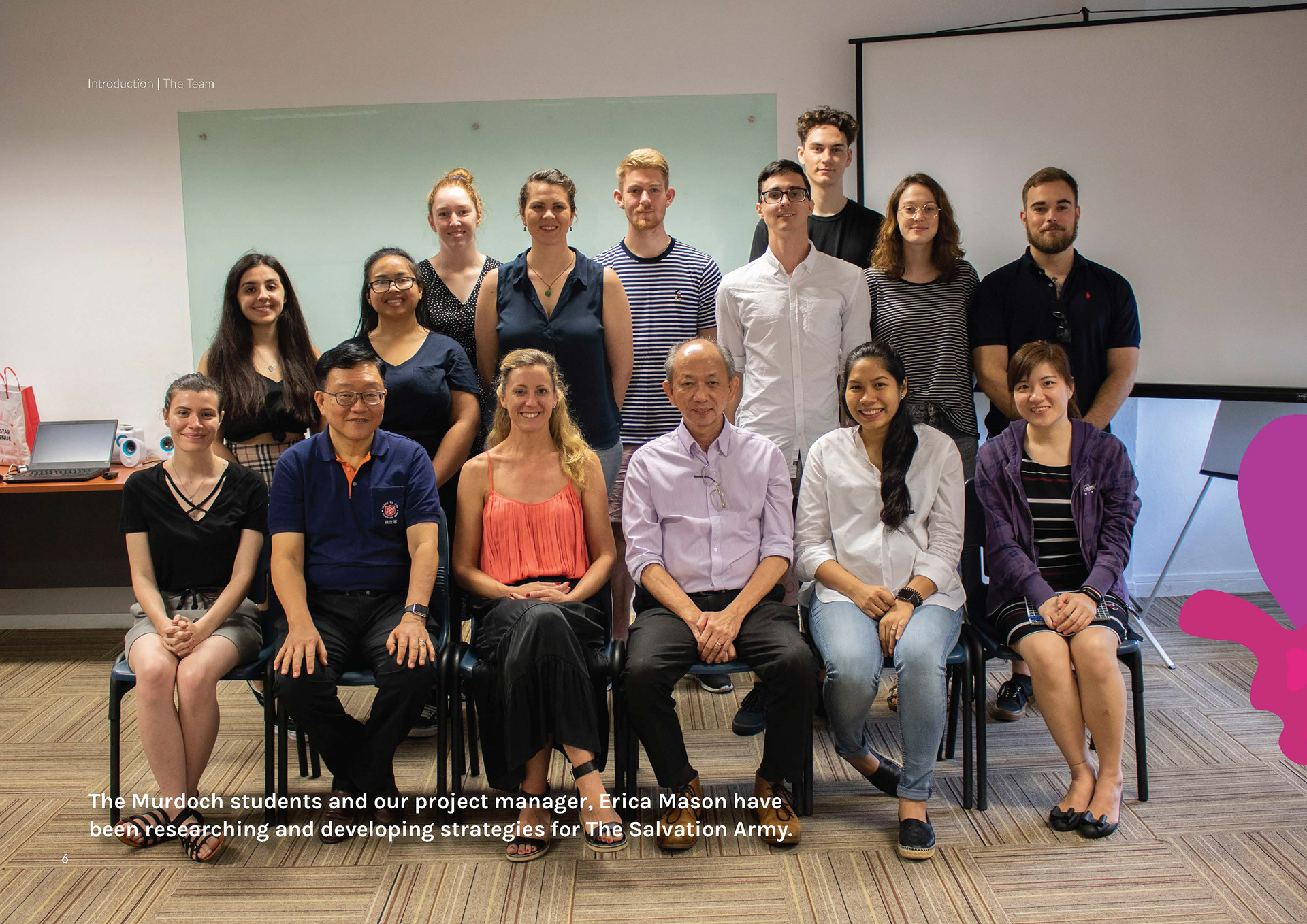
Murdoch University Service Design Team
Murdoch University Service Design Team
Duration
Several months of research, fieldwork and concept development across Australia and Singapore.
Several months of research, fieldwork and concept development across Australia and Singapore.
The Challenge
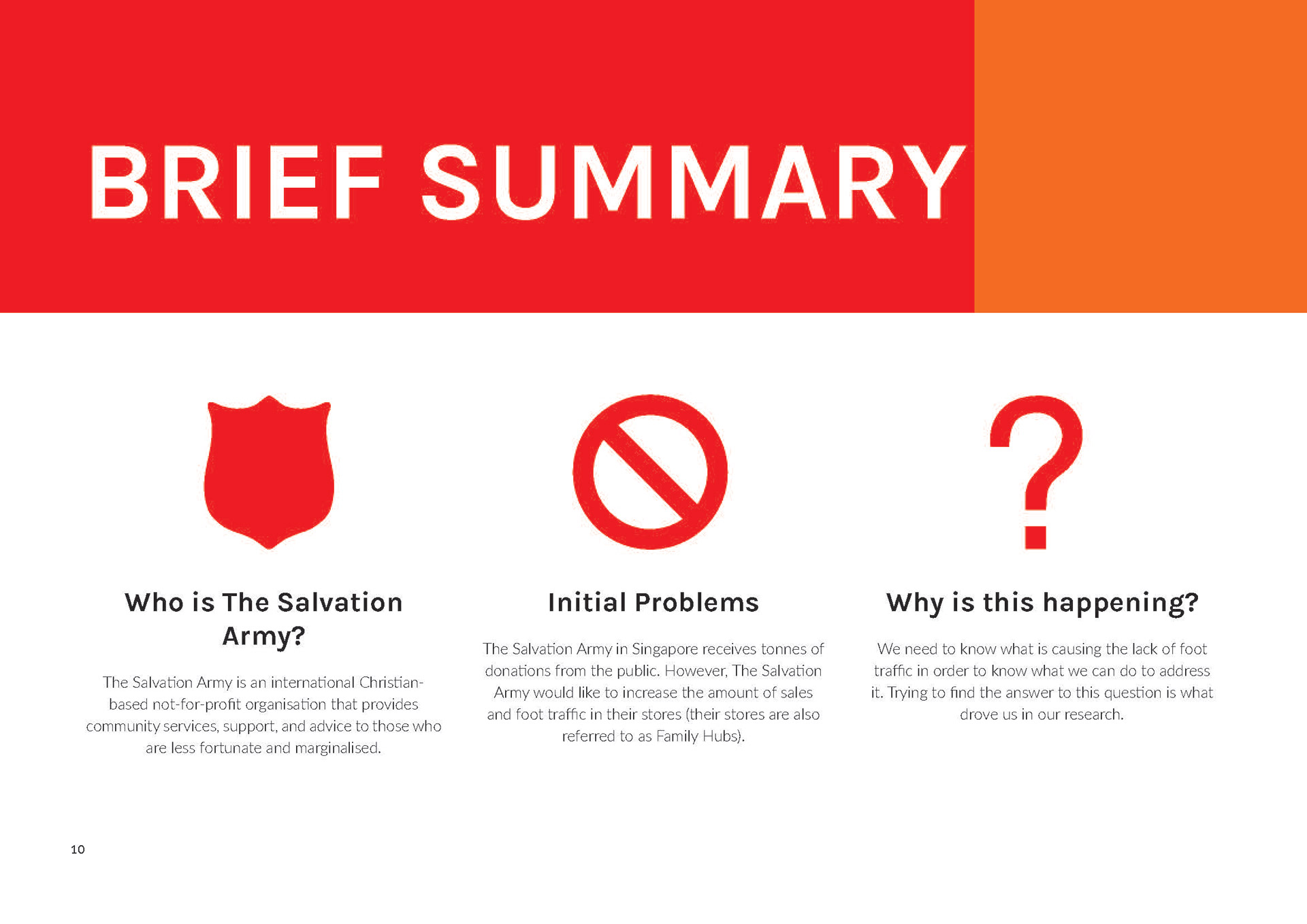
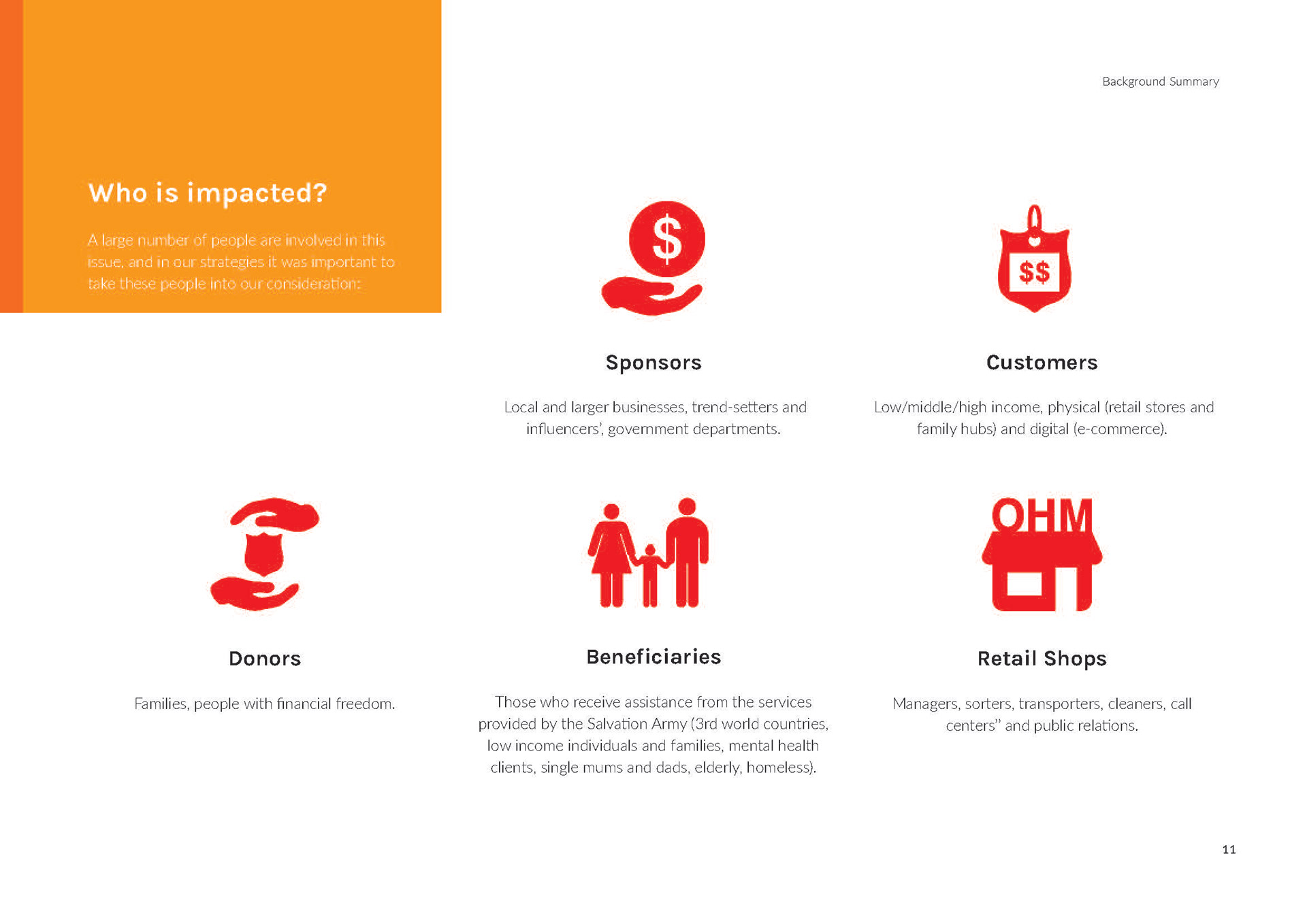
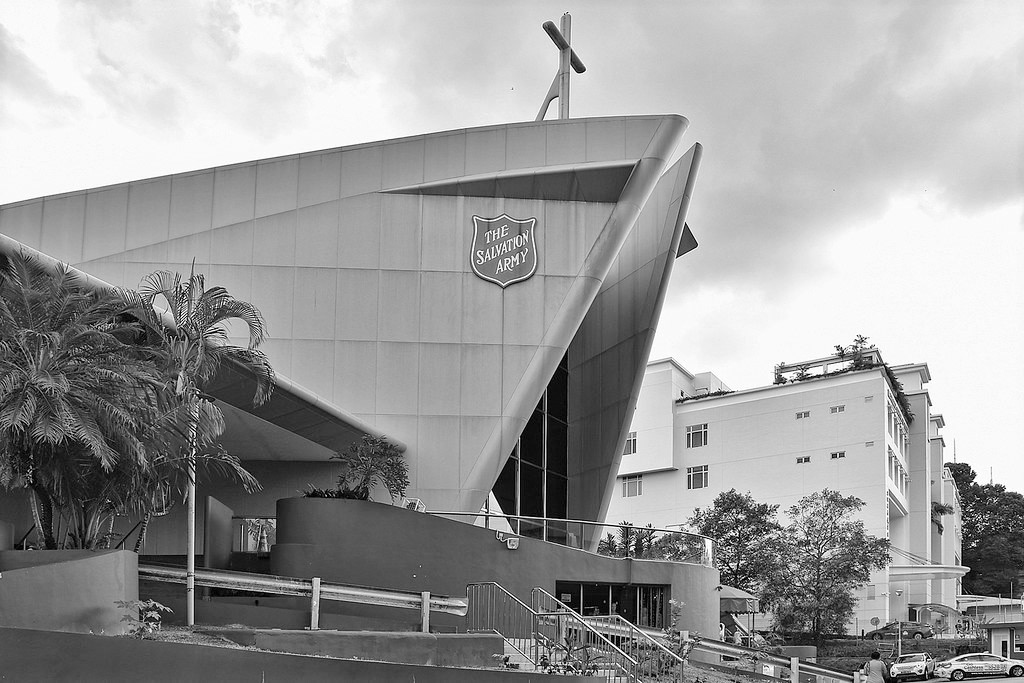
The Salvation Army Singapore received large volumes of donated goods, but relatively few people actually shopped in their stores.
Initial assumptions suggested the problem was marketing.
Our research quickly showed the issue was much deeper.
Customers didn't simply lack awareness.
Many people:
didn't know the stores existed
associated Salvation Army only with donations
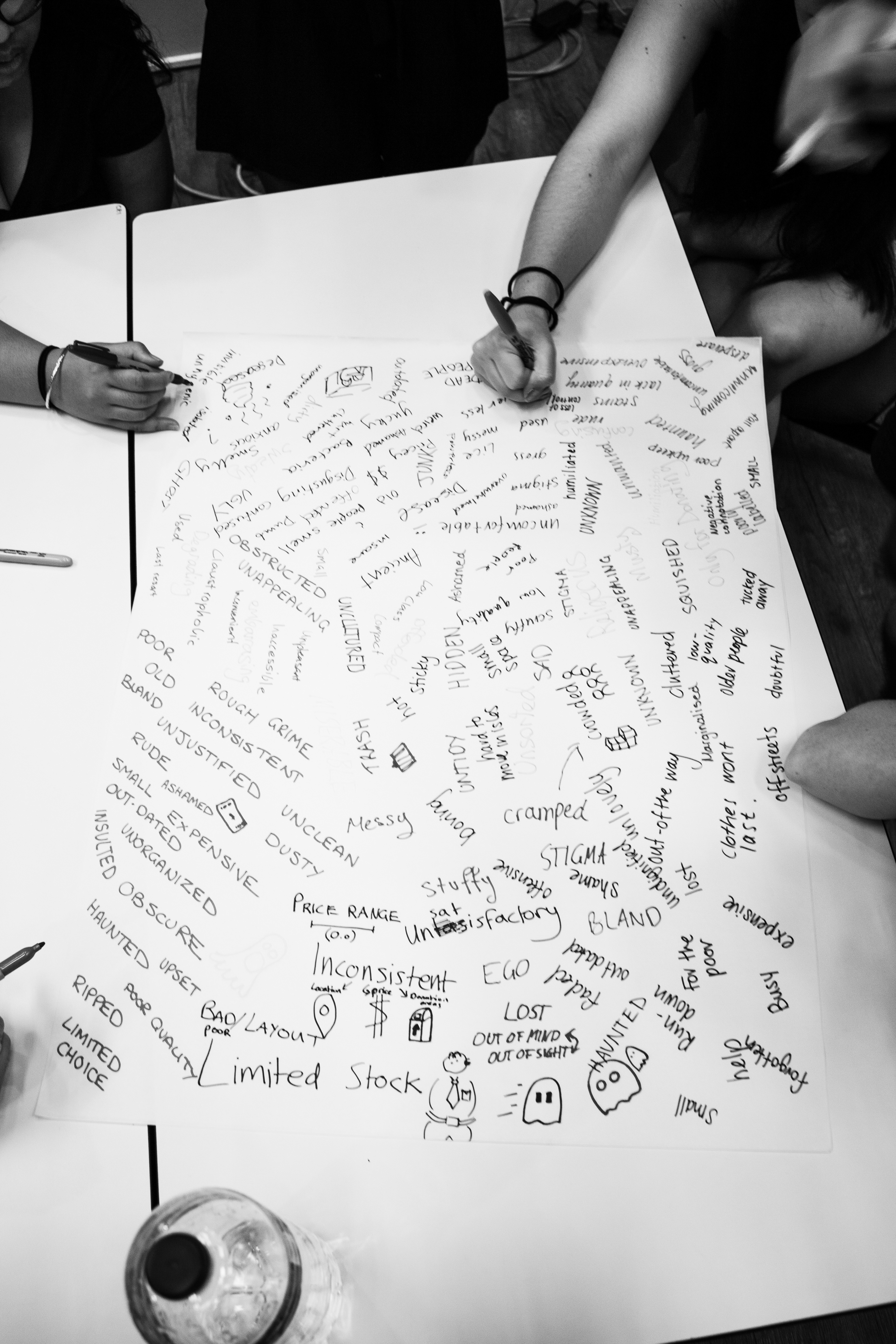
viewed second-hand shopping negatively
believed used clothing was dirty or undesirable
didn't understand where proceeds actually went
Rather than redesigning a store, we needed to redesign the public perception of the entire service ecosystem.
Our Design Process
Rather than jumping straight into solutions, we spent significant time understanding the wider service ecosystem.
Our process included:
Desktop research
Australian store benchmarking
International campaign analysis
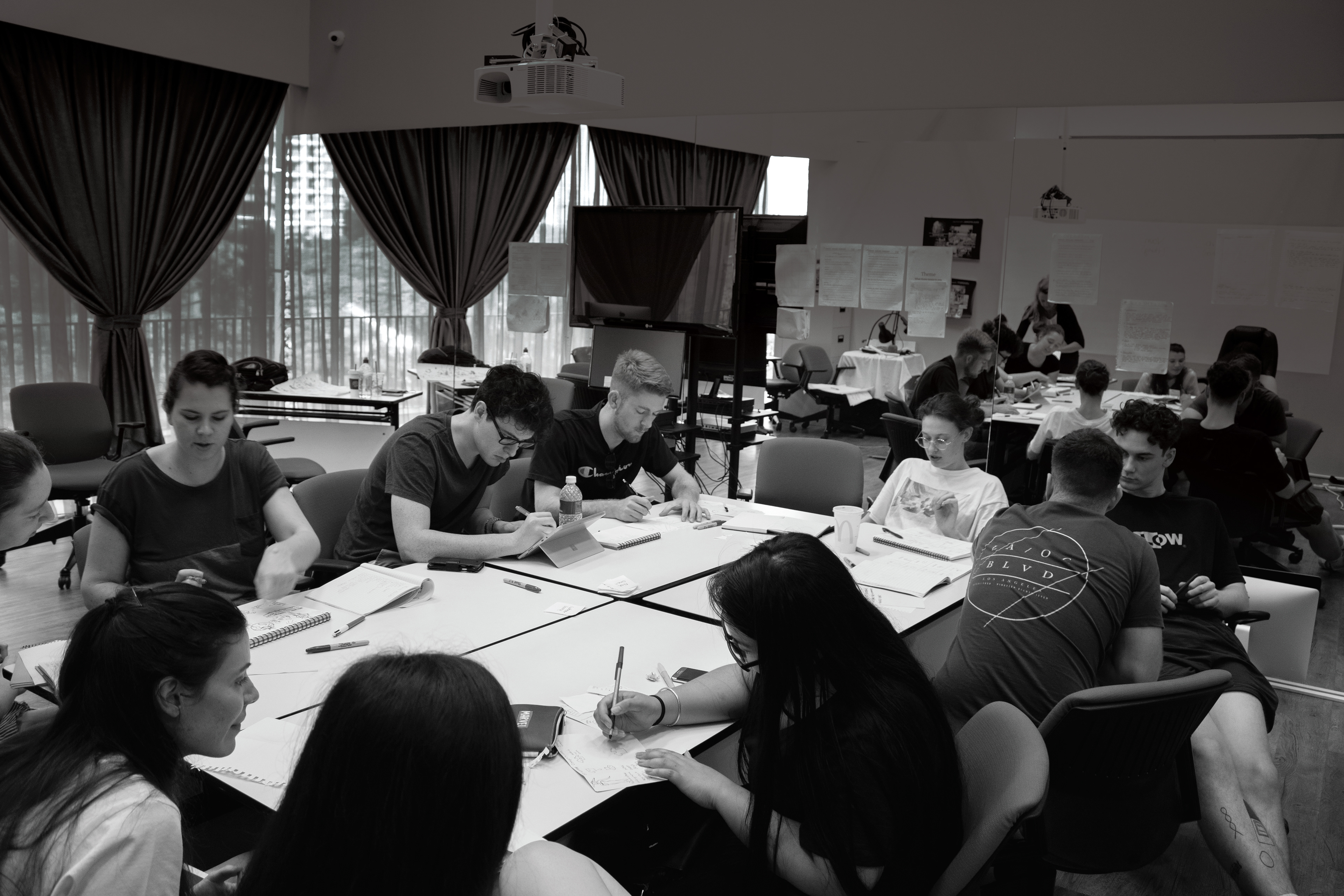
Stakeholder workshops
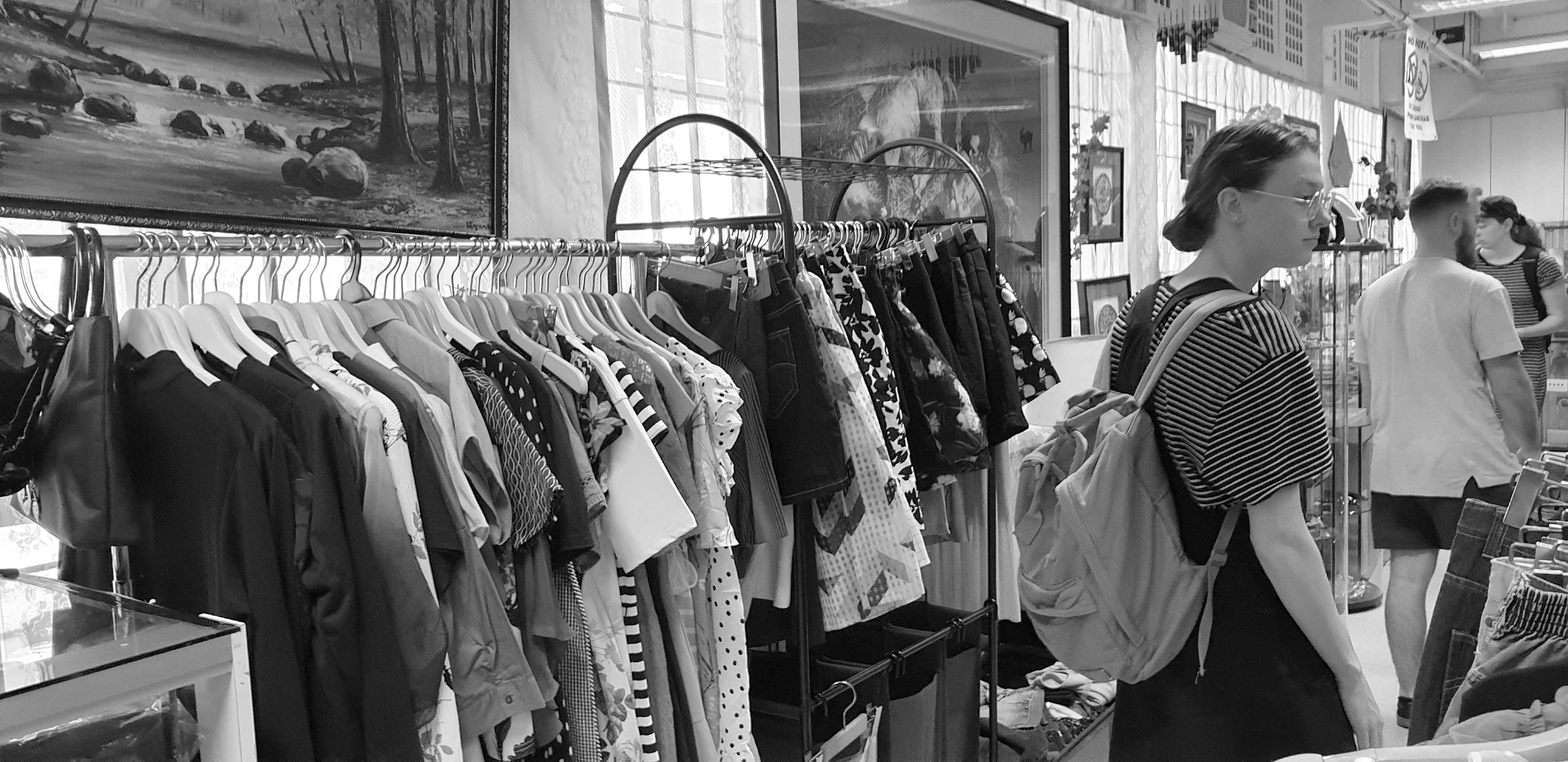
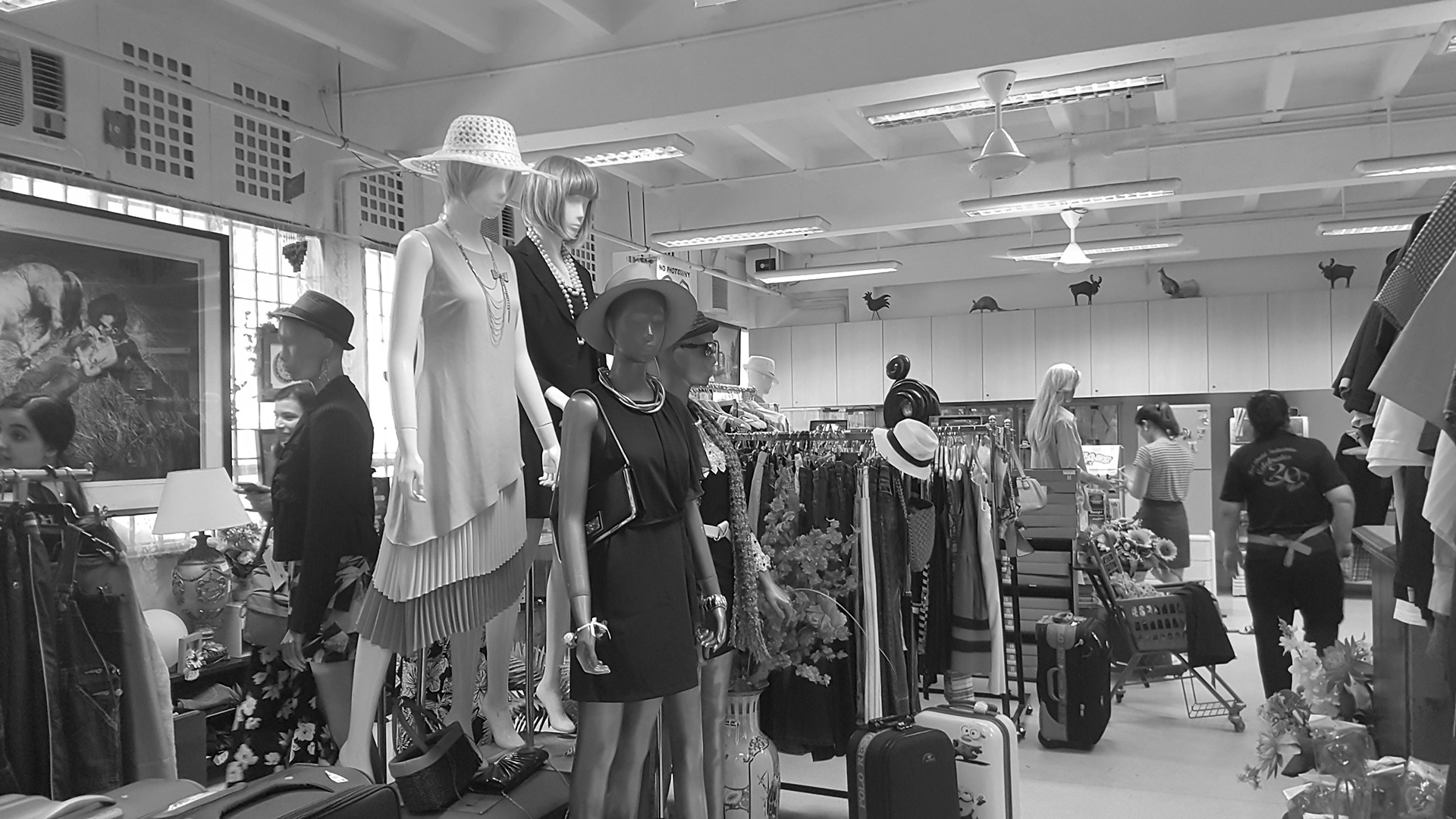
Field research in Singapore
Store observations
Customer interviews
Staff interviews
Competitor analysis
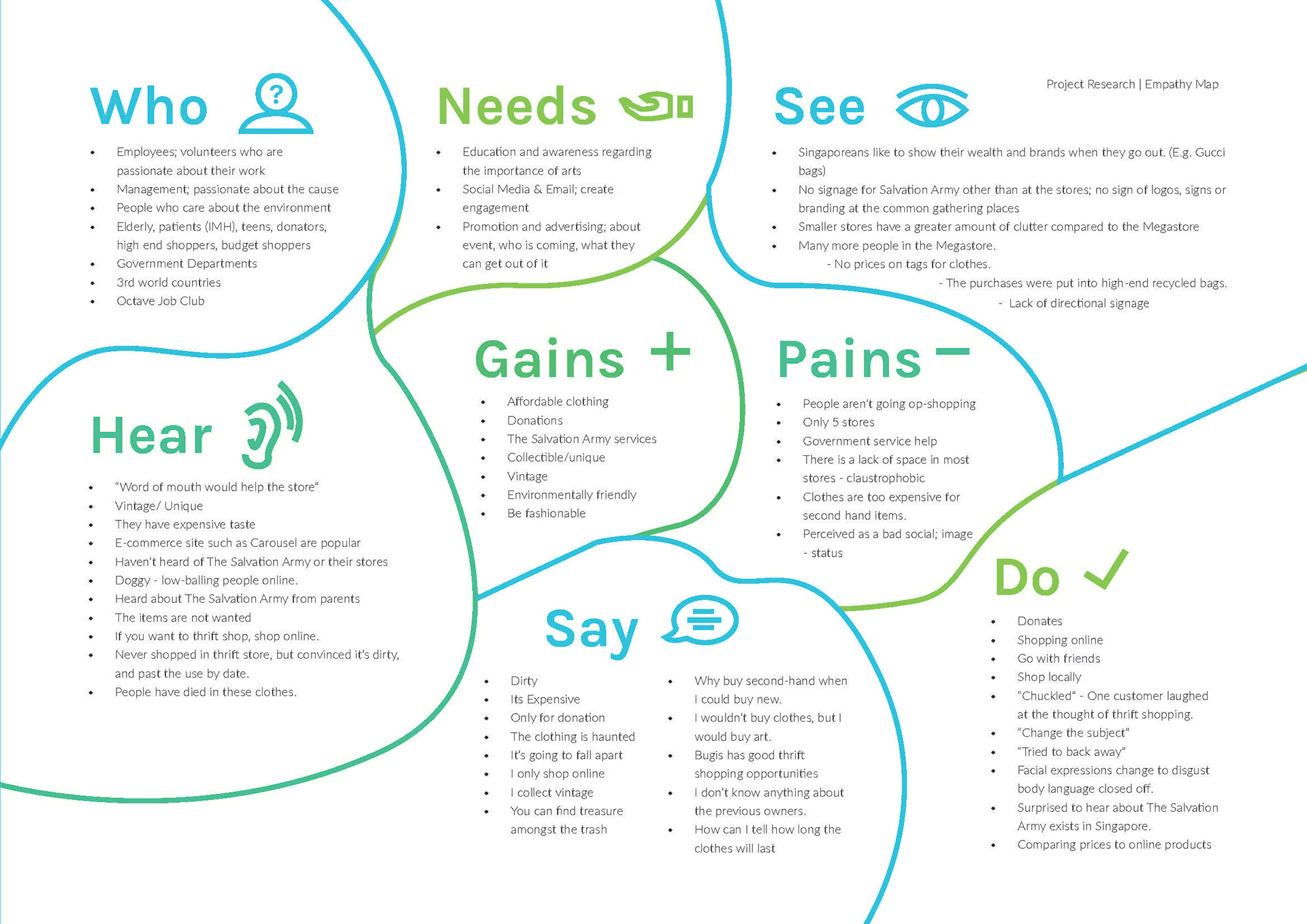
Empathy mapping
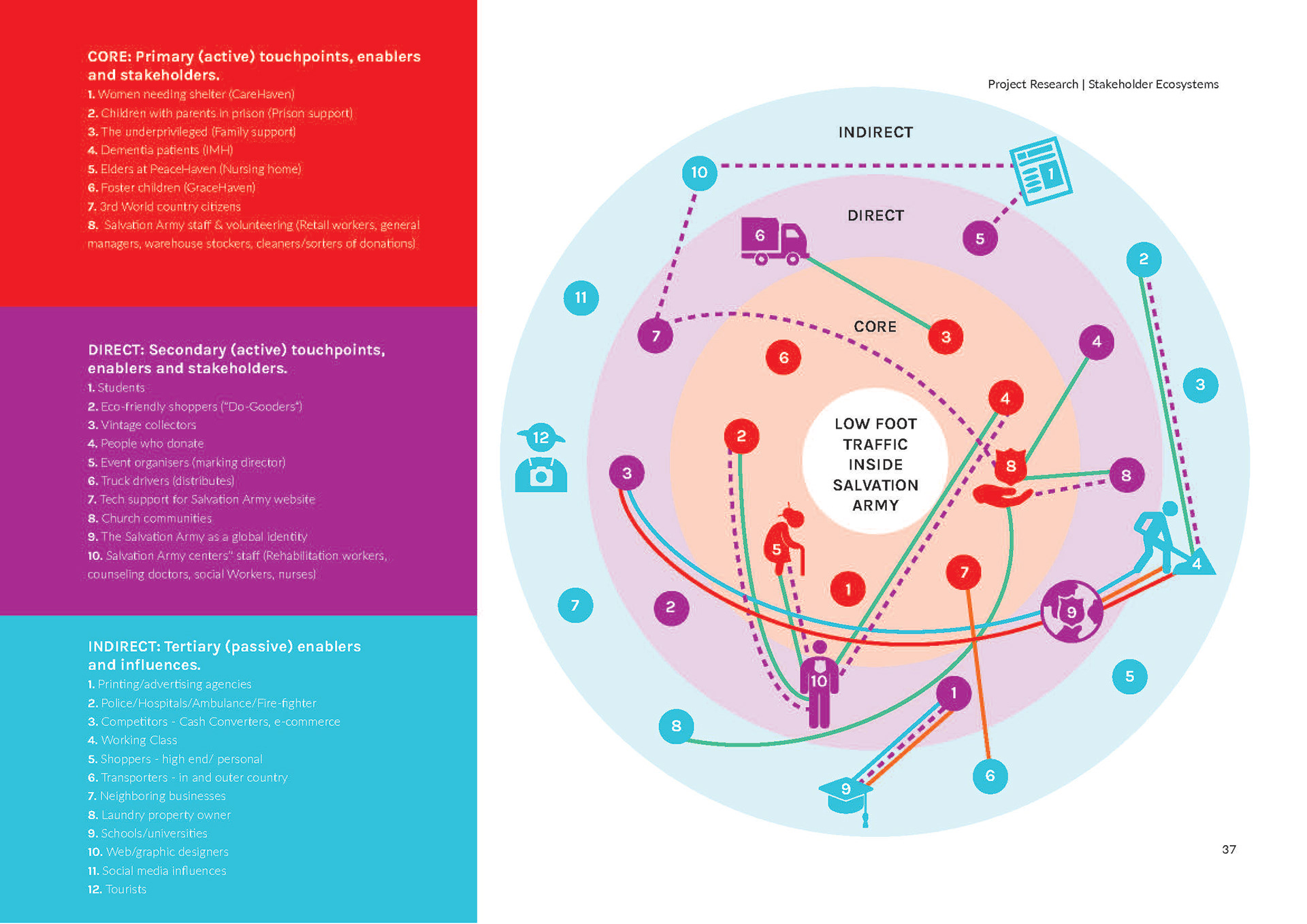
Stakeholder ecosystem mapping
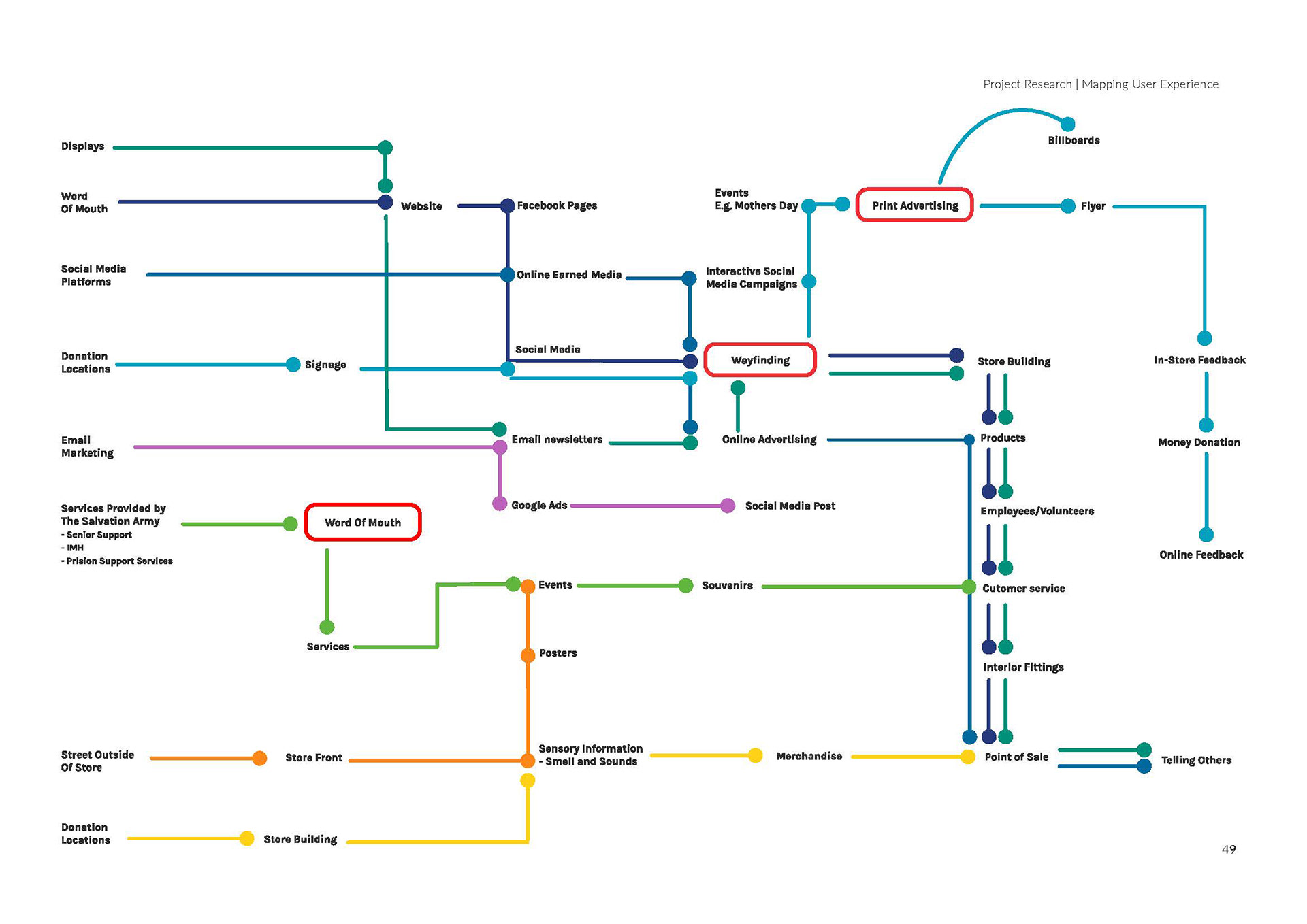
User journey mapping
Problem reframing
Co-design workshops
Rapid concept development
Proposal development
This research-first approach ensured every recommendation could be traced back to genuine customer insights rather than assumptions.
Research in Singapore
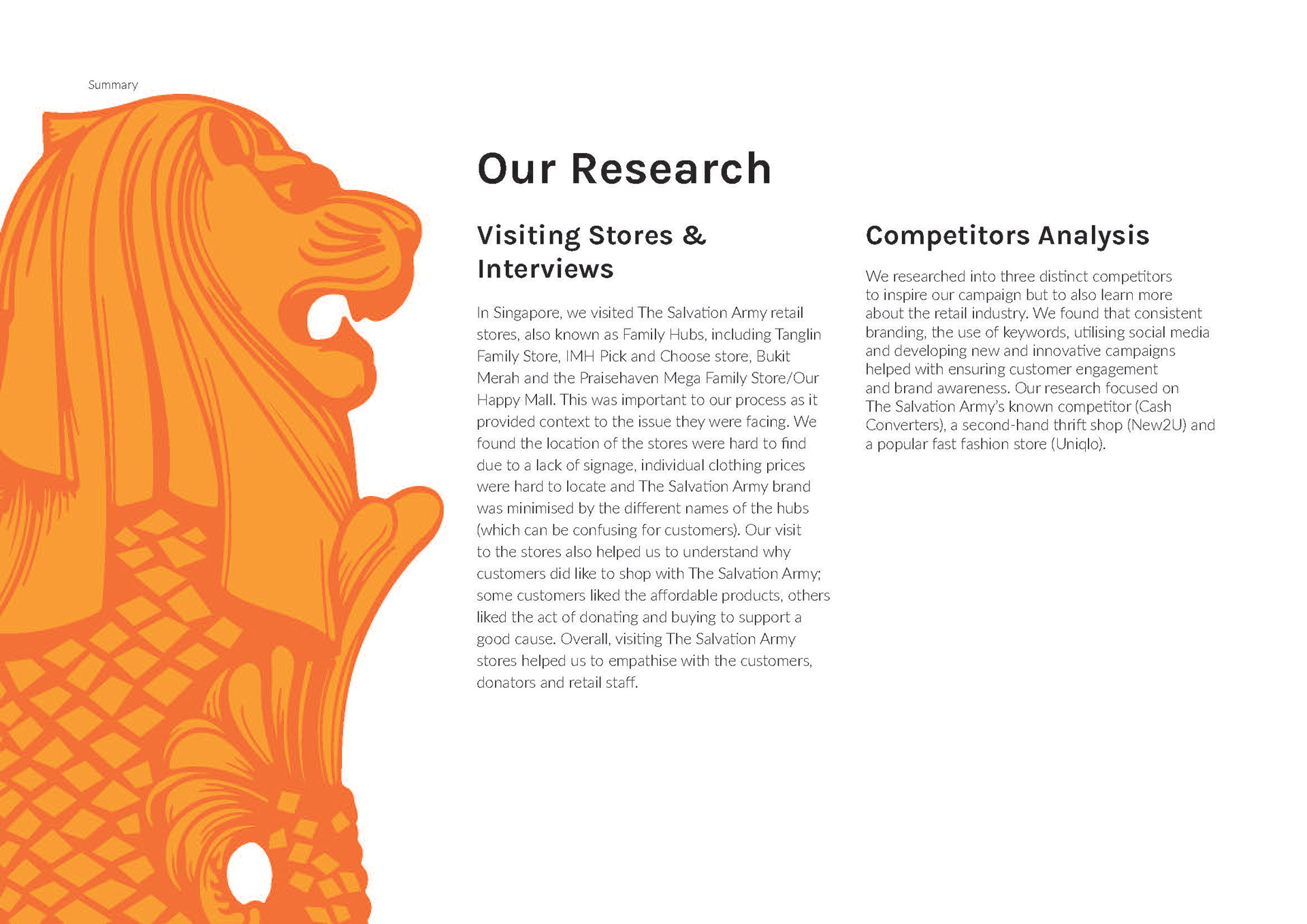
One of the most valuable parts of the project involved travelling to Singapore to immerse ourselves in the local context.
We:
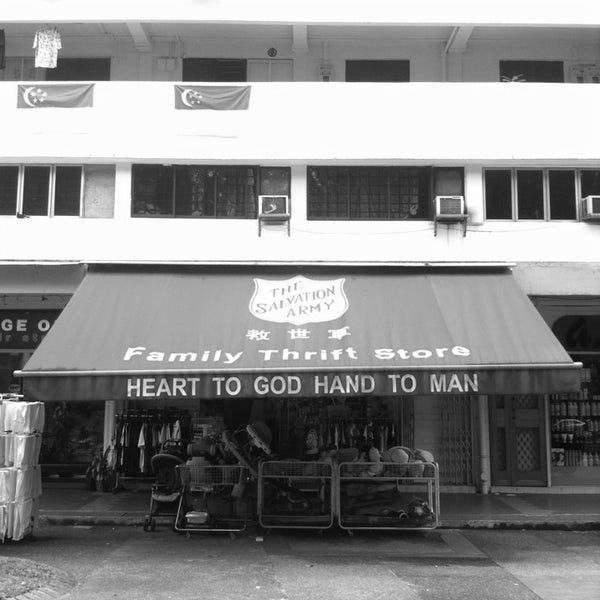
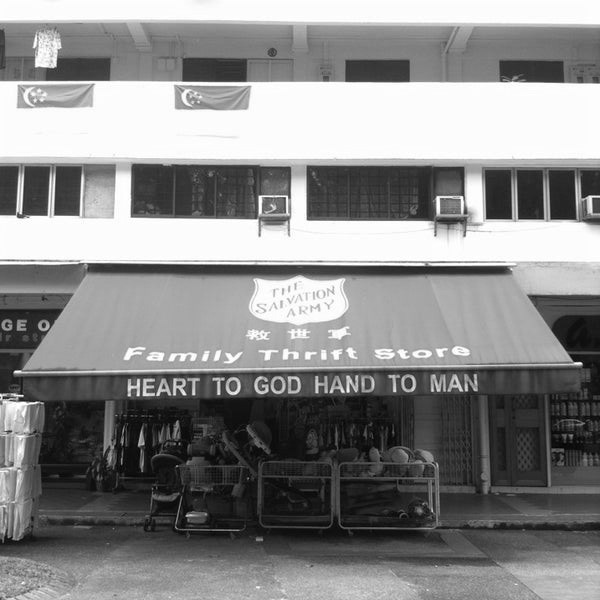
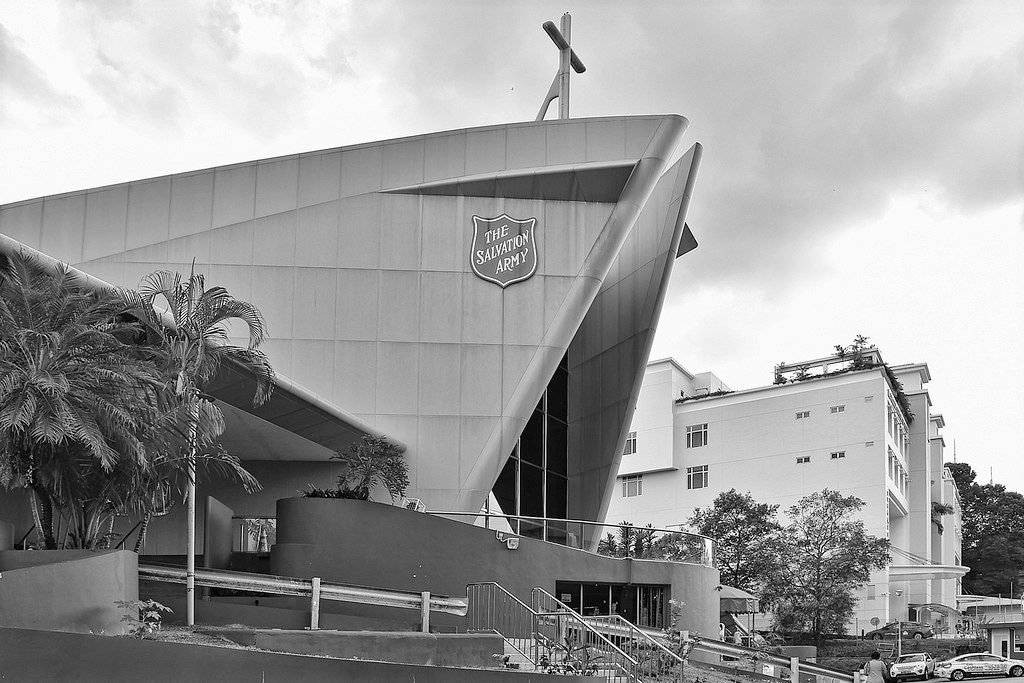
visited multiple Salvation Army Family Stores
met with Salvation Army representatives
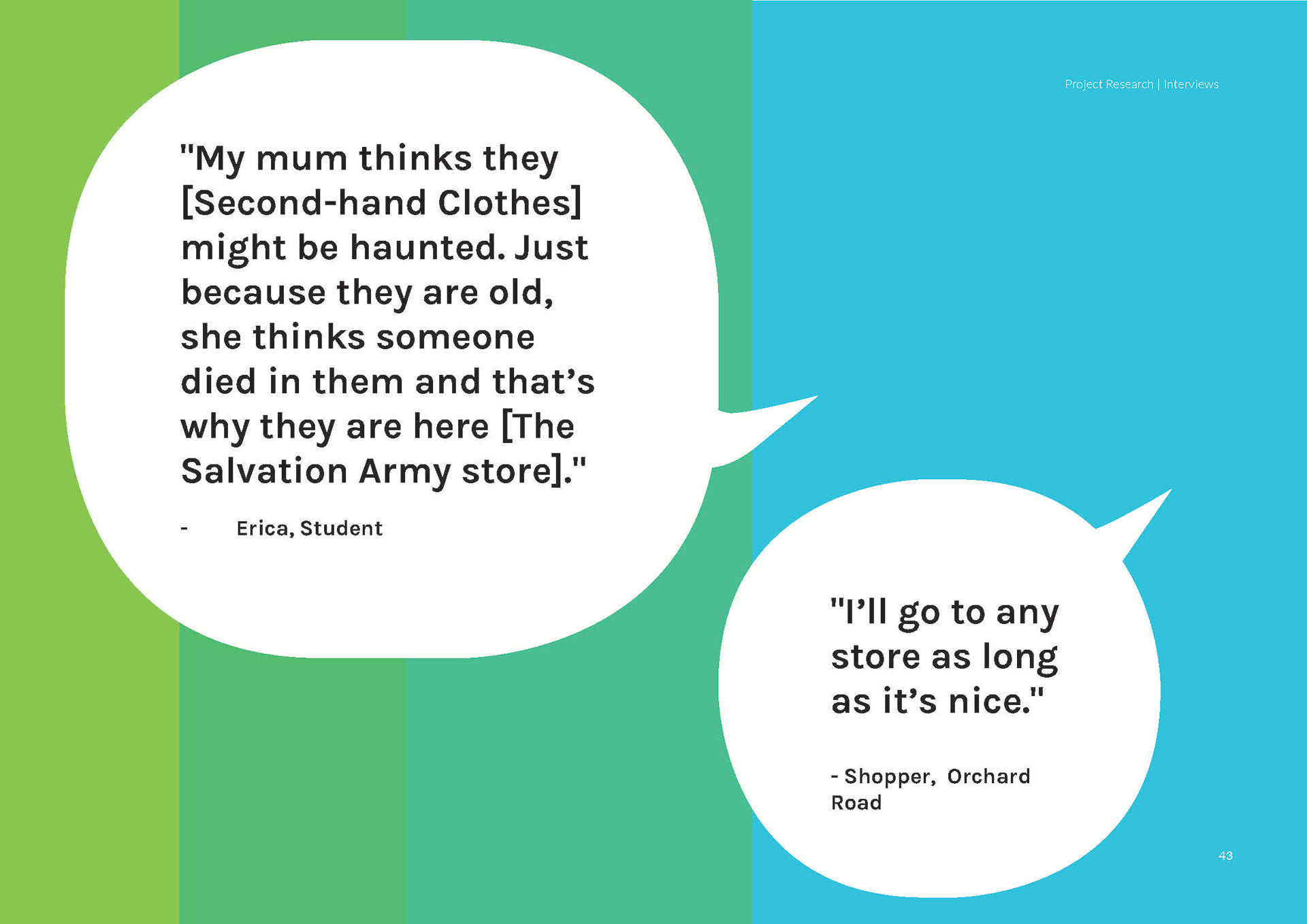
interviewed members of the public
interviewed retail staff
analysed competitor experiences
documented customer behaviour
compared stores across locations
Rather than evaluating individual touchpoints in isolation, we examined how every interaction influenced public perception of the organisation.
What We Discovered
Across interviews, observations and workshops, several themes consistently emerged.
Low Awareness
Many people had heard of The Salvation Army but had no idea what services it actually provided.
Stigma Around Second-Hand Shopping
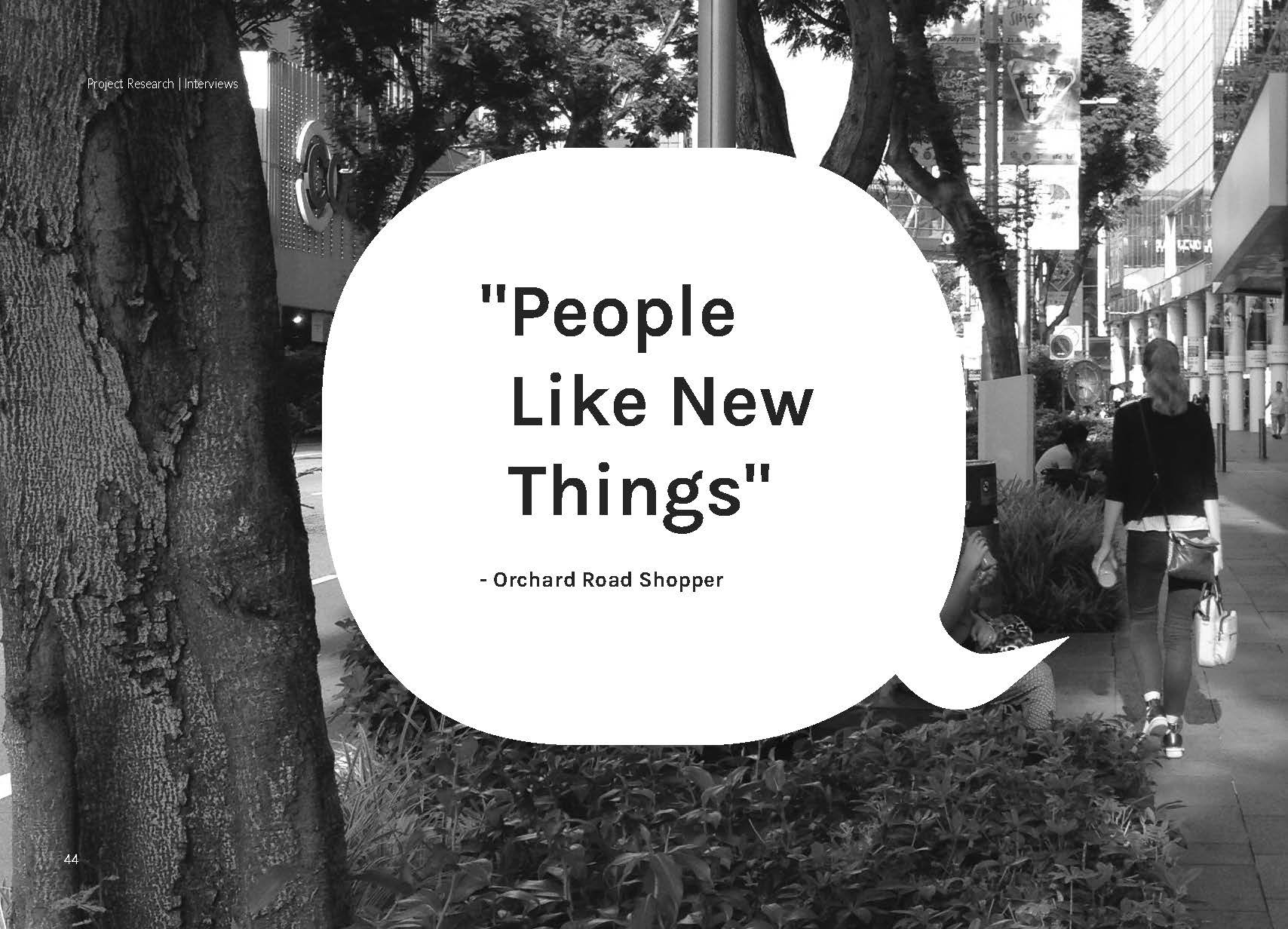
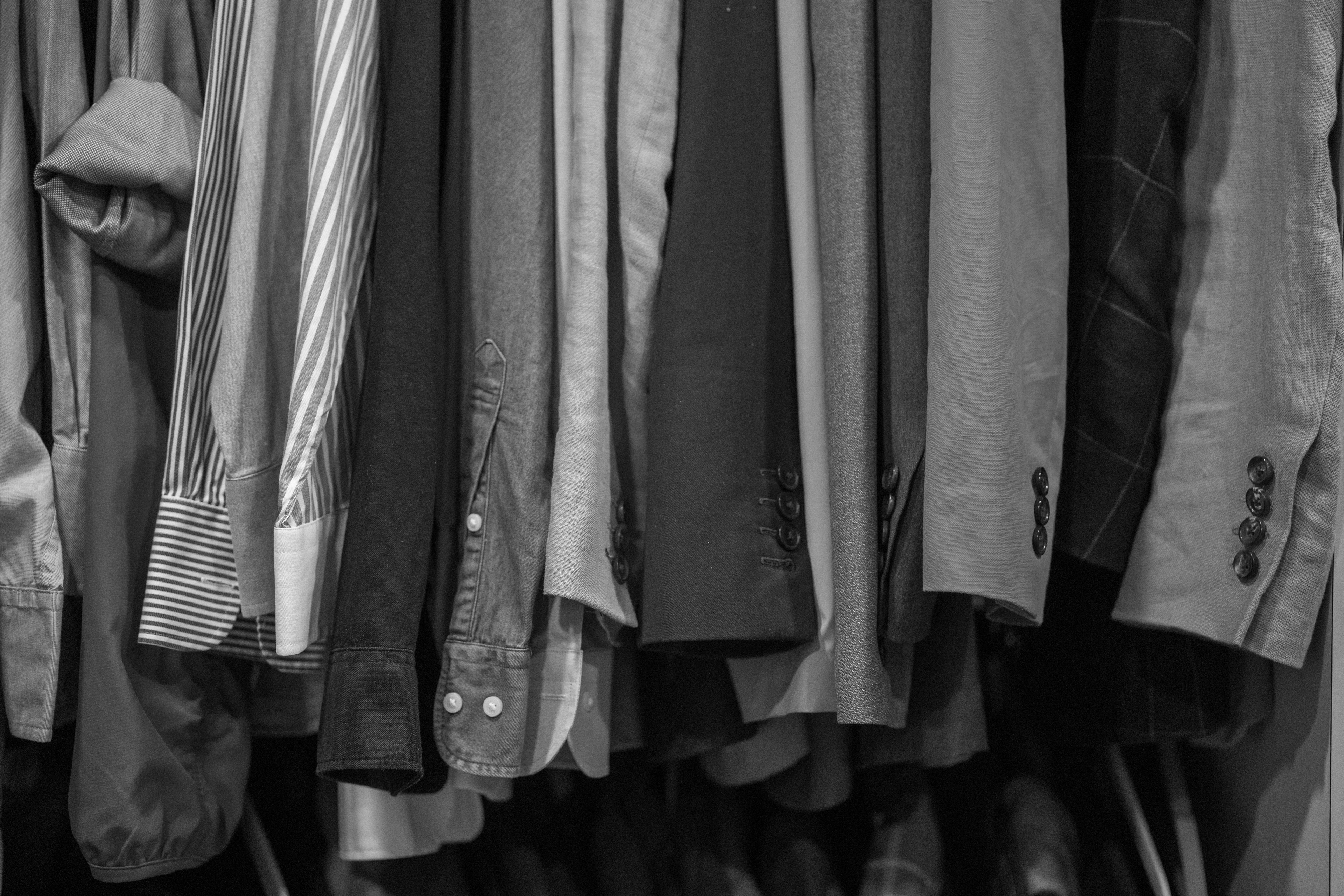
Used clothing was often associated with being dirty, low status or undesirable.
Some interviewees even expressed misconceptions about previously owned clothing.
Poor Discoverability
Many stores lacked clear signage and were physically difficult to find.
Confusing Brand Identity
People recognised donations more readily than retail.
Shopping was rarely associated with supporting community services.
Missed Opportunities
Customers who did visit stores often enjoyed finding unique items, yet this positive experience was not reflected in public perception.
Reframing the Problem
Instead of asking:
"How do we get more customers?"
We reframed the challenge as:
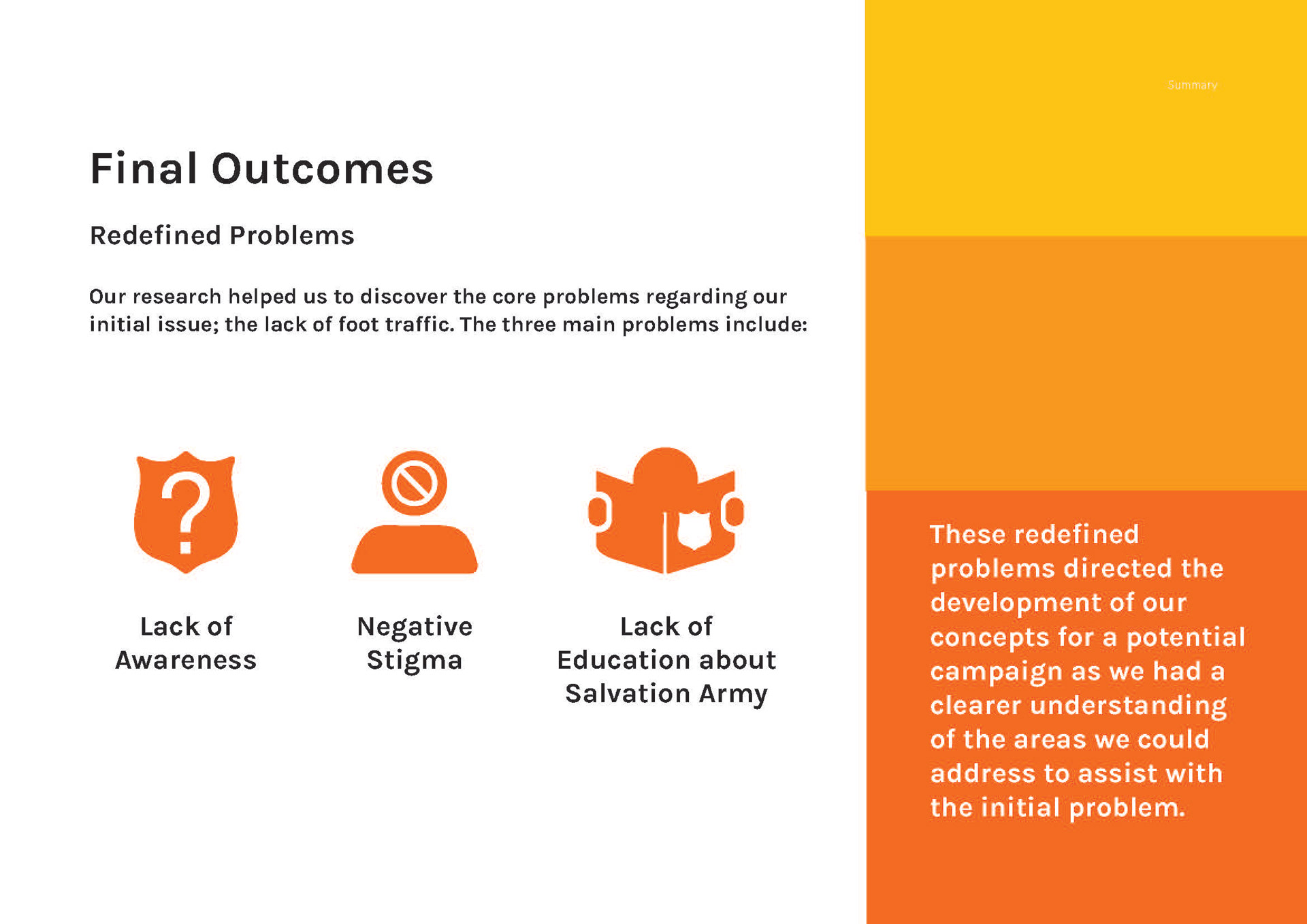
How might we increase awareness, reduce stigma and educate people about the value of second-hand shopping while showcasing the social impact of every purchase?
This shift fundamentally changed the direction of our solutions.
Concept Development
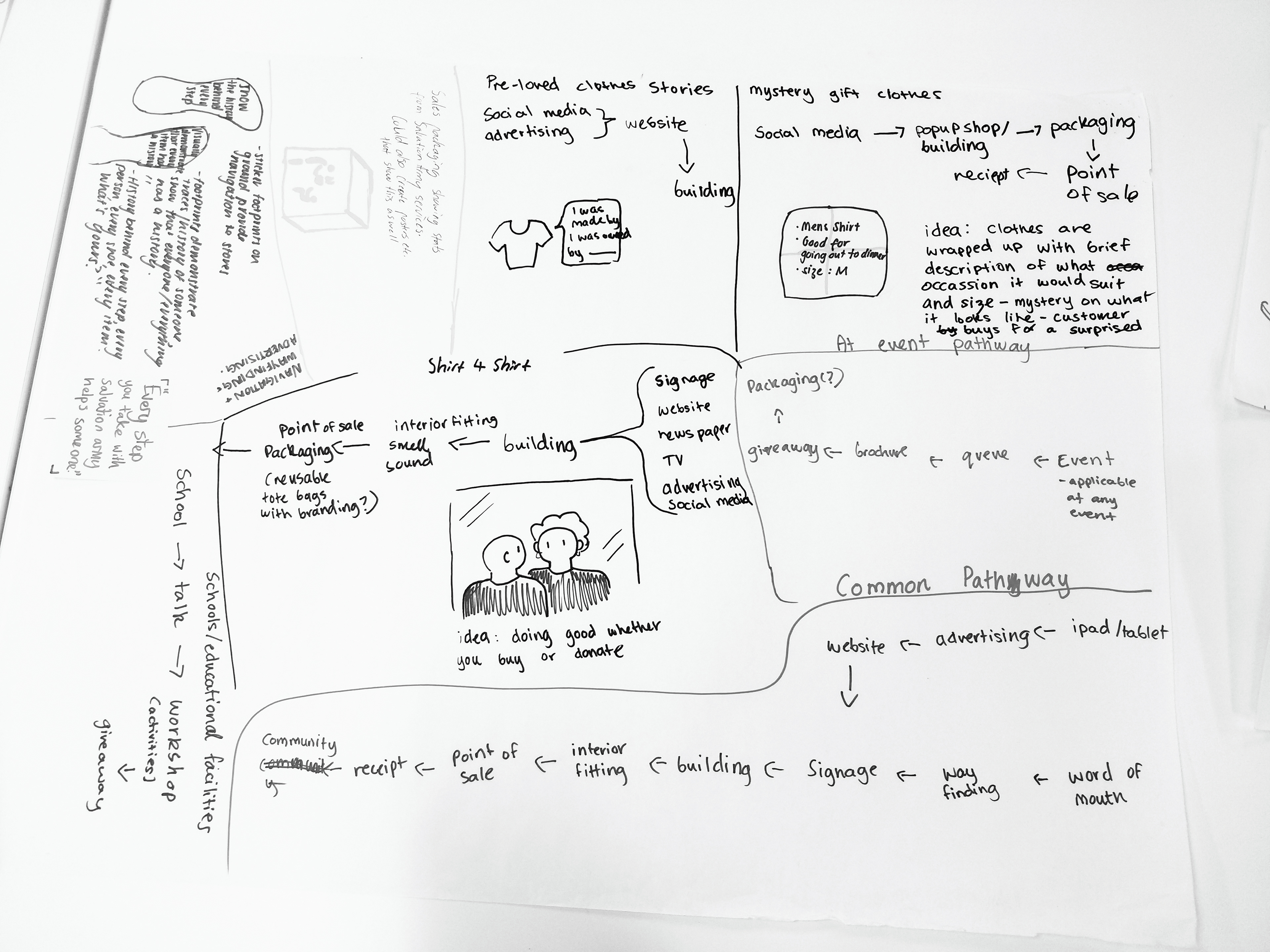
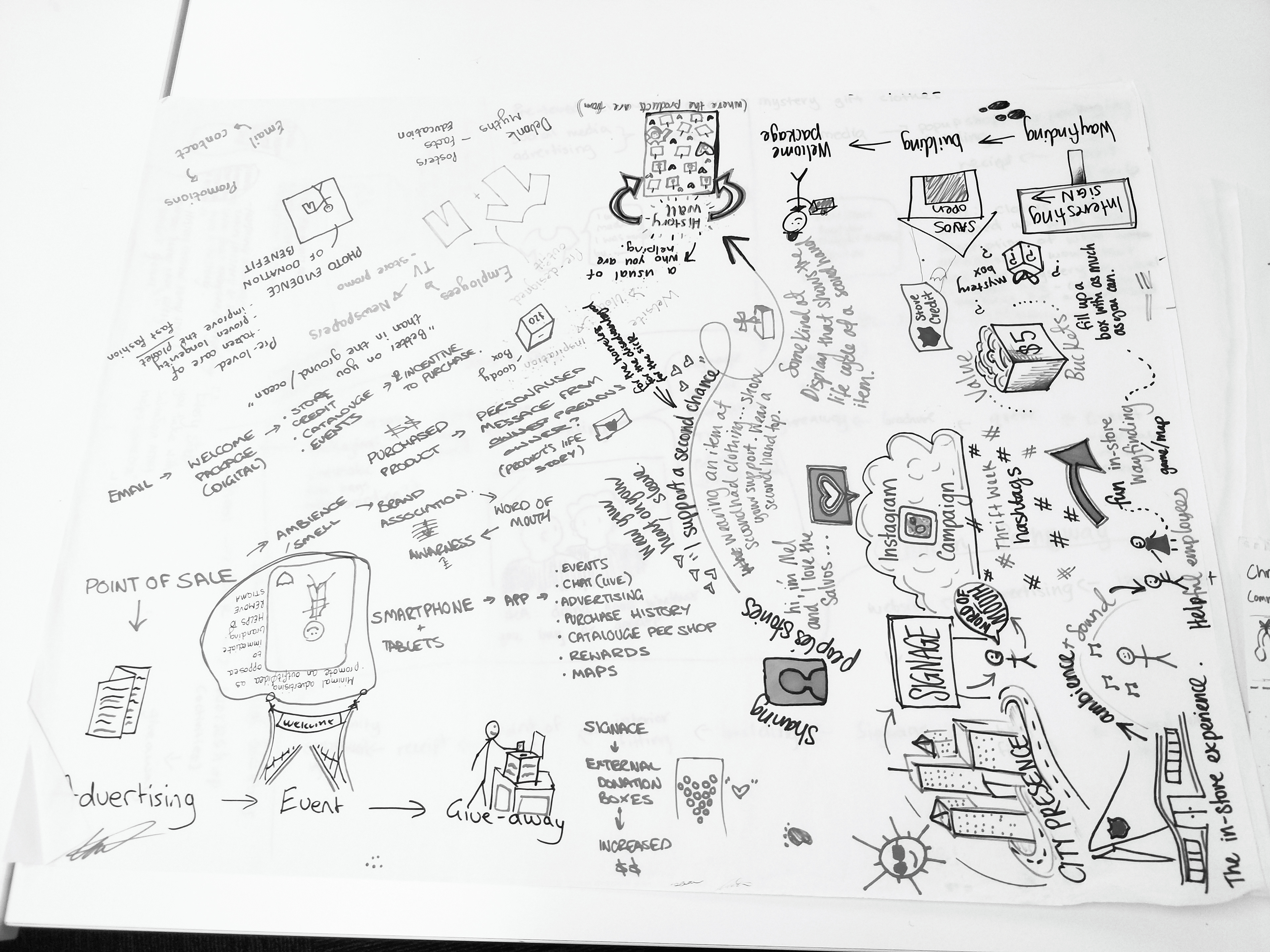
Following multiple ideation workshops, we developed a broad range of potential service concepts before refining them into three strategic directions.
These included:
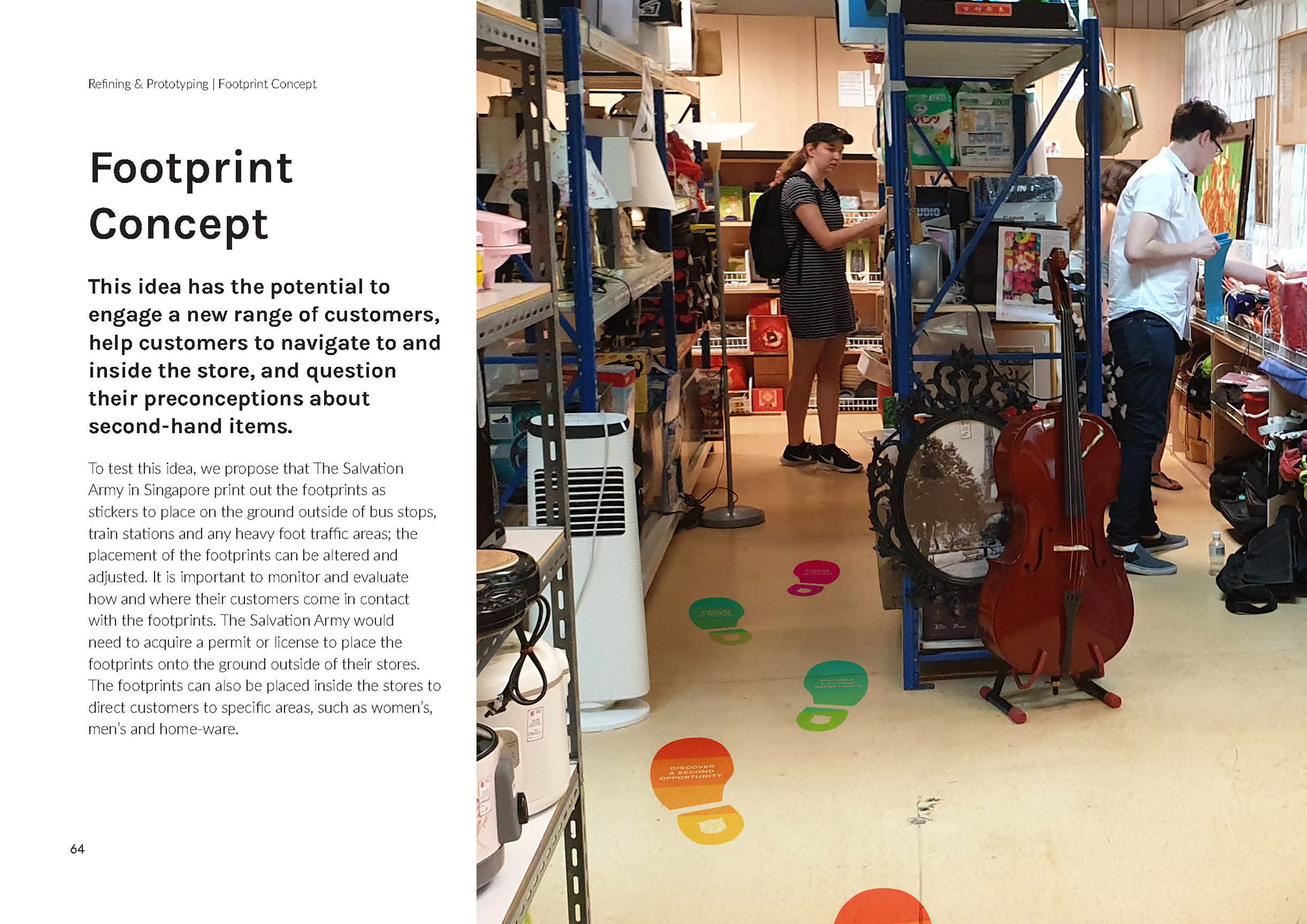
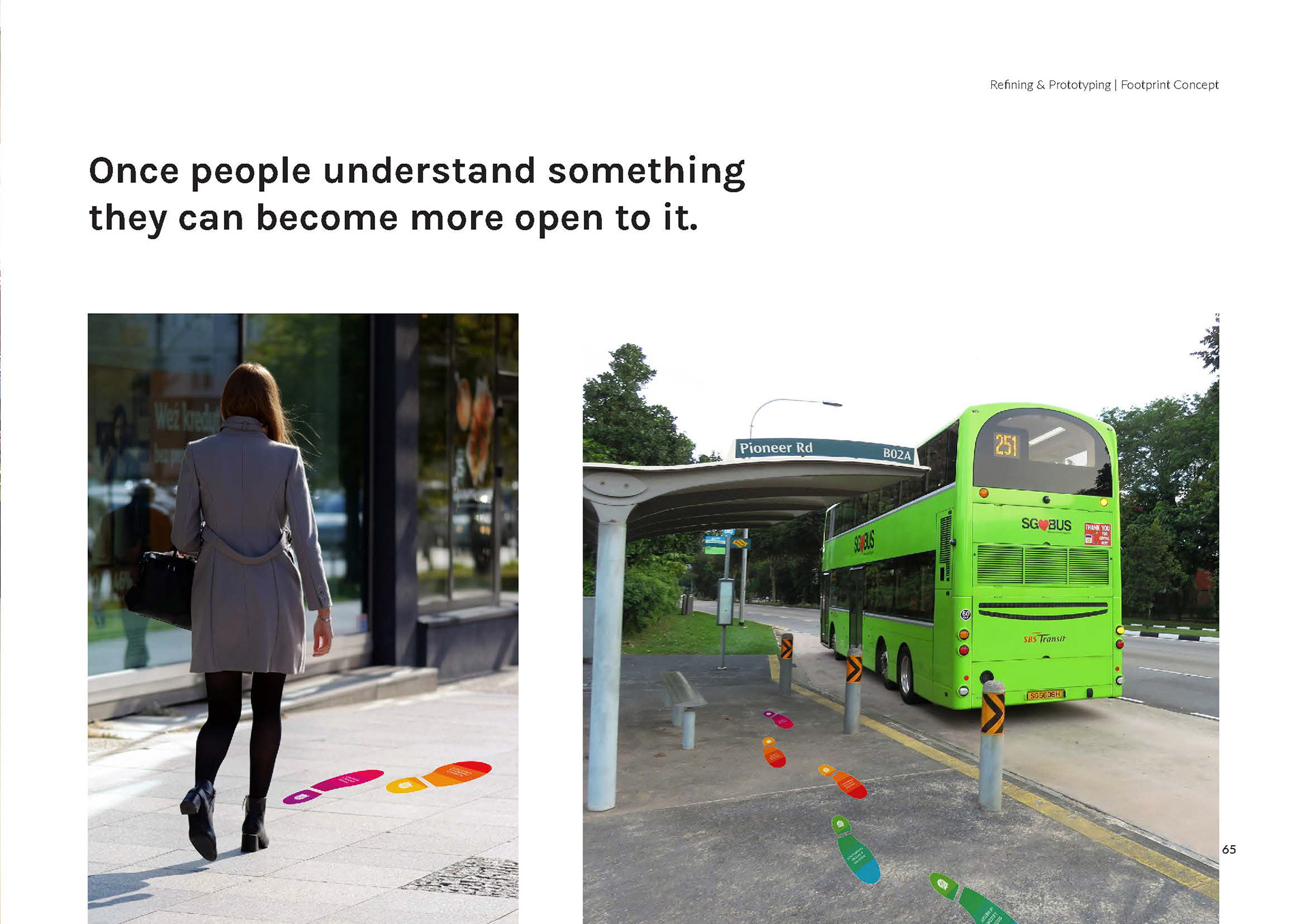
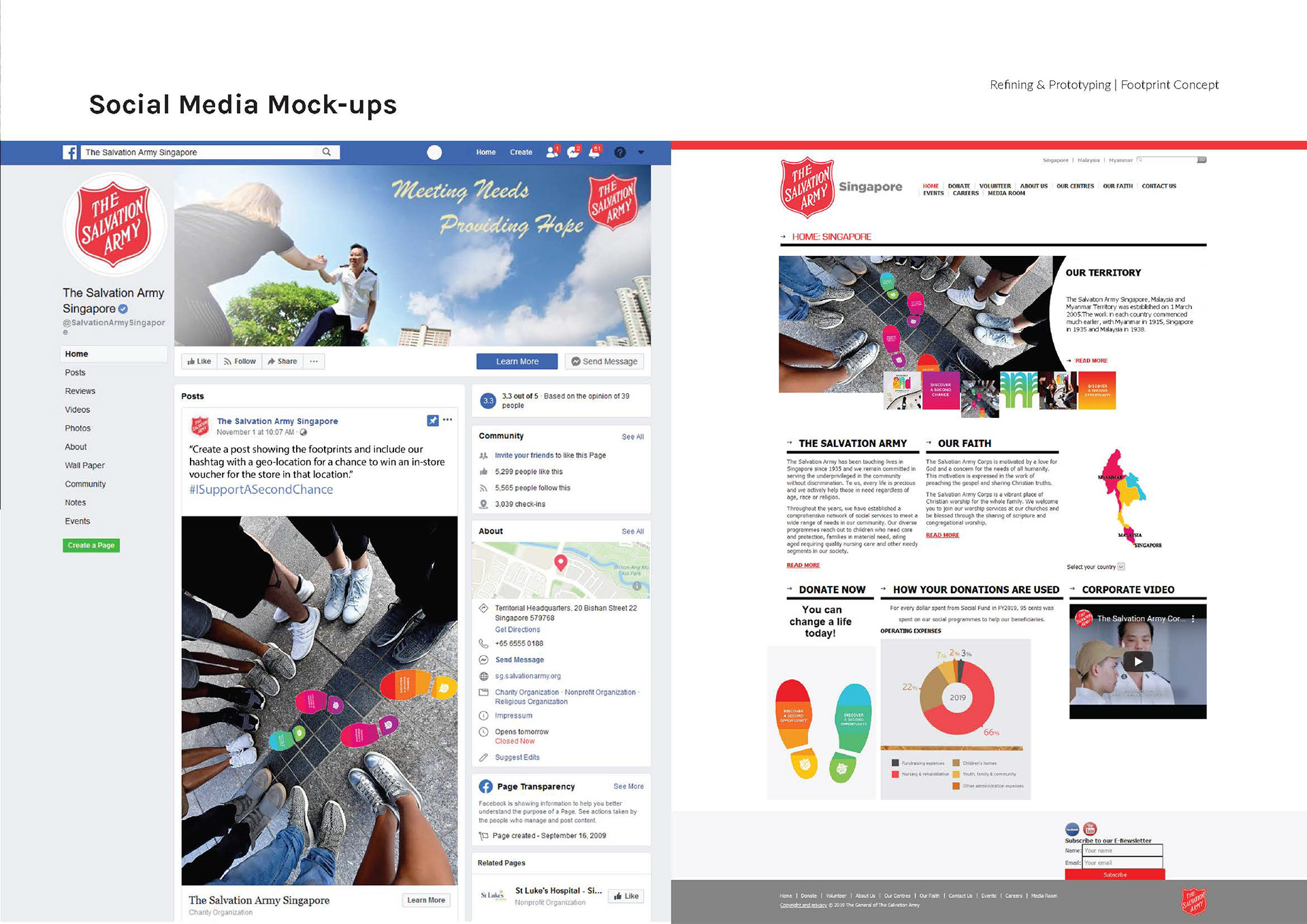
Footprint Navigation
Interactive footprints guiding customers from busy public areas into Salvation Army stores while symbolising the history behind second-hand items.
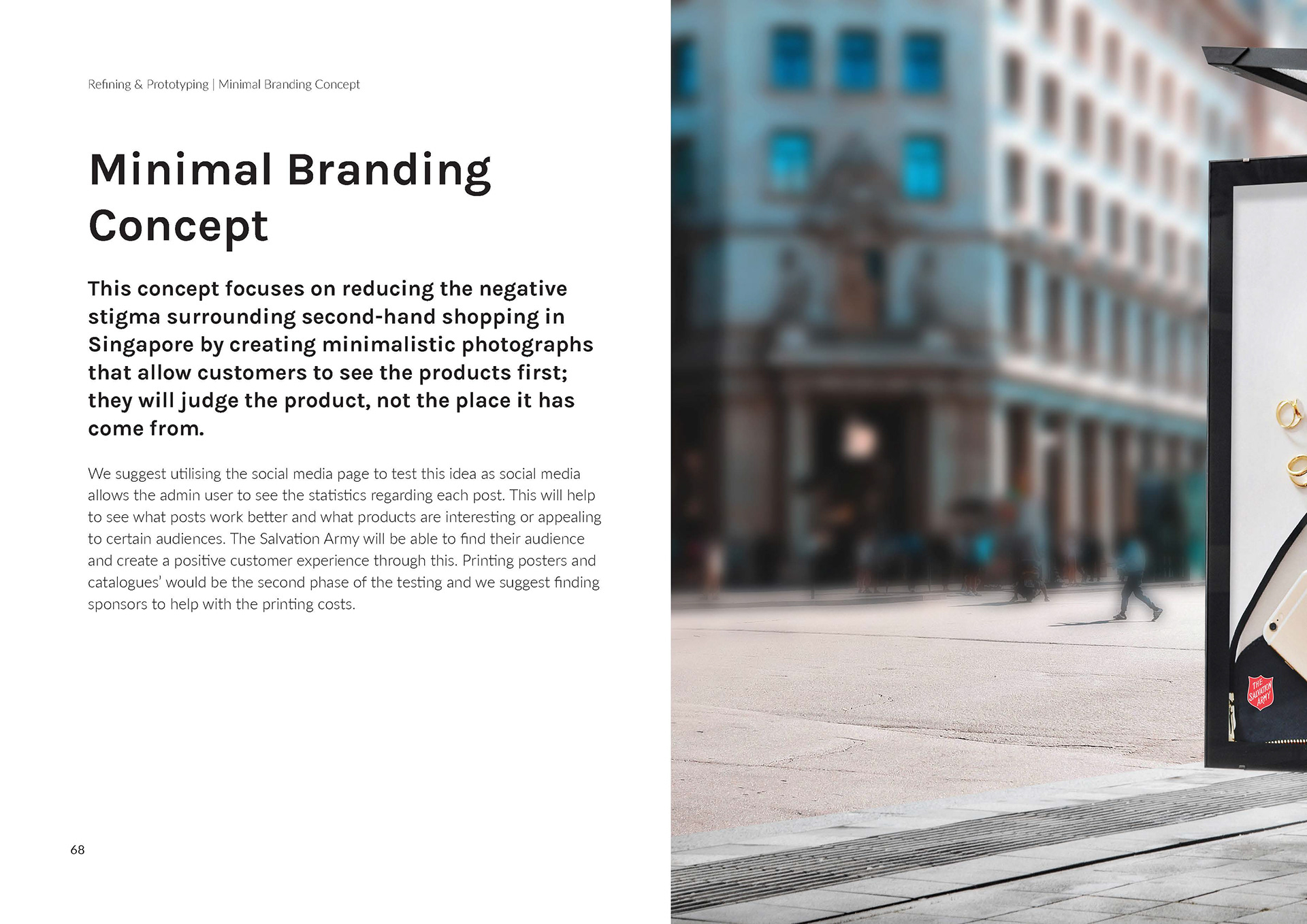
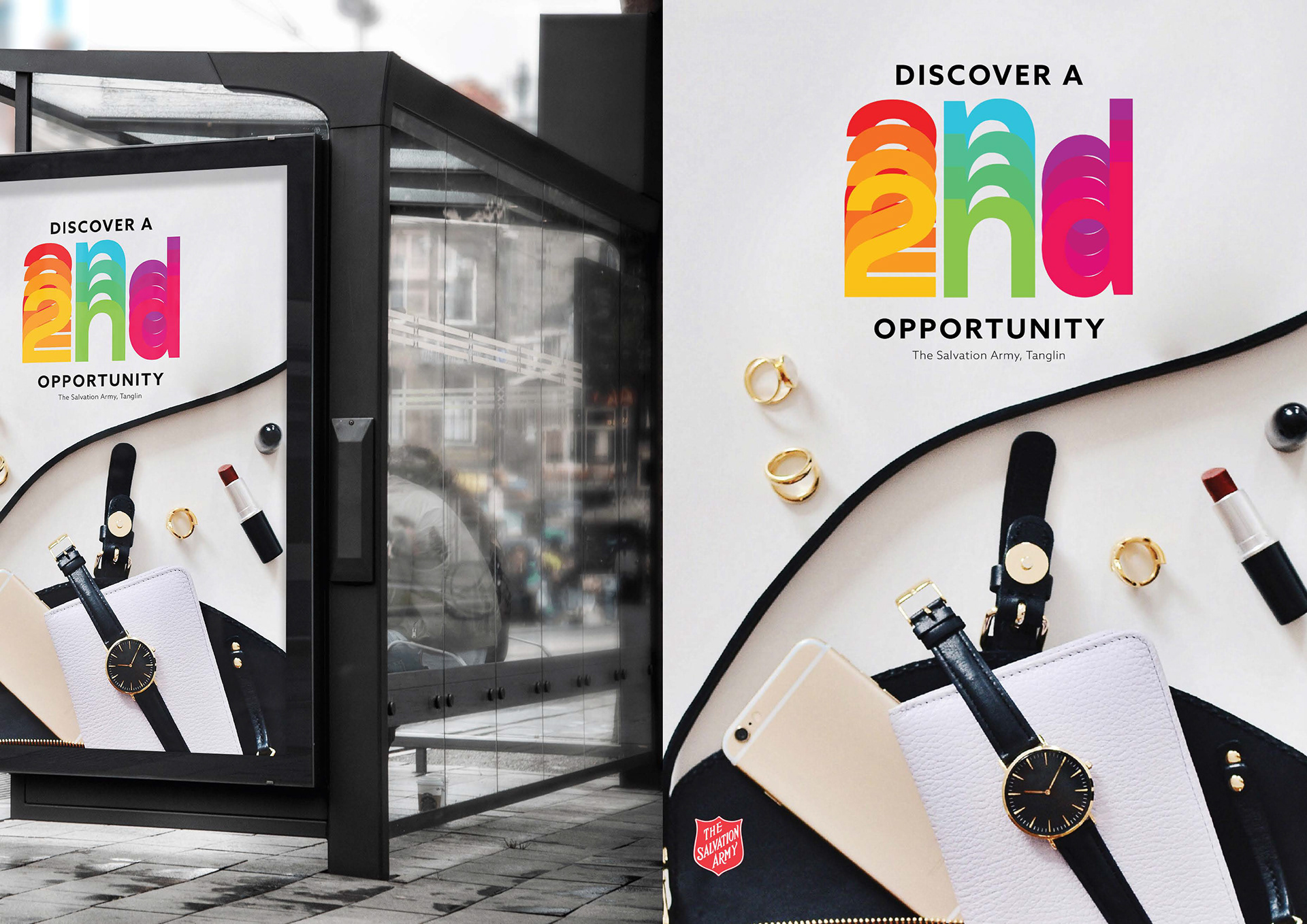
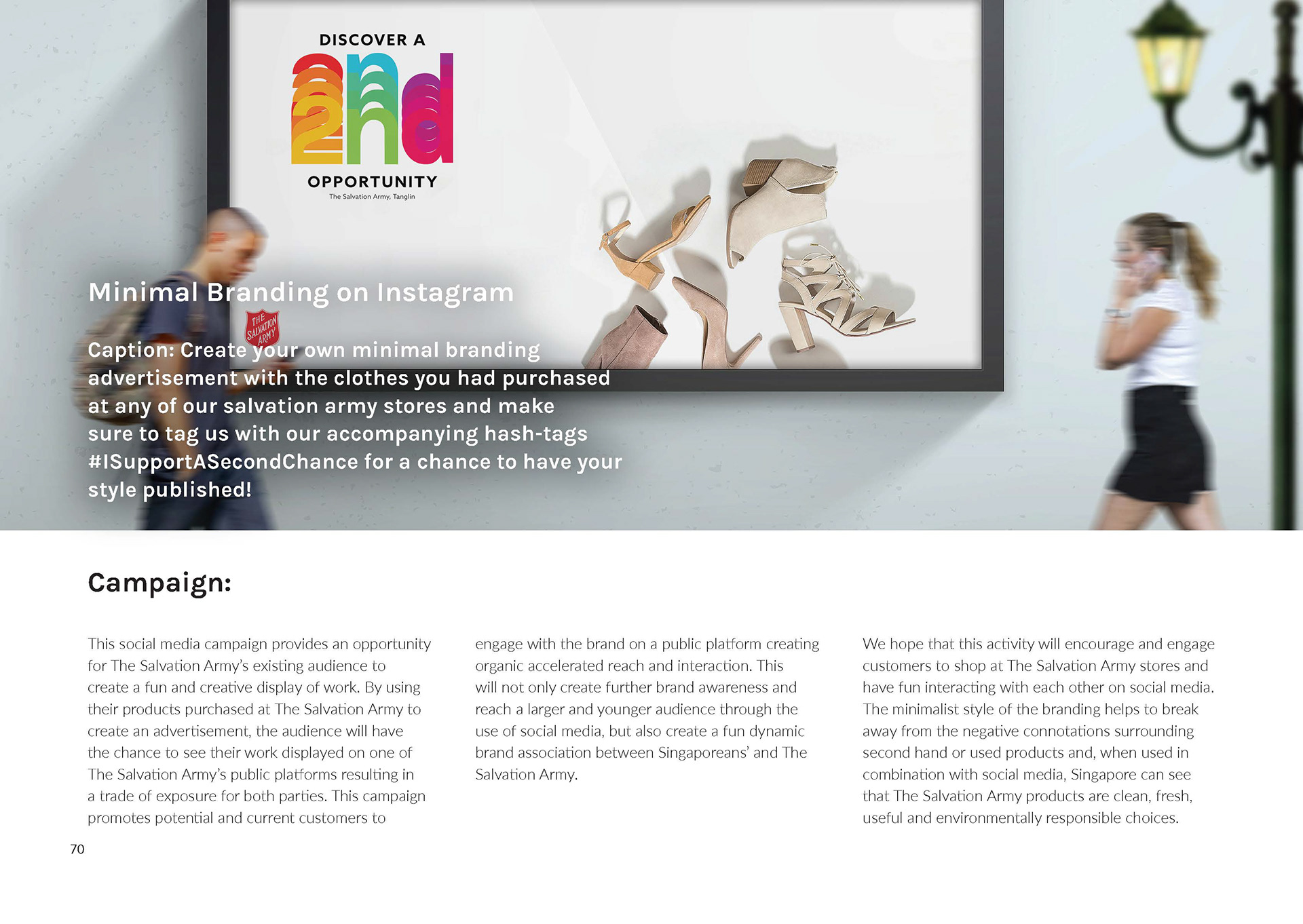
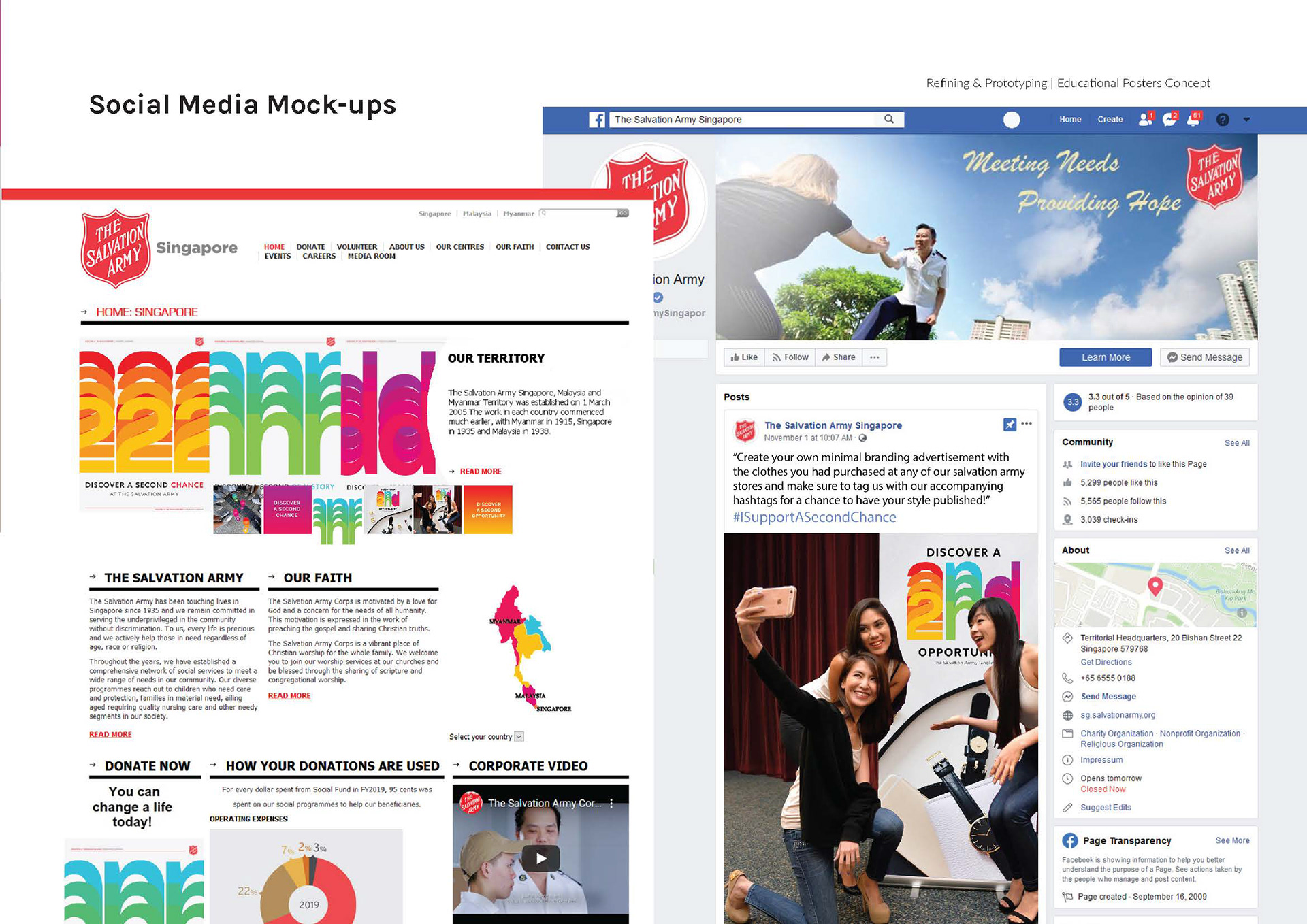
Minimal Branding Campaign
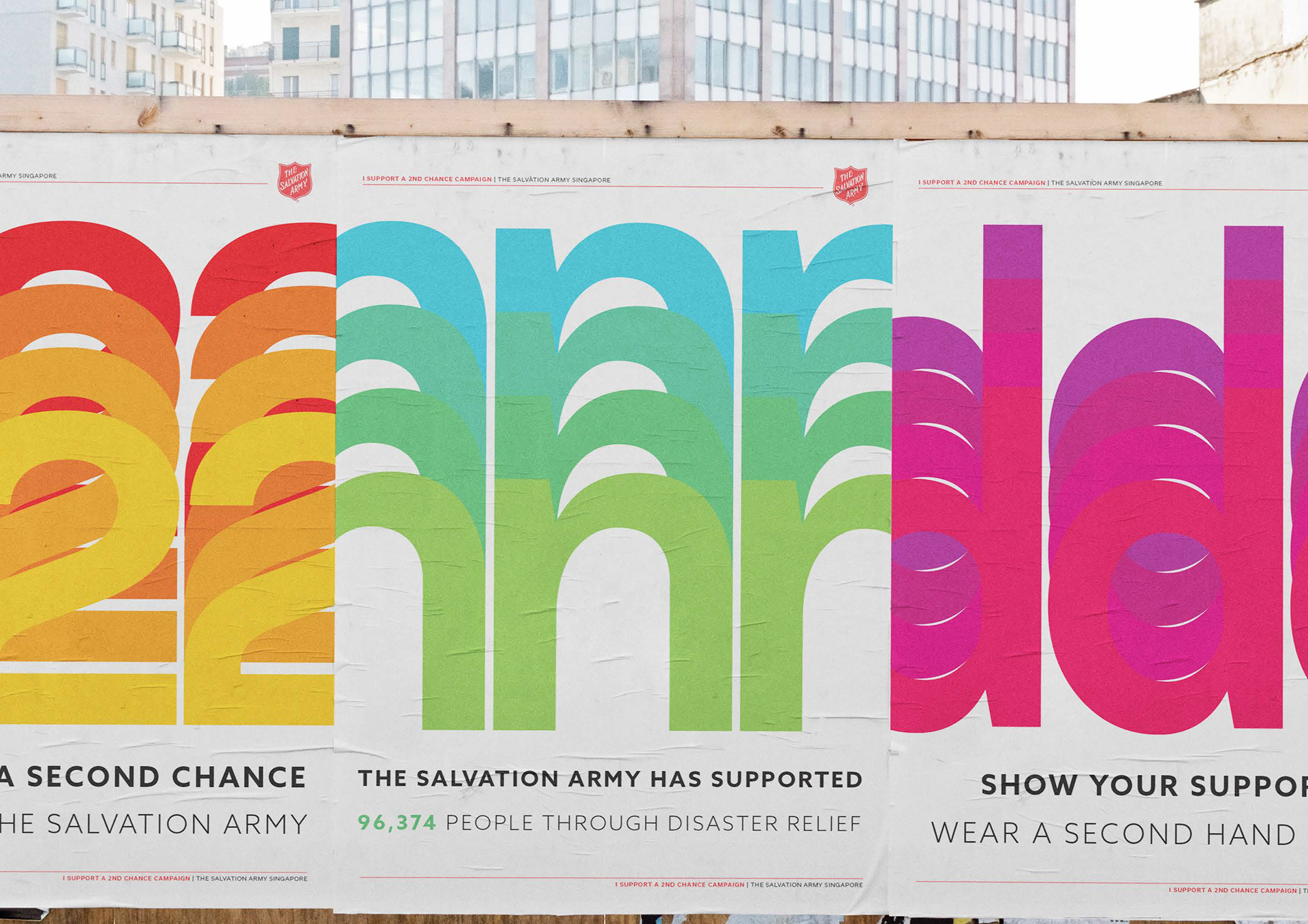
Advertising products before revealing the Salvation Army brand, allowing customers to judge quality before confronting existing biases.
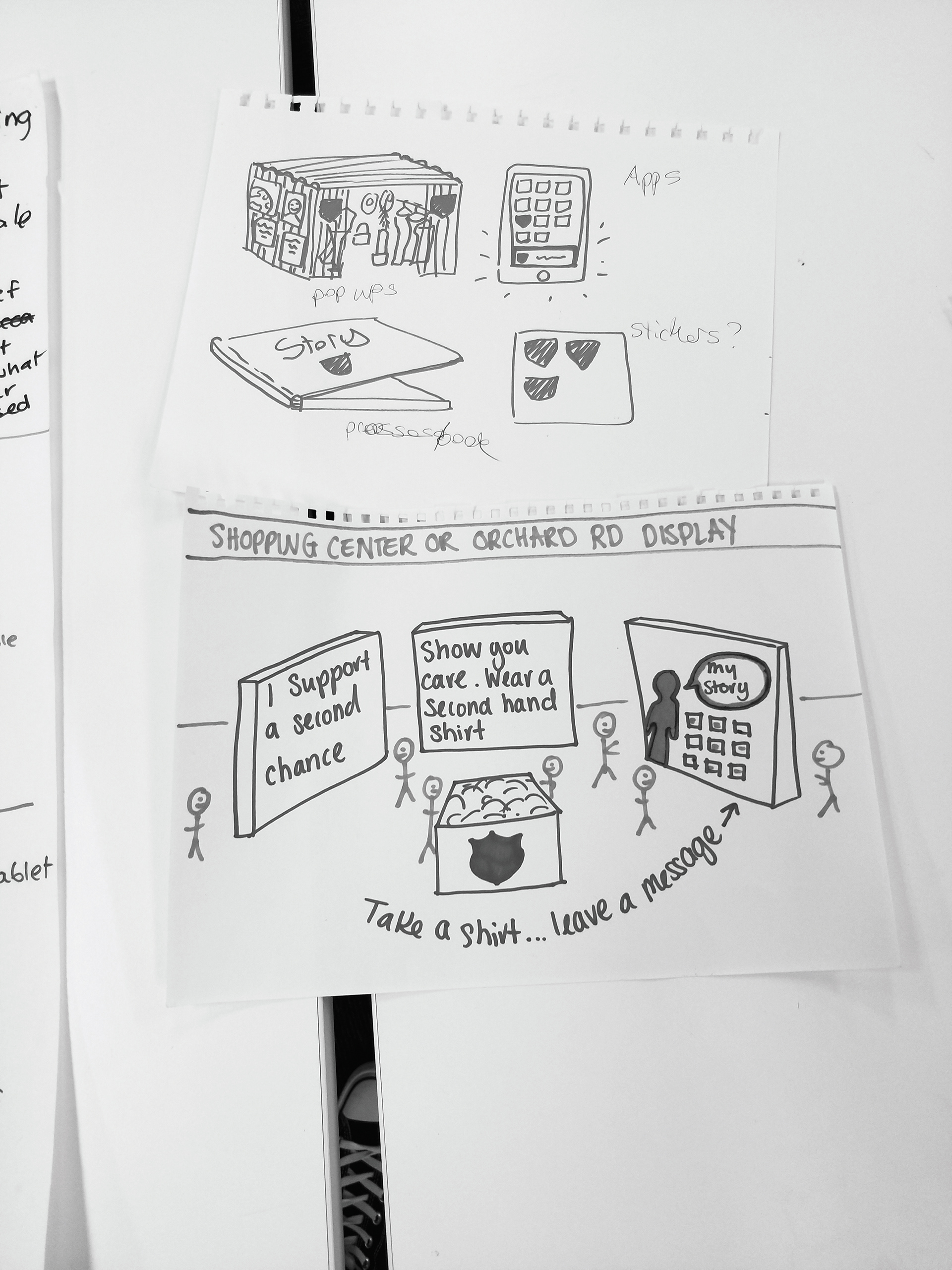
Educational Retail Displays
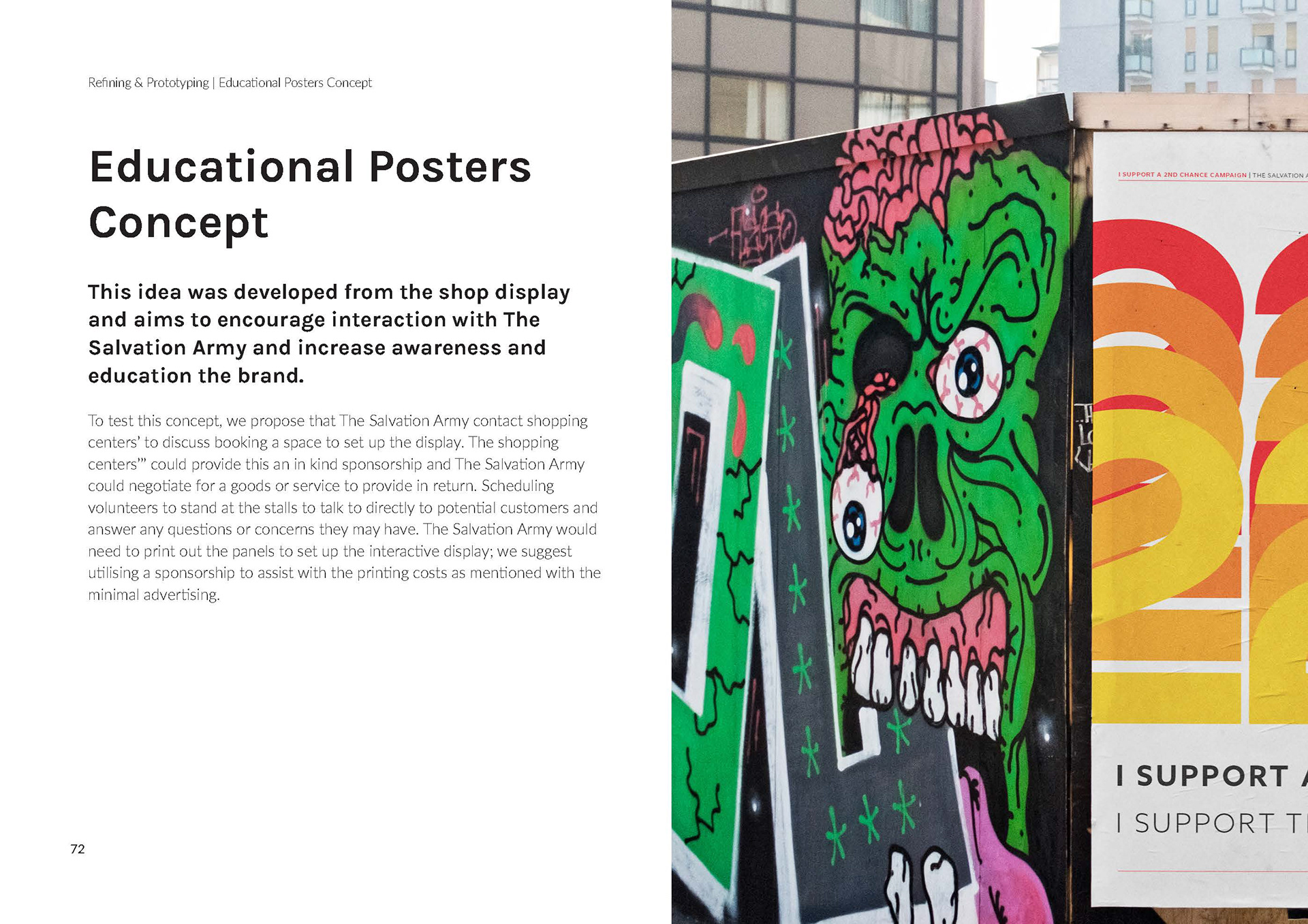
Interactive public displays educating shoppers about where donations go and how purchases support community services.
Supporting concepts also included:
Heritage Stories
Mobile App
Mystery Box Campaign
Pop-up Stores
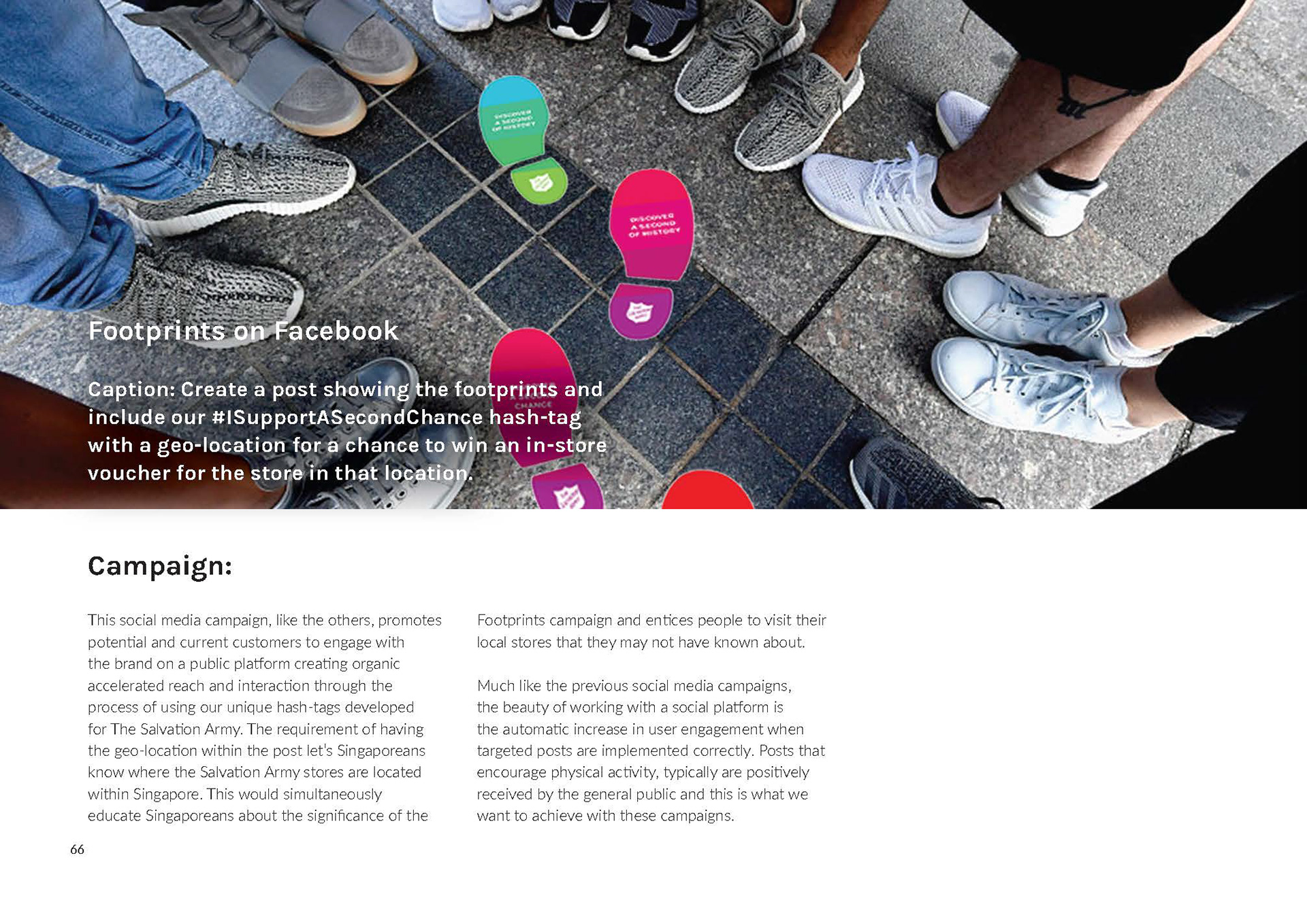
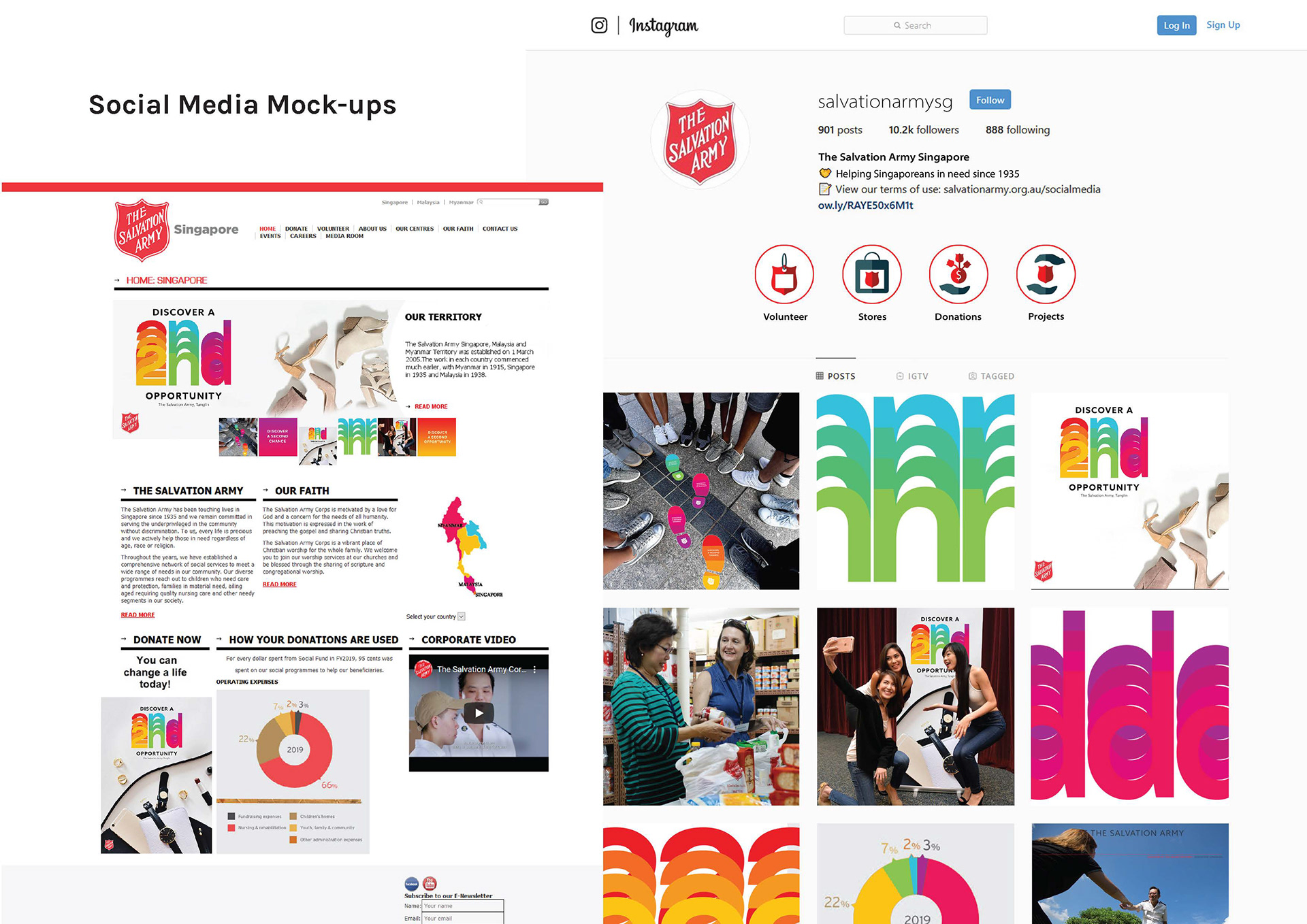
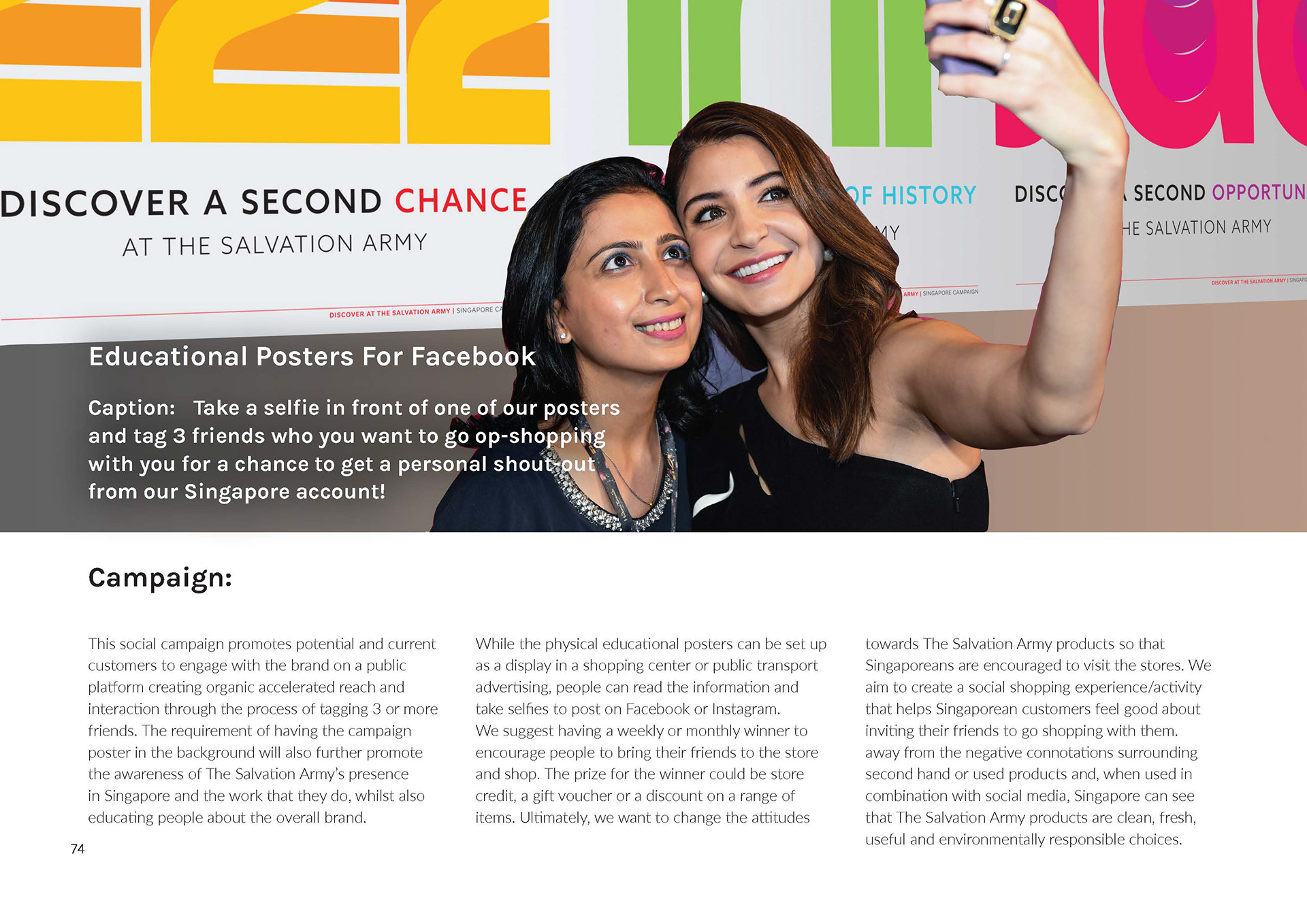
Social media engagement campaigns
Outcomes
The project culminated in a comprehensive strategic proposal presented to The Salvation Army Singapore.
Rather than delivering a single design artefact, we provided a research-backed service strategy that addressed the underlying causes of low retail engagement.
The recommendations focused on:
increasing public awareness
improving wayfinding
reducing stigma
strengthening education
encouraging community participation
creating stronger emotional connections with the brand
Reflection
This project fundamentally changed how I approach design.
Rather than viewing design as the creation of interfaces or visual assets, I began seeing it as the design of relationships, systems and experiences.
By immersing ourselves in a different culture, engaging directly with stakeholders and challenging our own assumptions, I learned that meaningful solutions emerge through empathy, research and collaboration—not simply aesthetics.
It remains one of the projects that shaped my philosophy as a Service Designer.